Stornoway
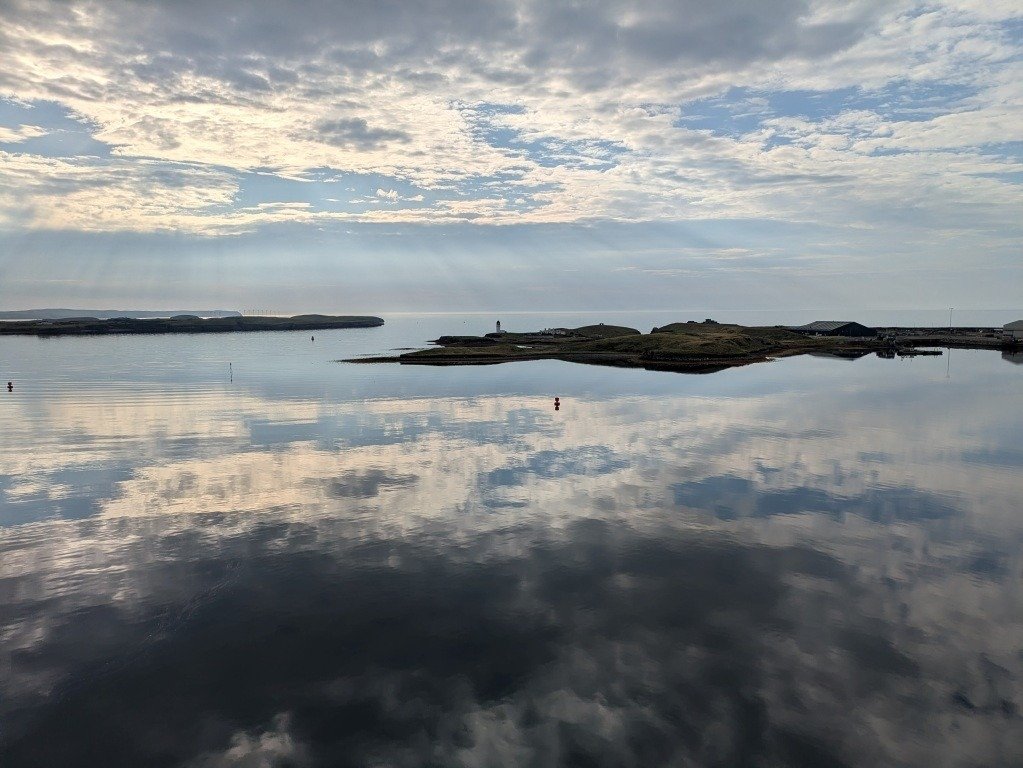
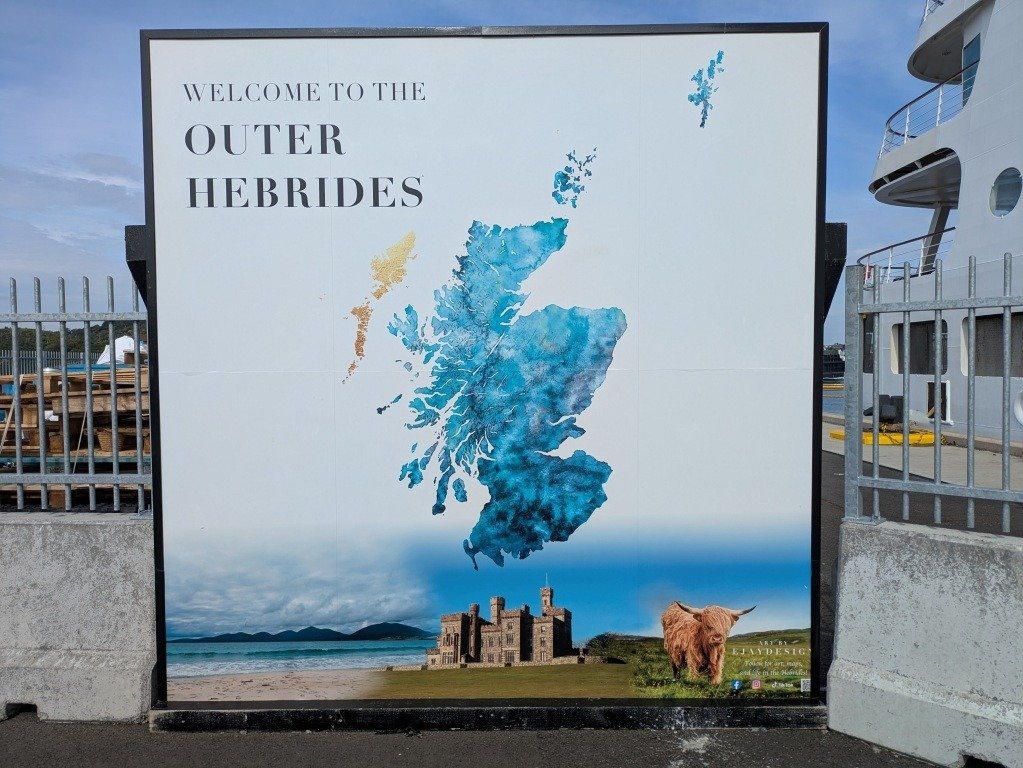
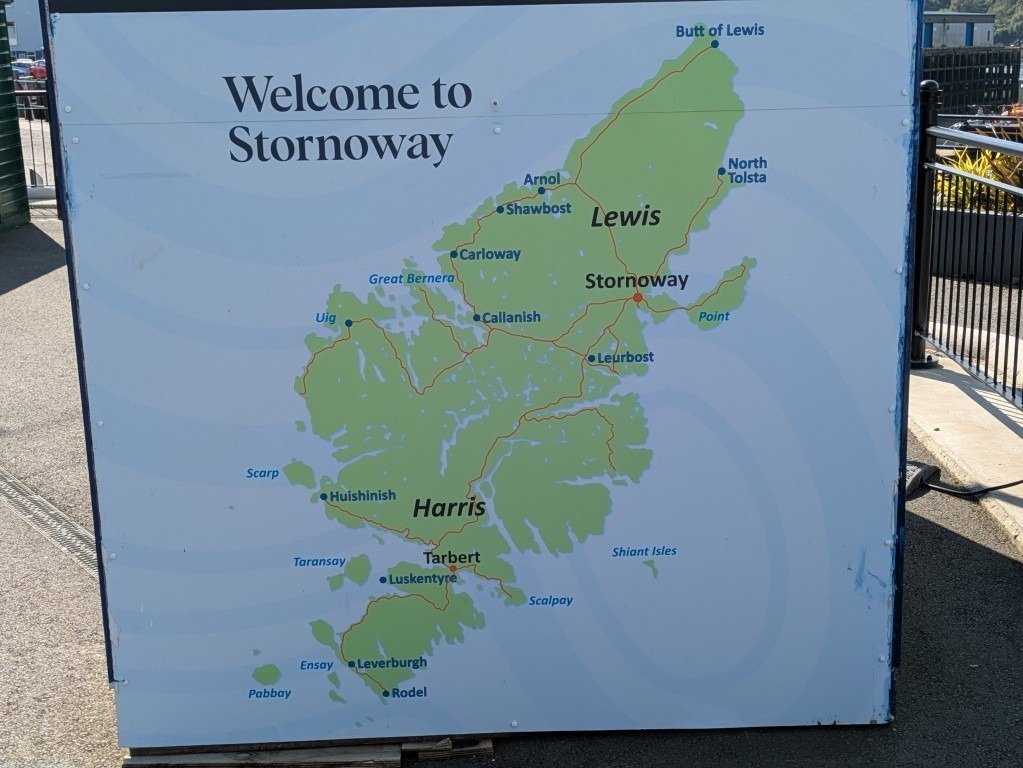
On a calm, clearing, 15c Thursday morning we approached Stornoway. Docked by 8am at the new Deep Sea Terminal. Stornoway is the main town, and by far the largest, of the Outer Hebrides, and the capital of both the Isle of Lewis and encompassing island of Lewis and Harris. The town’s population is around 8,000, making it the third-largest island town in Scotland’s islands. The Gaelic language is very much alive in this part of the world and still taught in the schools.
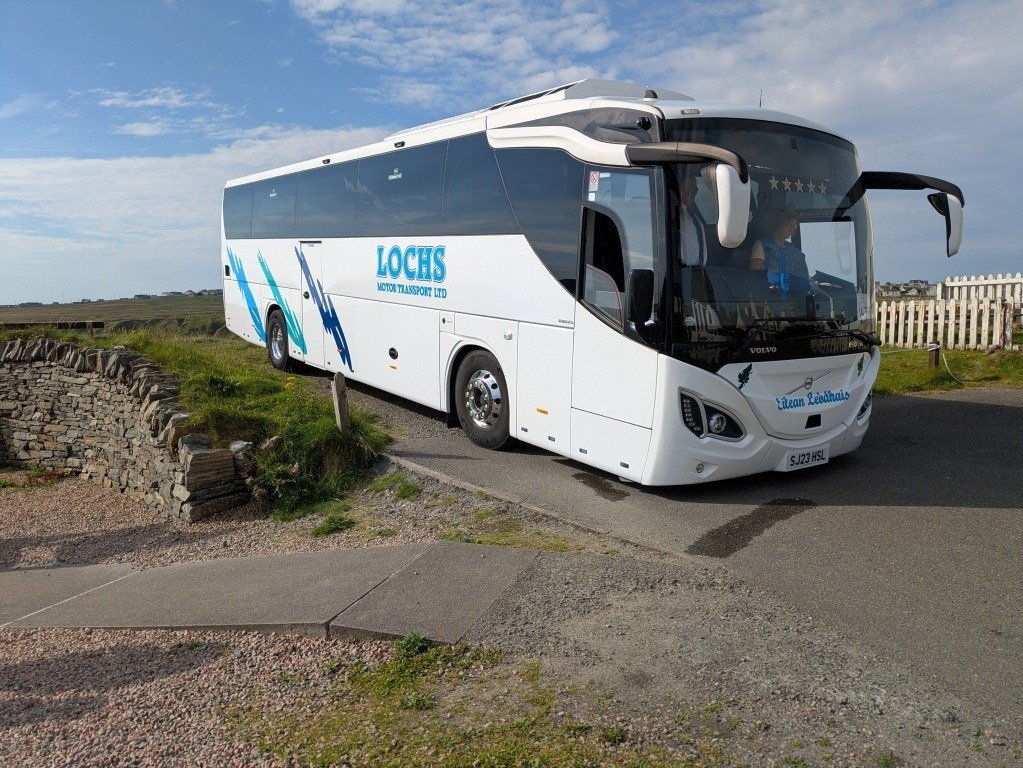
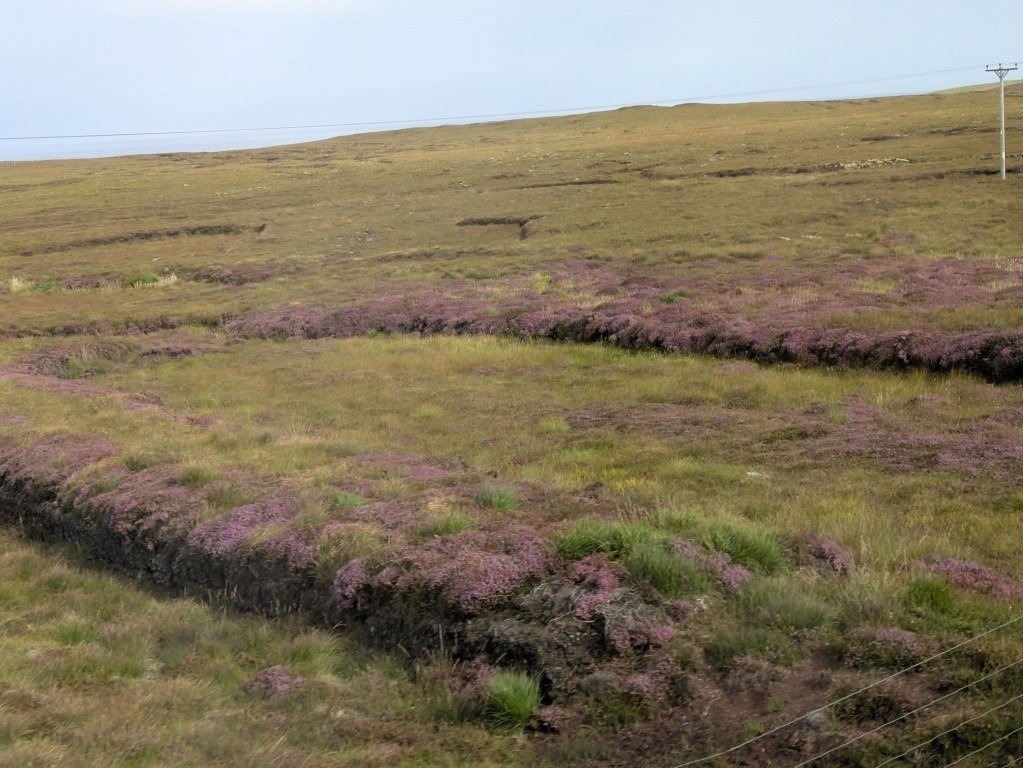
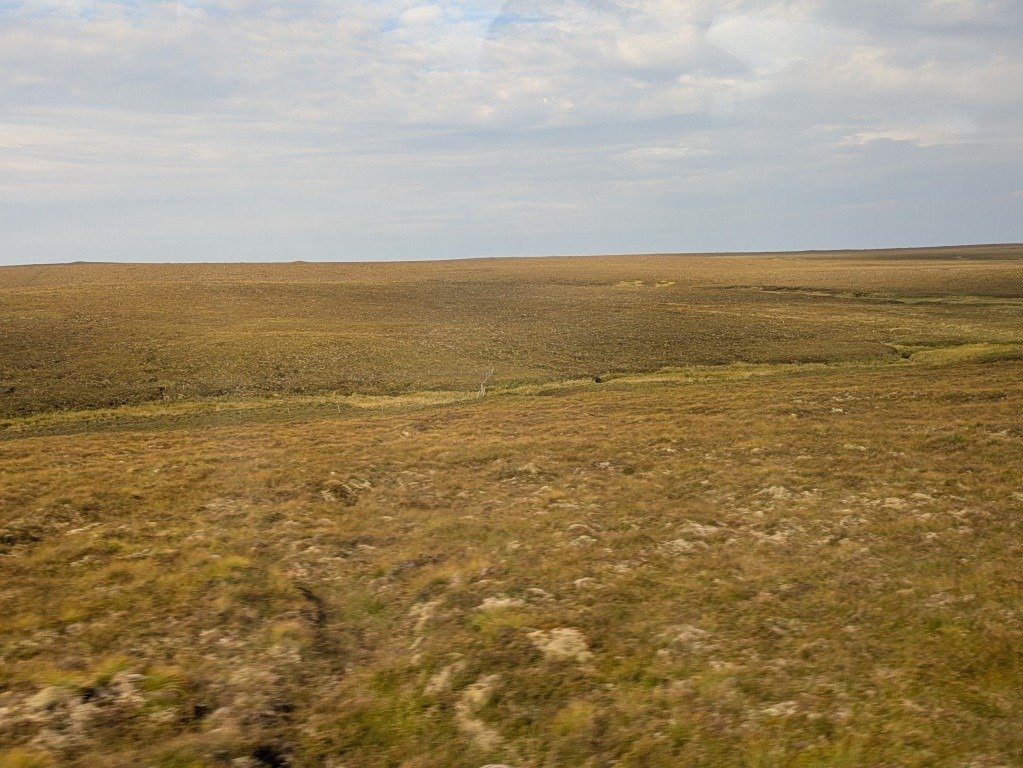
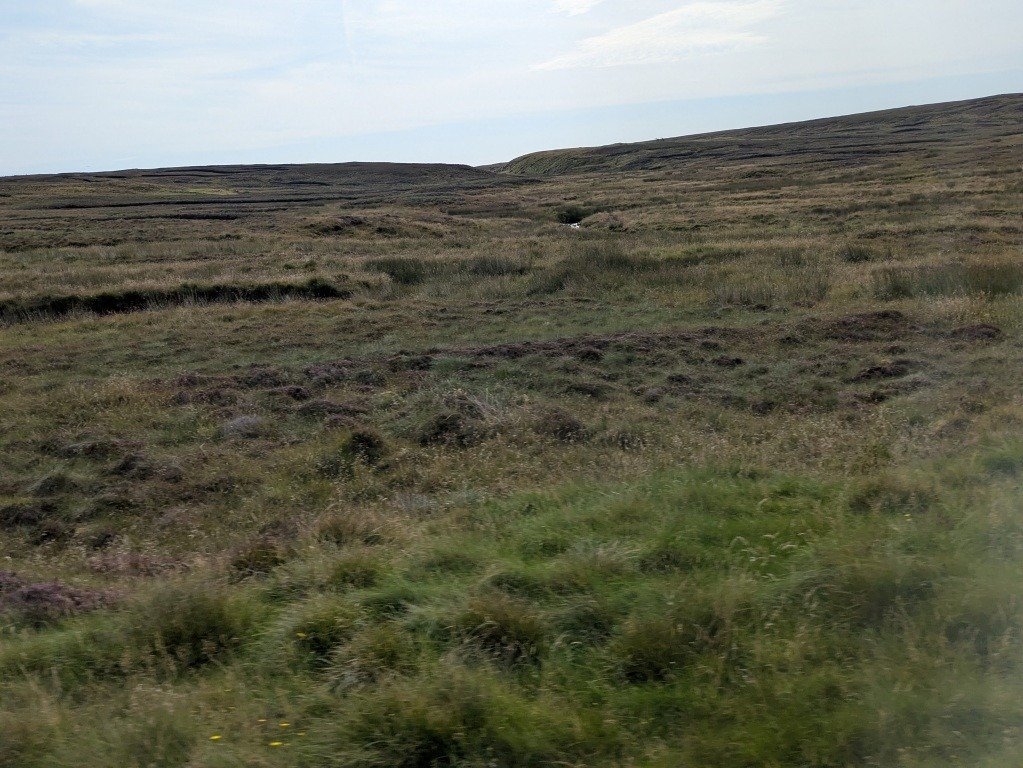
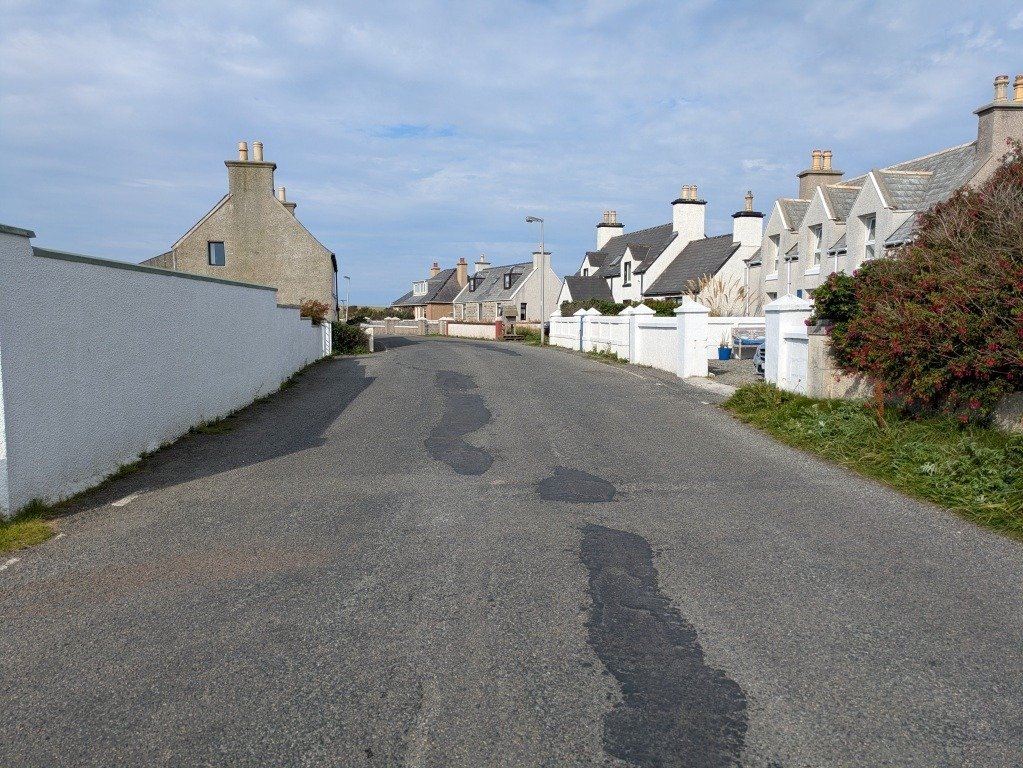
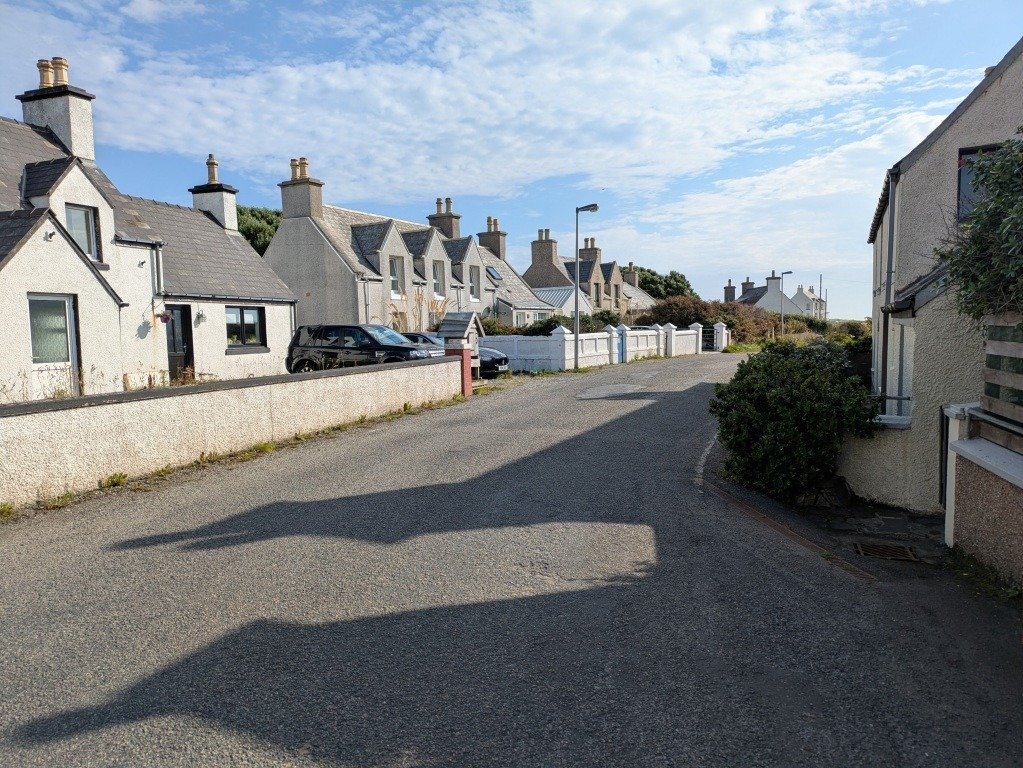
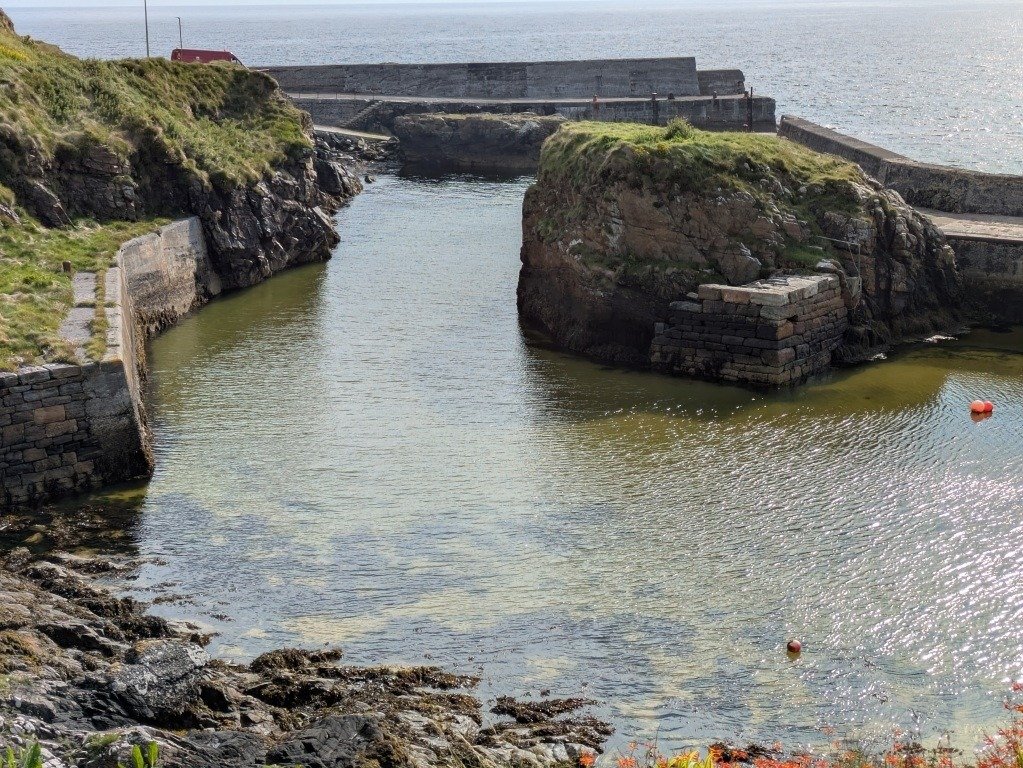
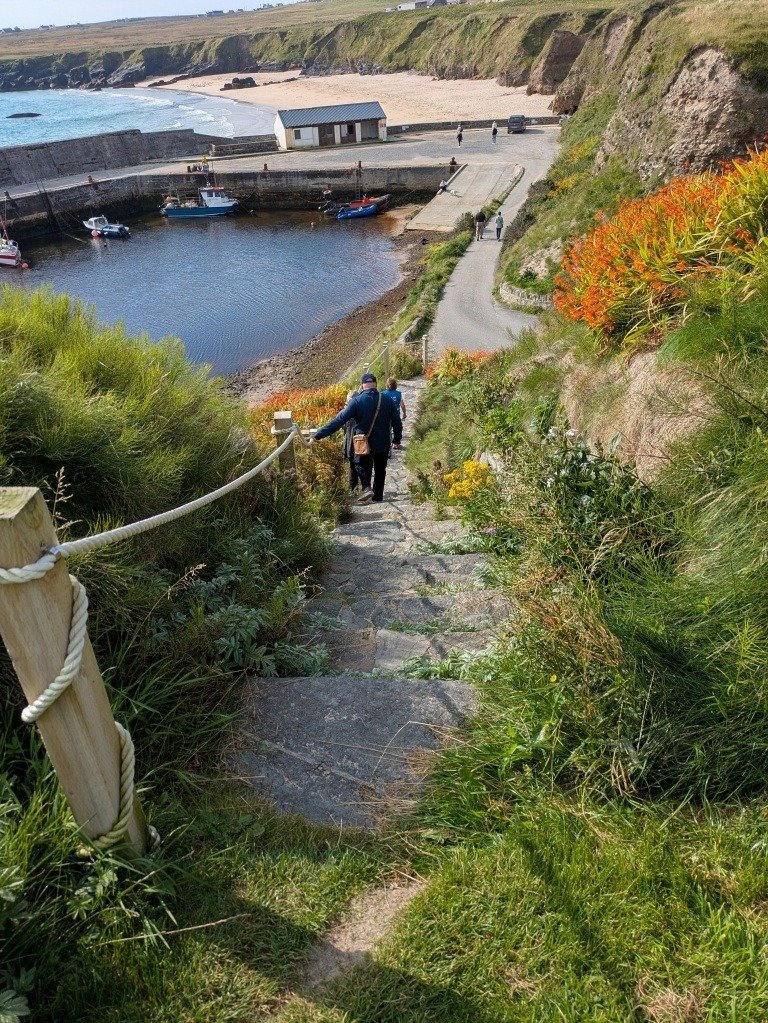
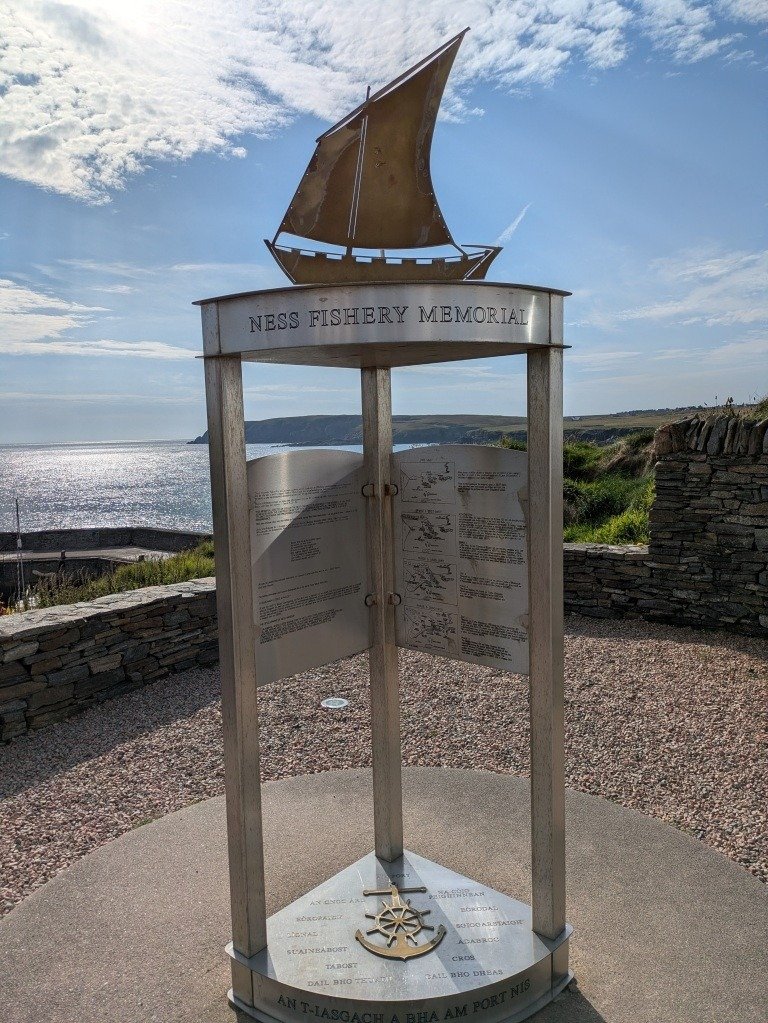
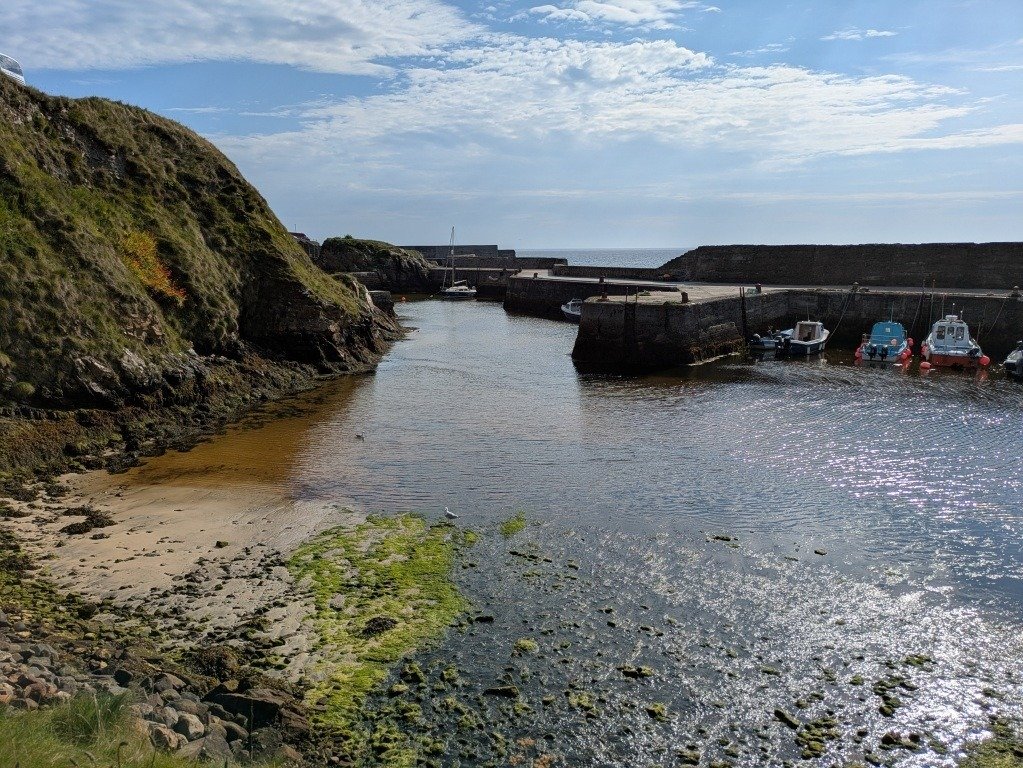
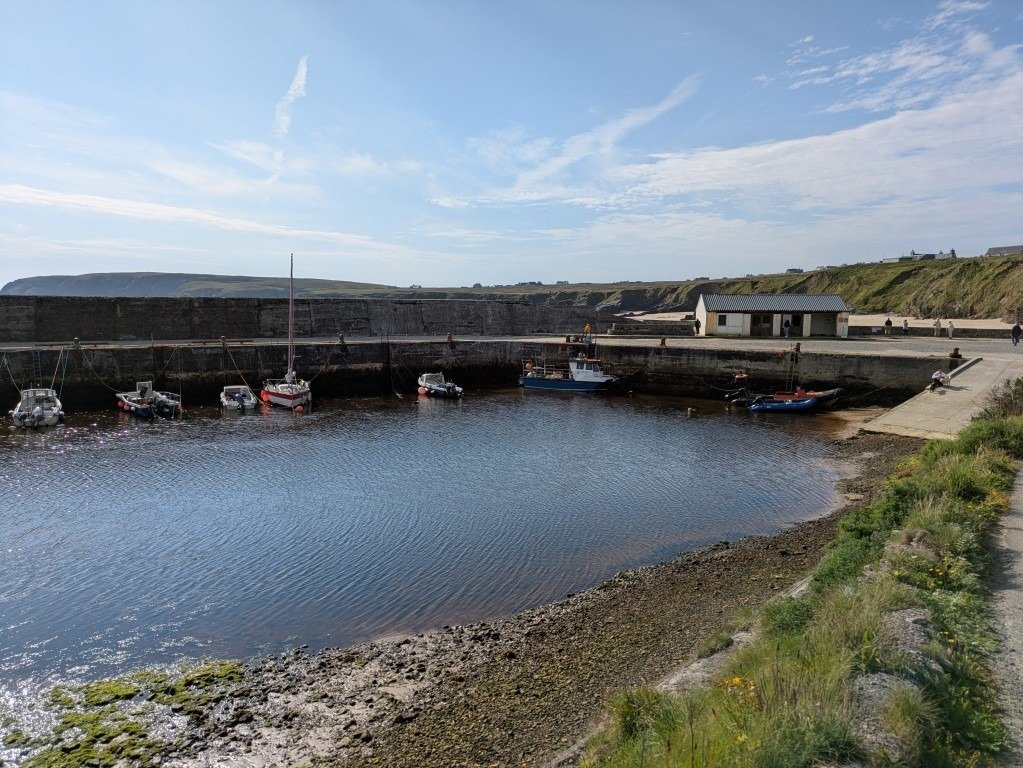
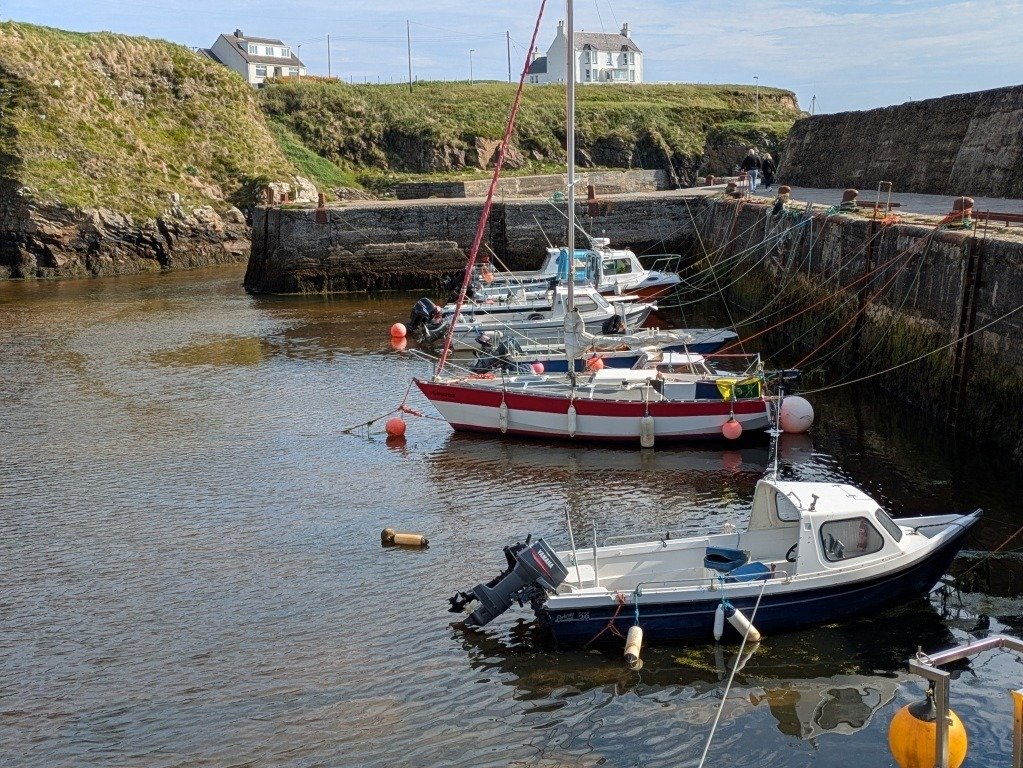
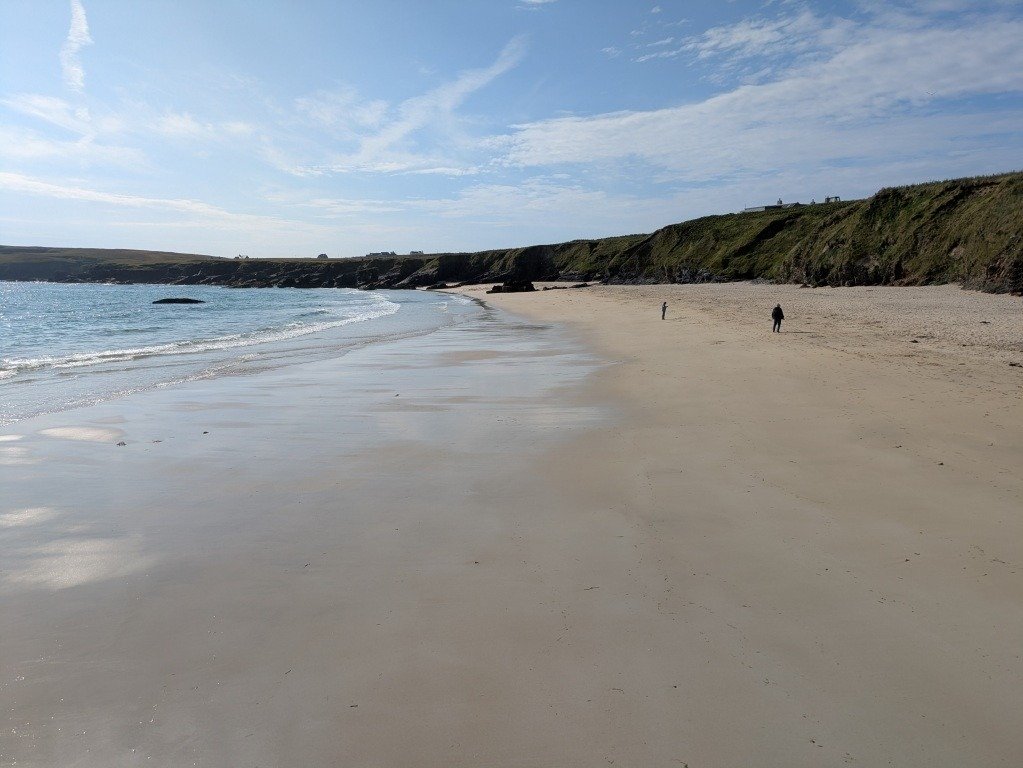
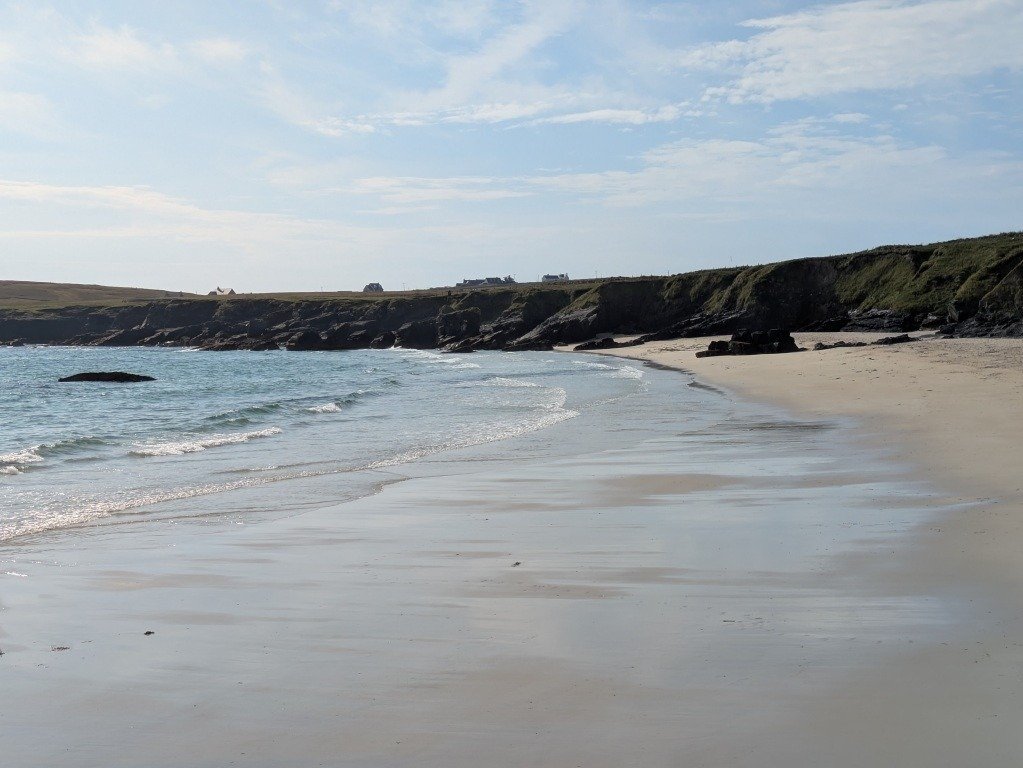
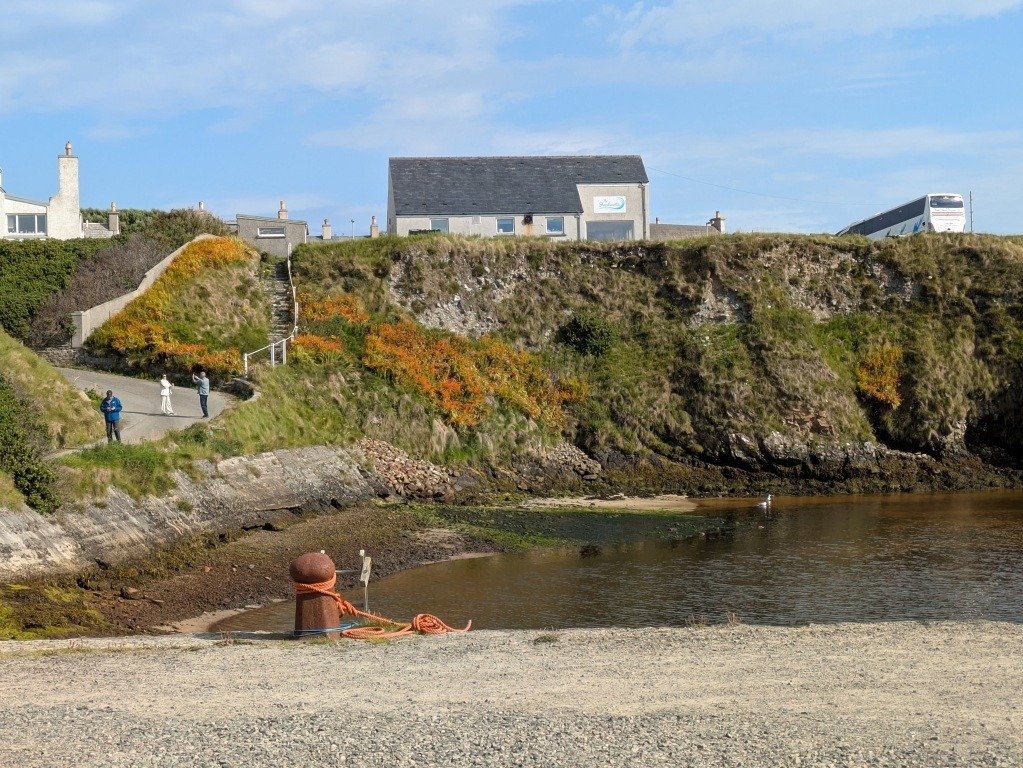
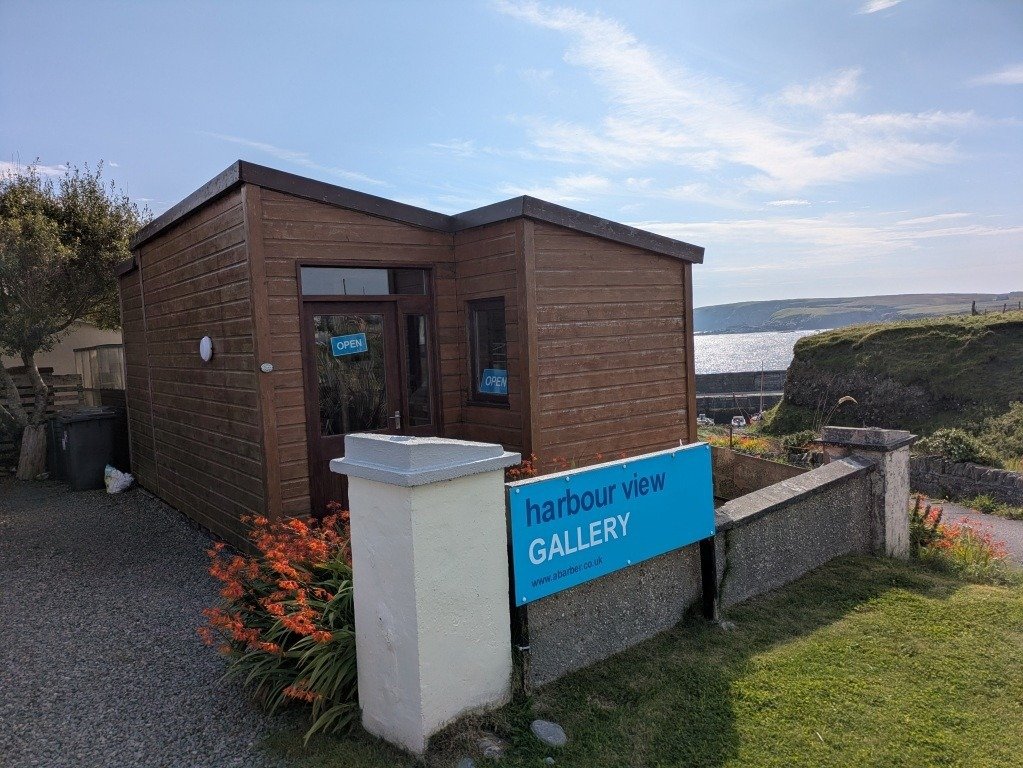
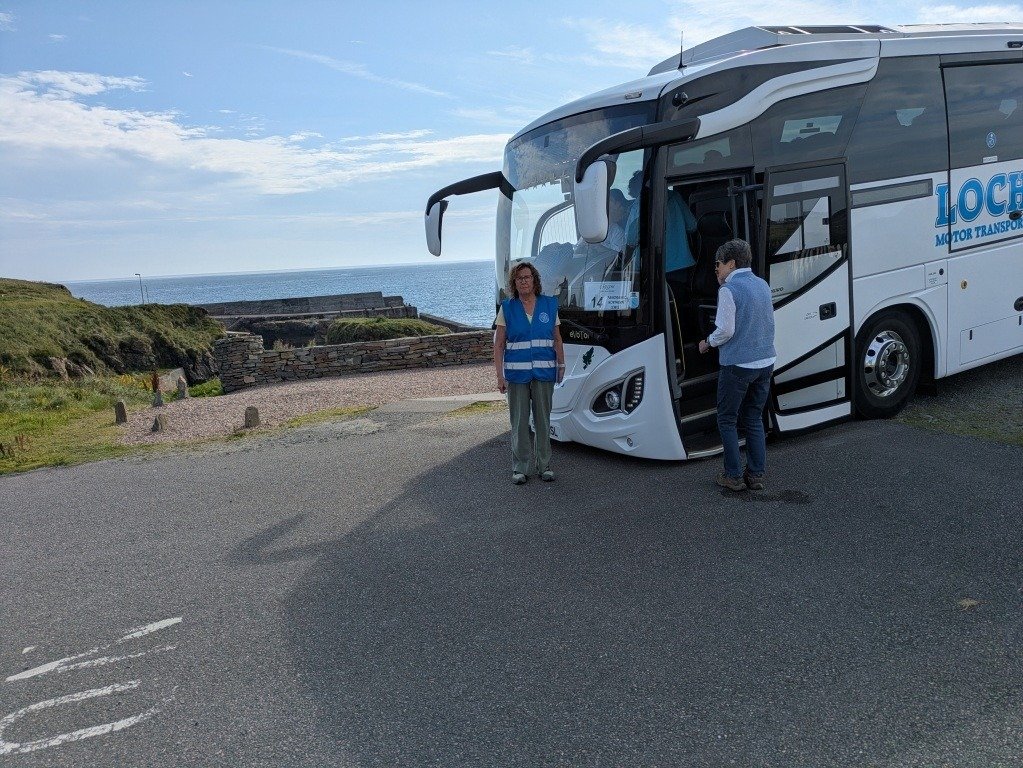
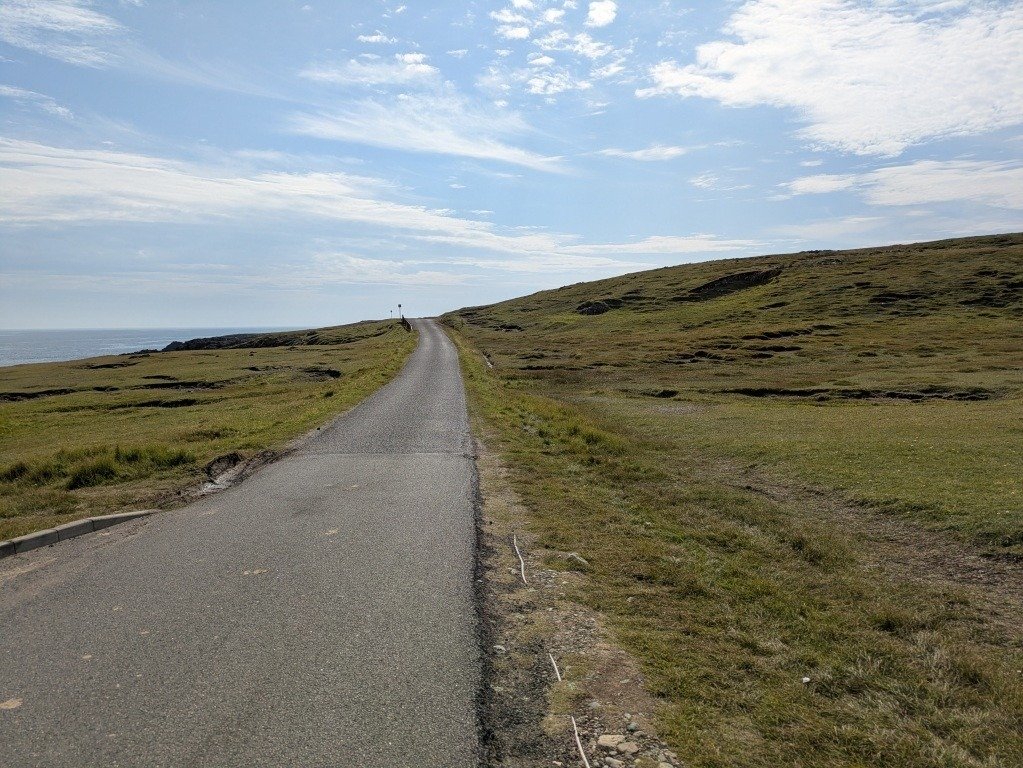
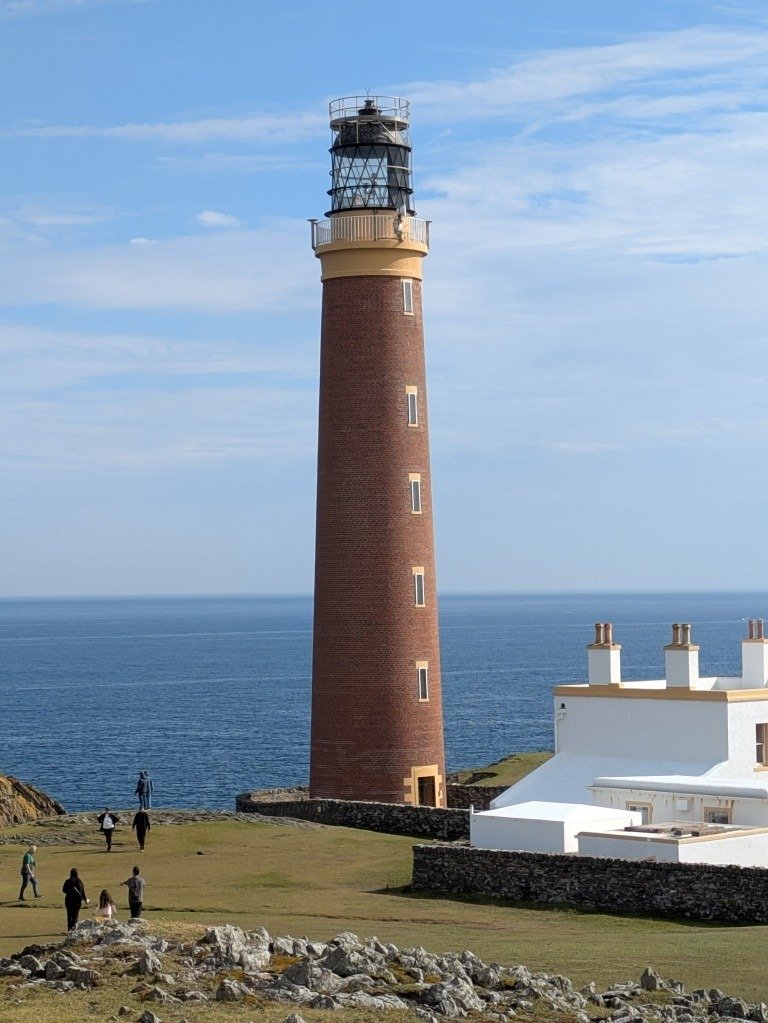
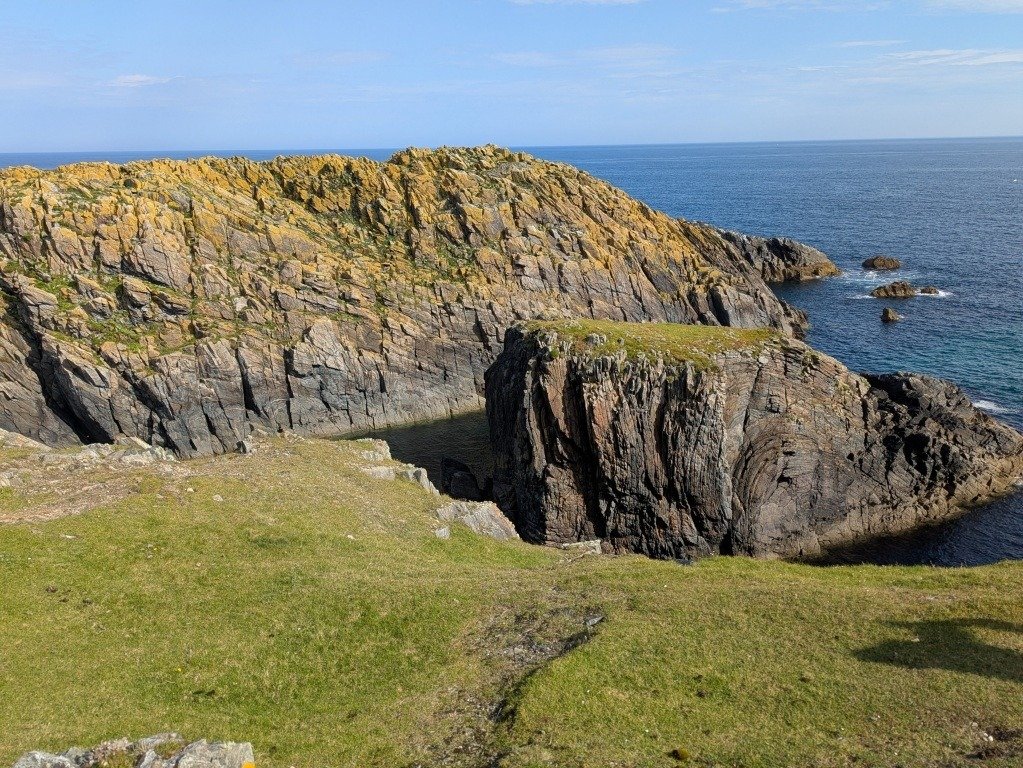
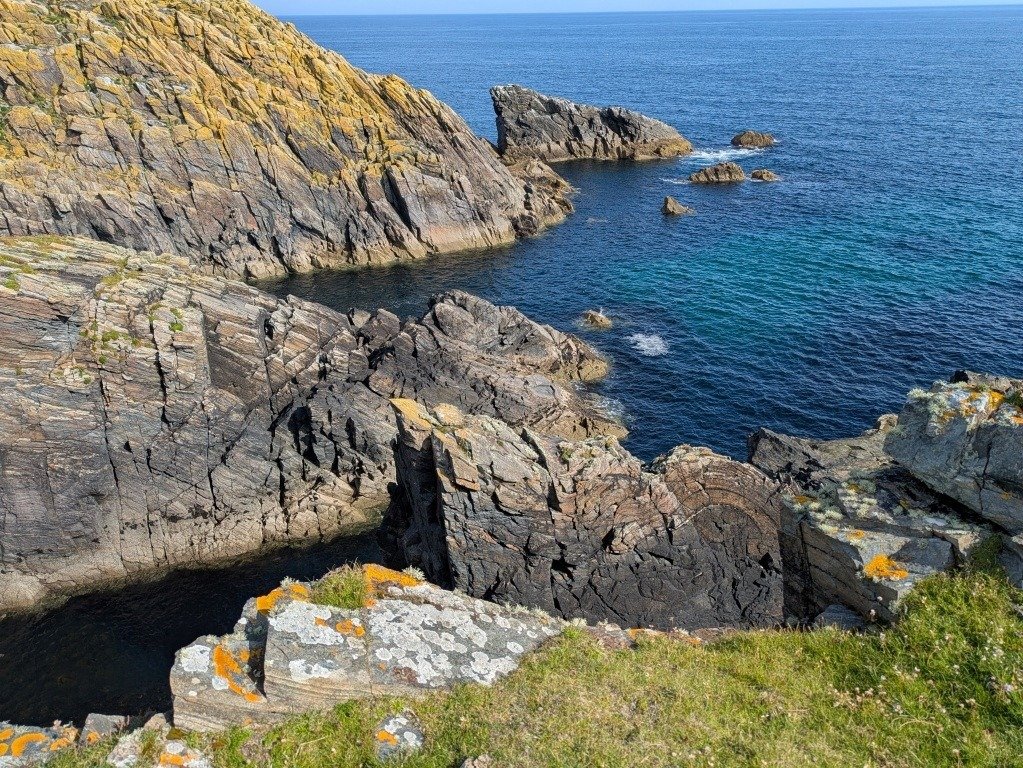
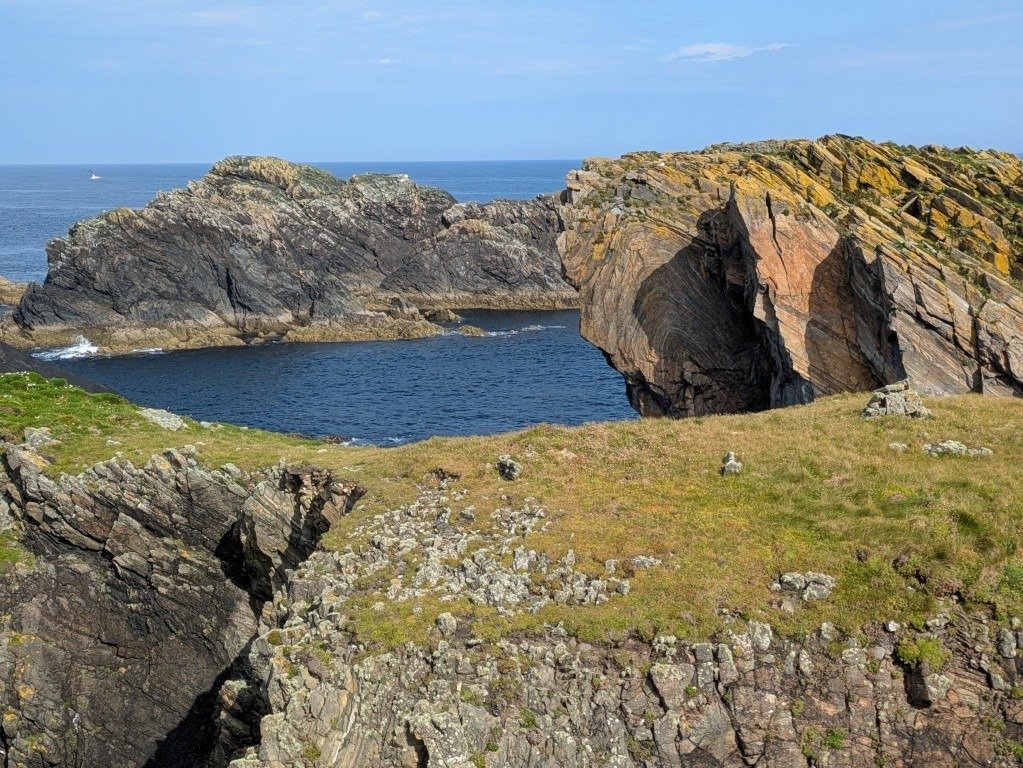
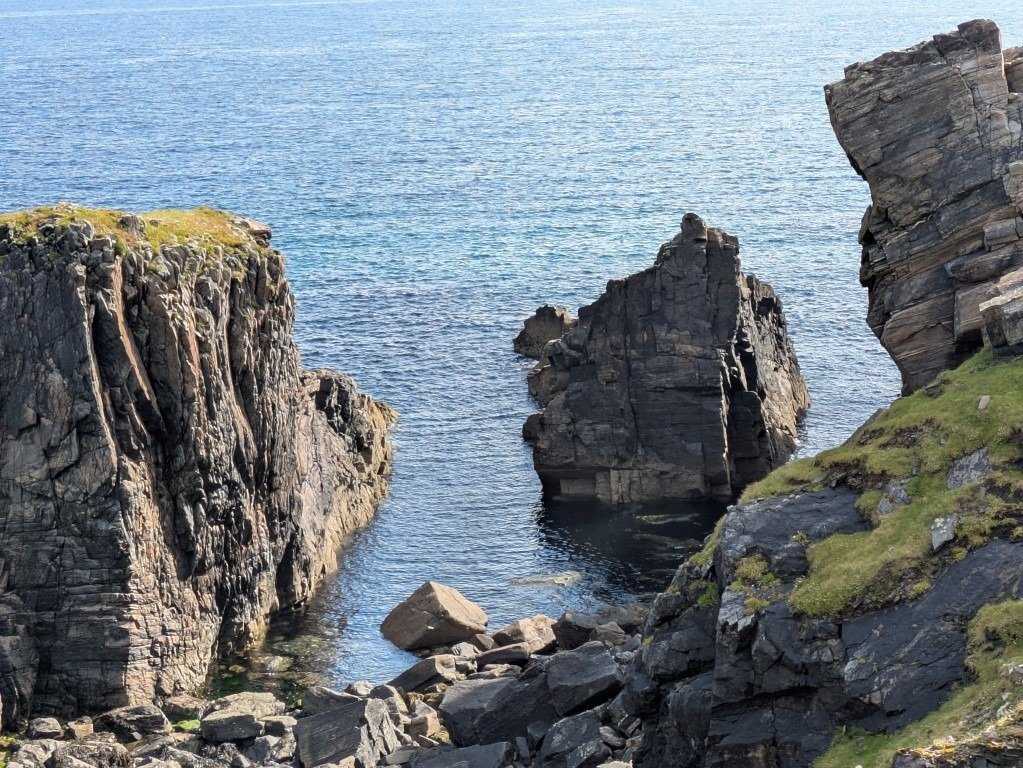
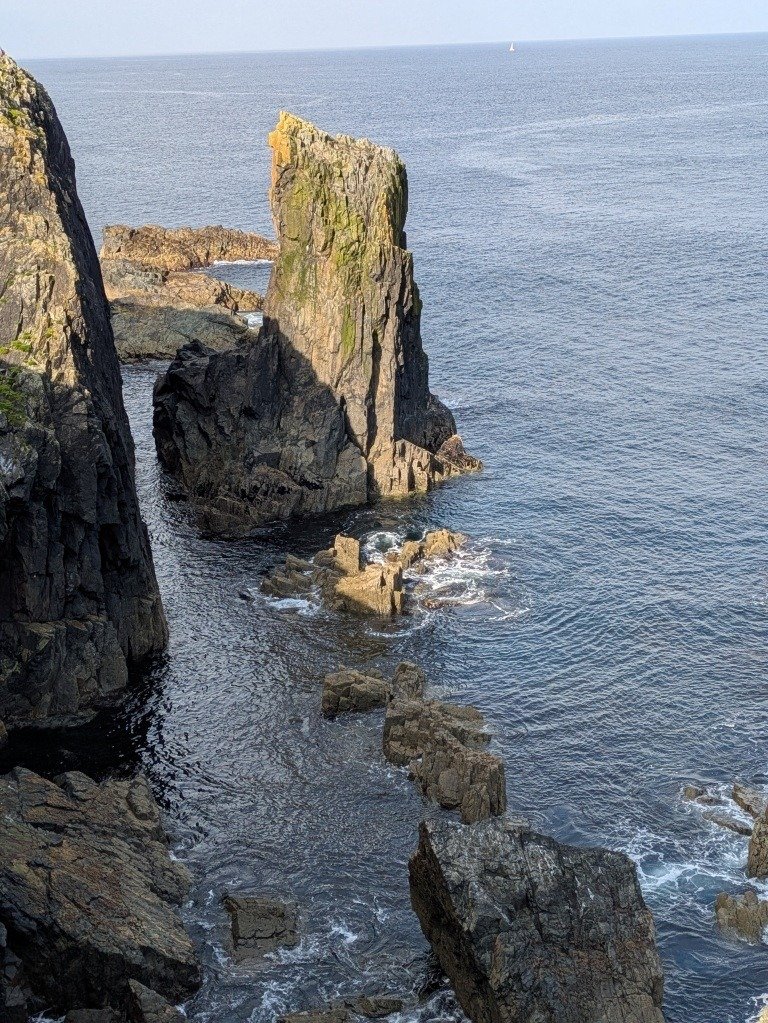
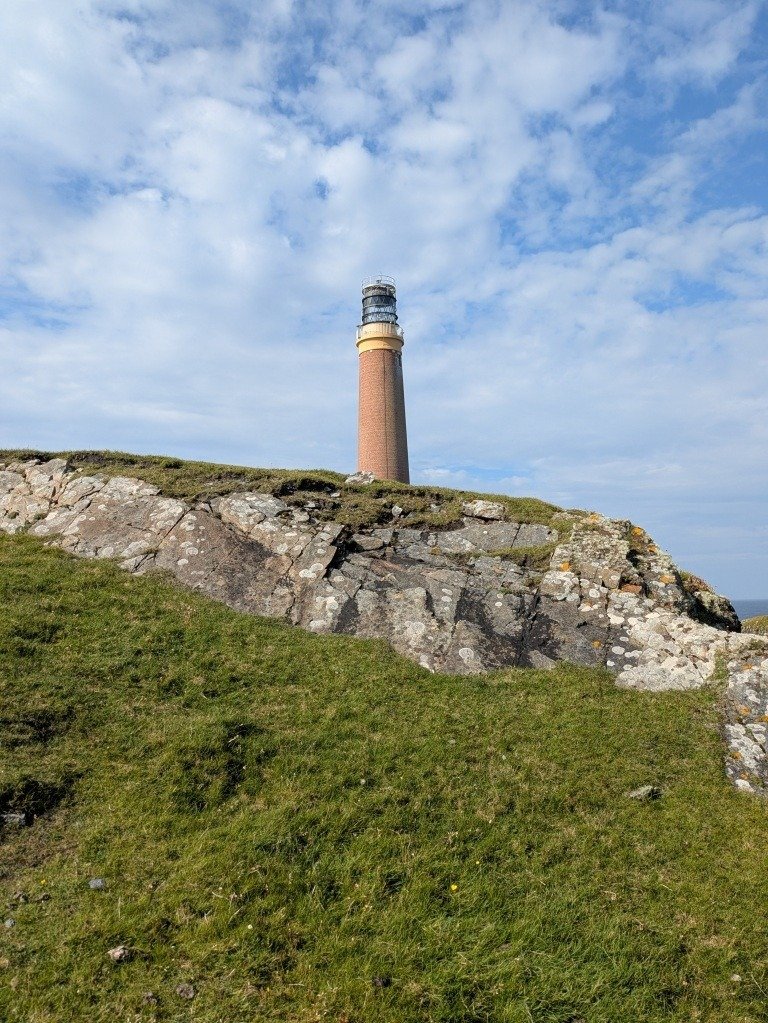
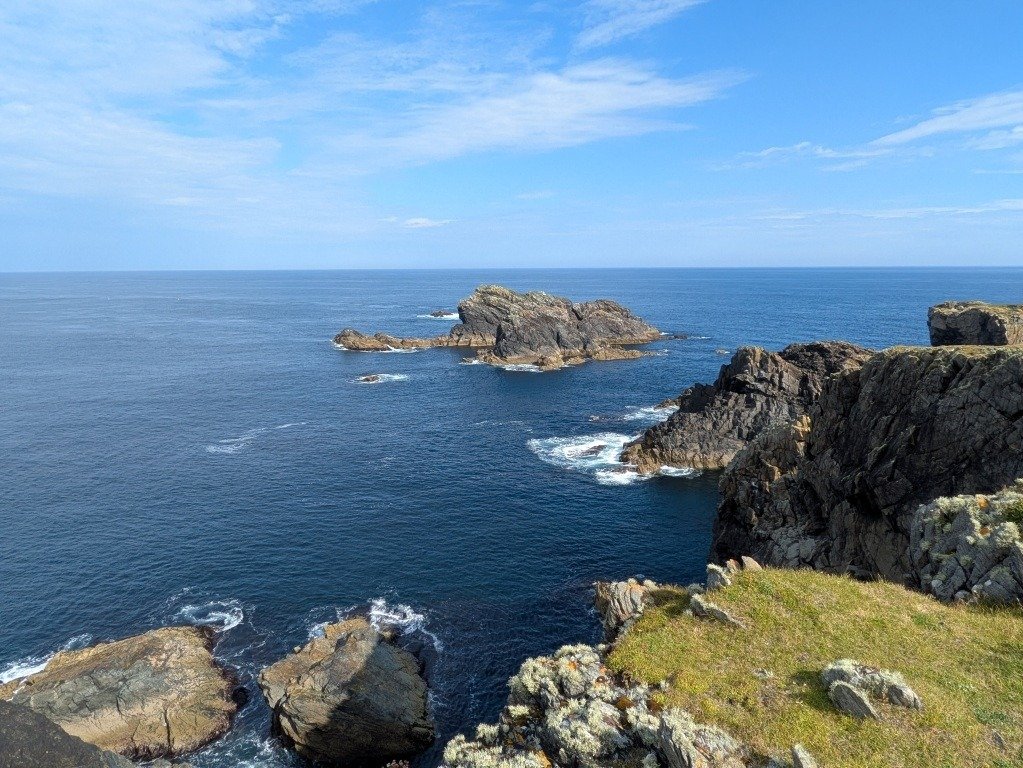
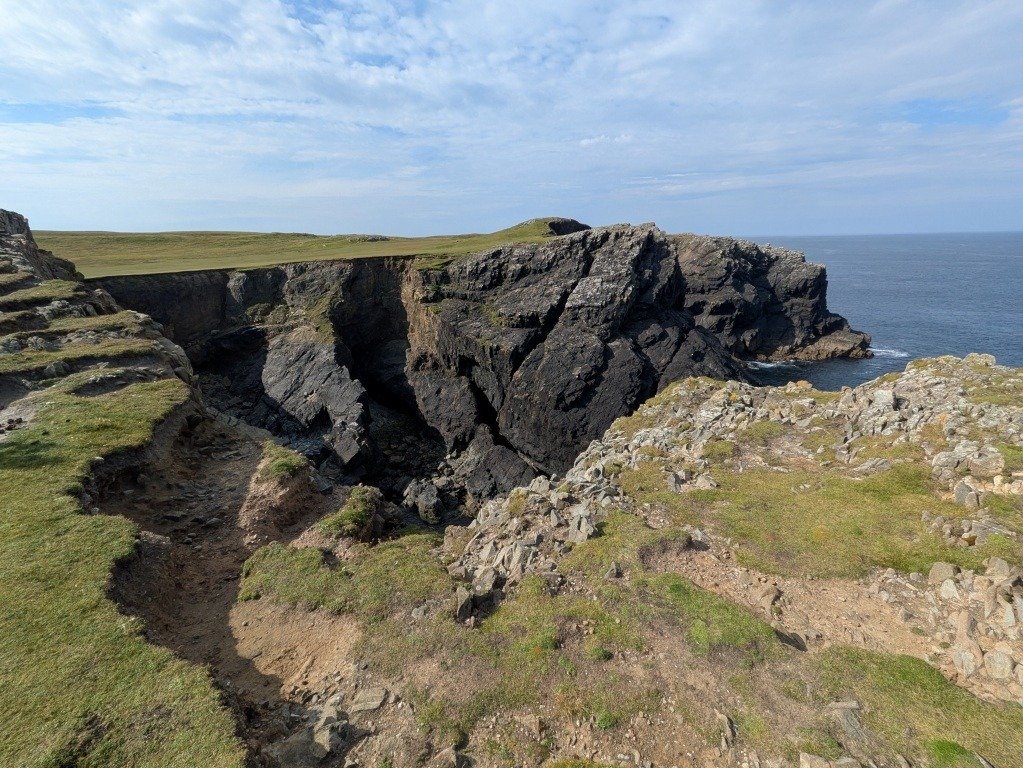
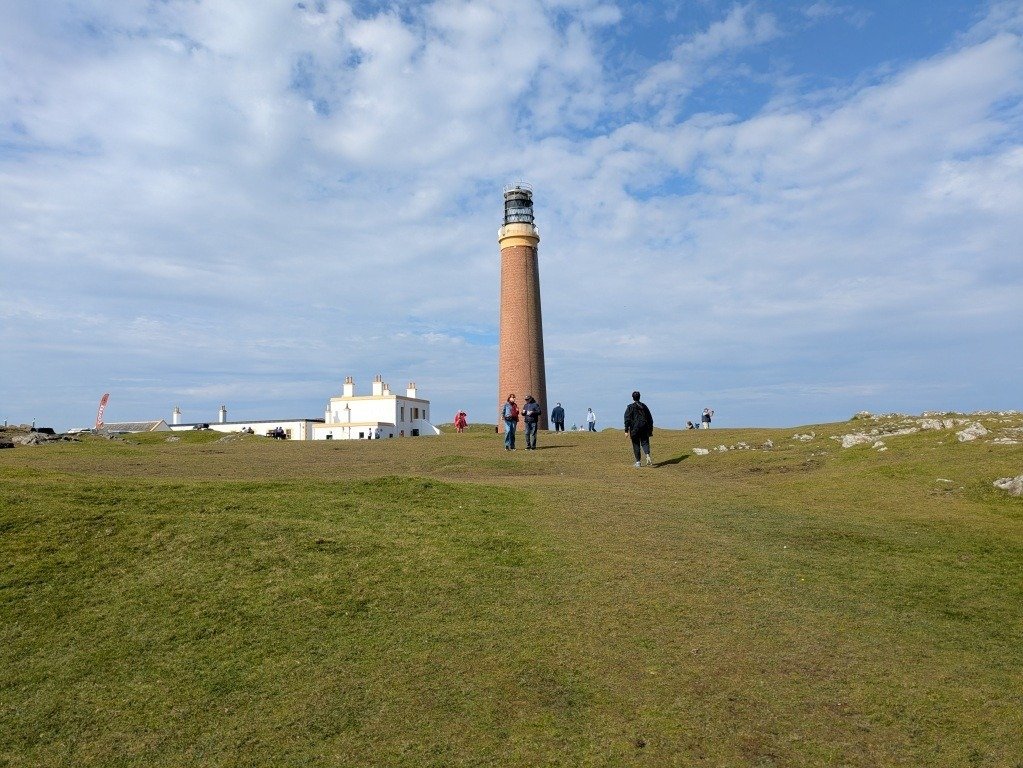
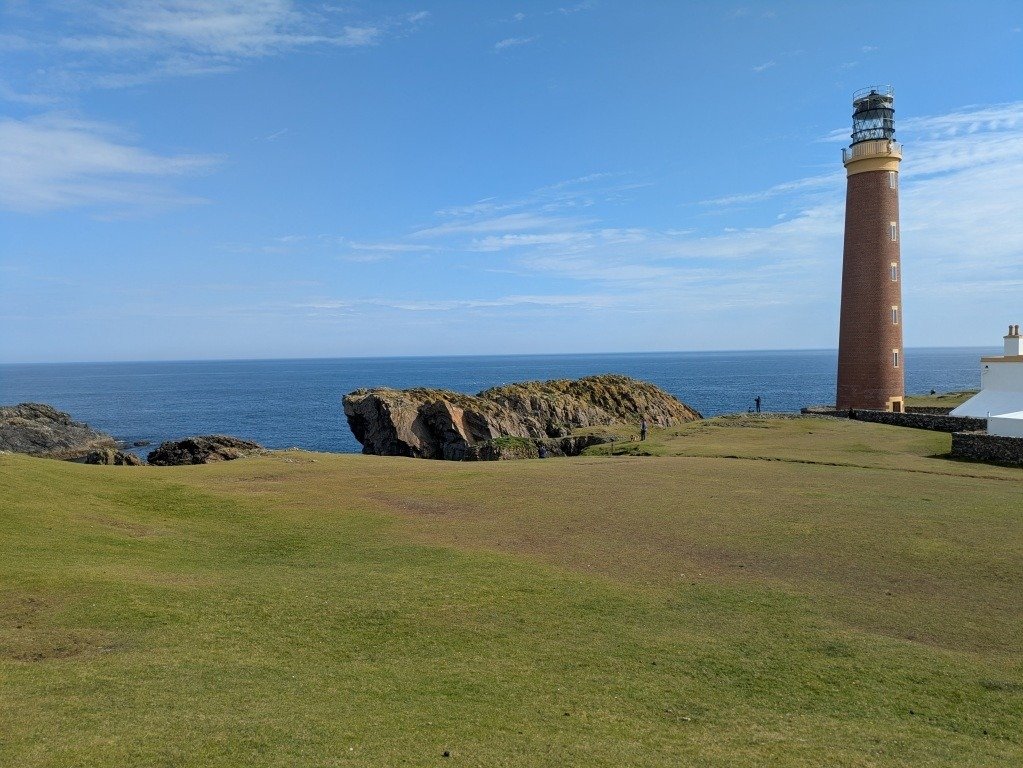
At 9:30am our tour of 30 boarded the bus for a visit to the Butt of Lewis right in the north of the Island. Our guide today was Carol with John our driver. Leaving the port, we observed a large bird flying past which was a rare Sea Eagle. These were extinct in Scotland but have recently been reintroduced on Lewis. Heading out of town we quickly found ourselves crossing low, open land covered in heather. These are the peat bogs which stretch right across this land. Peat is a very important to the Islanders as it is cut and used for heating by the crofters. Domestic cutting of peat is traditionally carried out on individual peat ‘banks’ which take the form of a cut peat face, often no more than 10 or 20m long, though sometimes extending for as much as 100m. The peat is cut using a special spade which has many different local names and designs, and each face is as tall as either one or two cuts from this spade. Each year the face retreats further across the peat bog as a thickness of approximately 10 cm is removed from the peat face in the form of individual ‘turves’ or ‘peats’. These are allowed to air-dry, heaped up for collection and then gathered to form a peat stack which represents the annual fuel supply. After about 45 minutes we reached the Butt of Lewis which is the most northerly point on the Island of Lewis, in the Outer Hebrides. The headland, which lies in the North Atlantic, is frequently battered by heavy swells and storms. We now stopped for a 40-minute visit at the small village Port of Ness (Nis in Gaelic) The harbour was constructed in the early 19th century. An enlargement was built in 1893, with a breakwater added the following year. Port Nis is at the northerly end of the A857 road. A small, interesting harbour with the entrance through a rocky cliff face and rocky islet. One end of the harbour leads onto a sandy northeast facing beach. Because it faces out into The Minch at the very north of the Hebrides, Port of Ness has been designed to allow for the greatest possible protection from storms. Now becoming sunny with temperature rising towards 20c it was great to be able to wander down to the harbour and beach. We visited the small Harbour View art gallery in the village where we met the owner and artist. Some interesting paintings of the surrounding area and wildlife. Back on the bus we took the single-track road out to the nearby lighthouse on the headland. It was engineered by David Stevenson in 1862. Unusual for a lighthouse in Scotland, it is constructed of red brick and is unpainted. The station’s claim to fame, according to the Guinness Book of Records, is that it is the windiest spot in the UK. In 1998the light was automated on 30 March. Today’s optic system is a Bi-Form setup, consisting of a pair of 2 Tier, high-powered LED marine lanterns flashing in synchronisation. A wonderful wild place with the rocks and ocean below. Many birds out on the rocks including gannets, cormorants and gulls. Stopped here for about 45 minutes before commencing on our return journey to Stornoway where we arrived at 1pm.
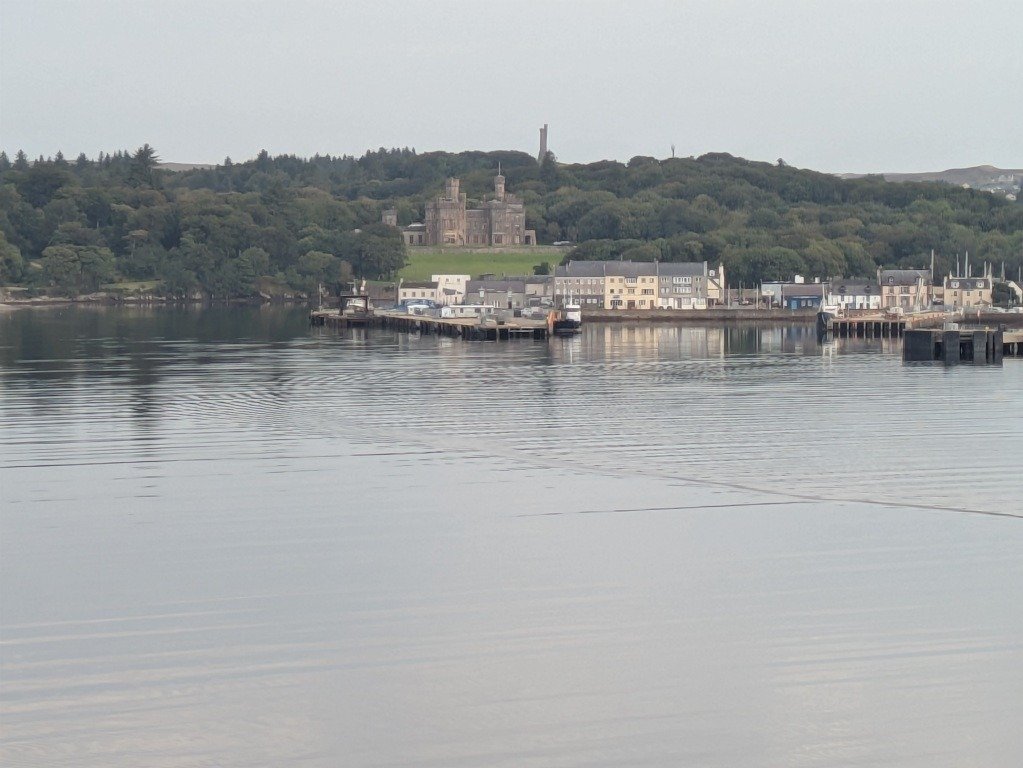
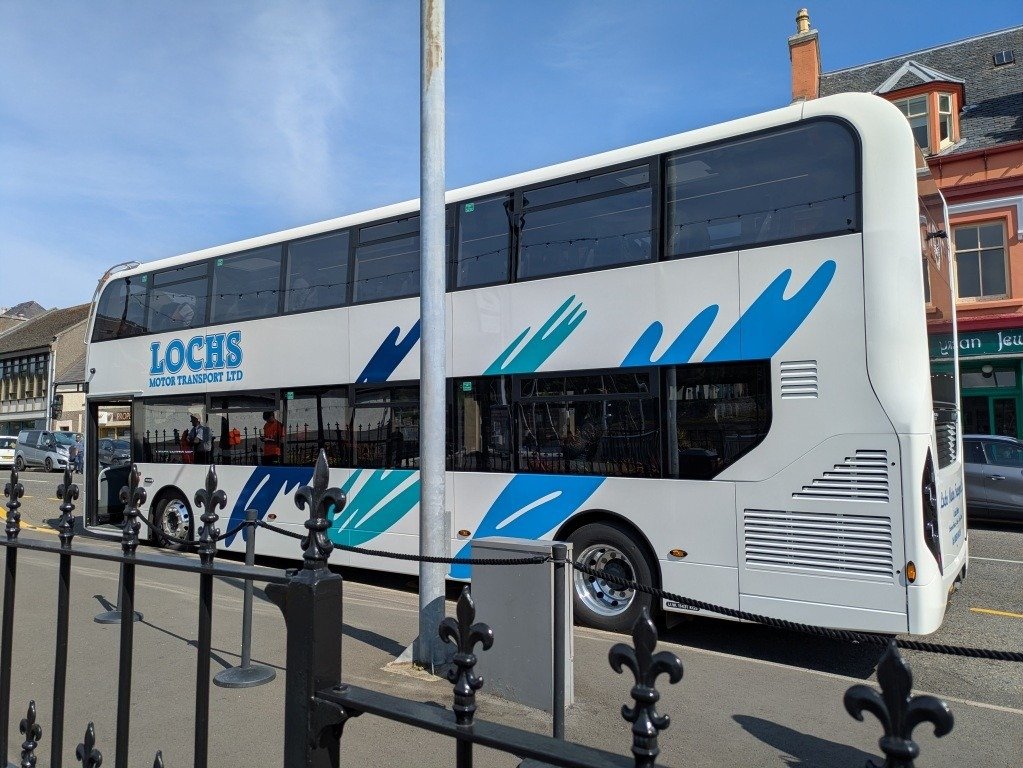
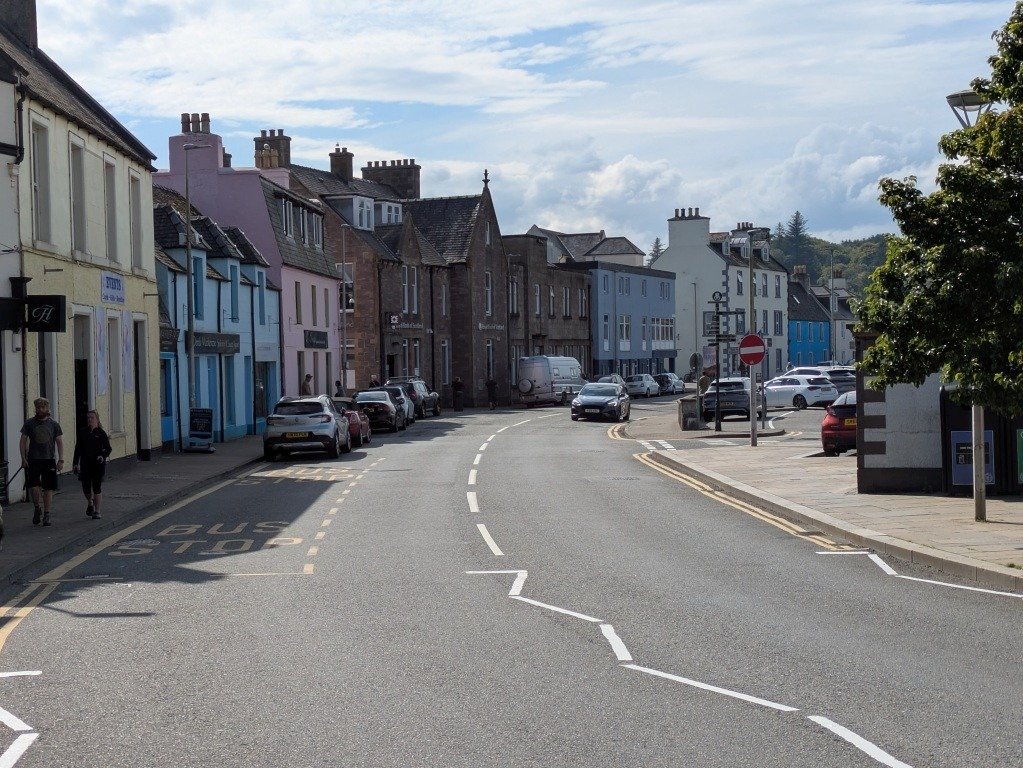
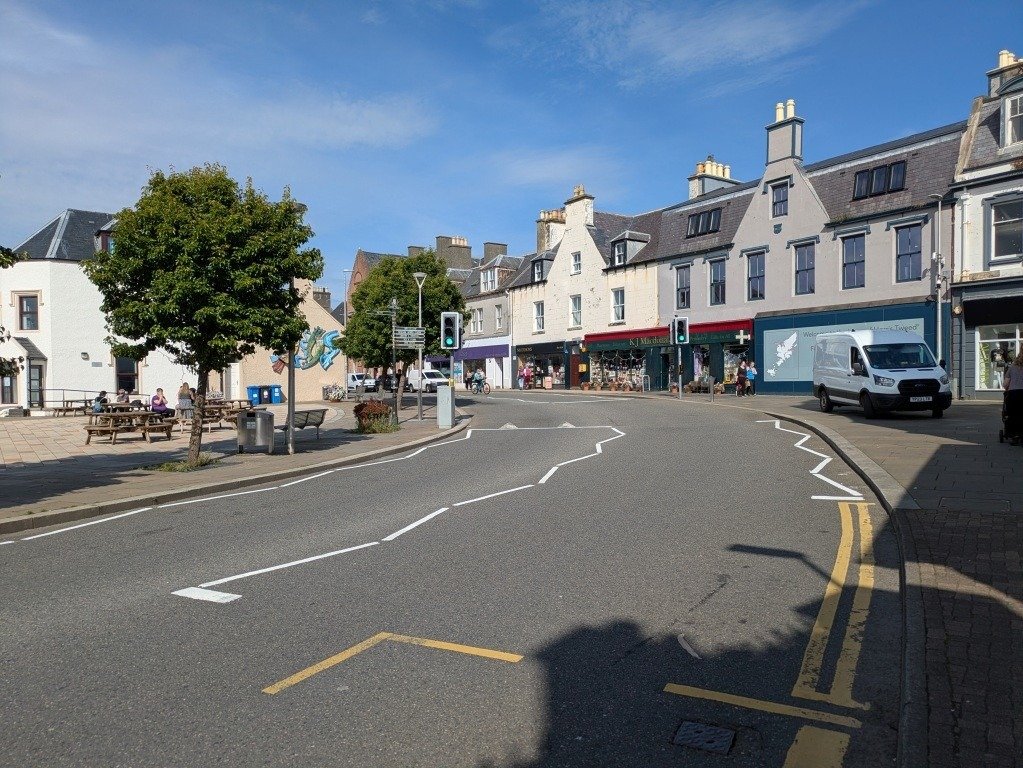
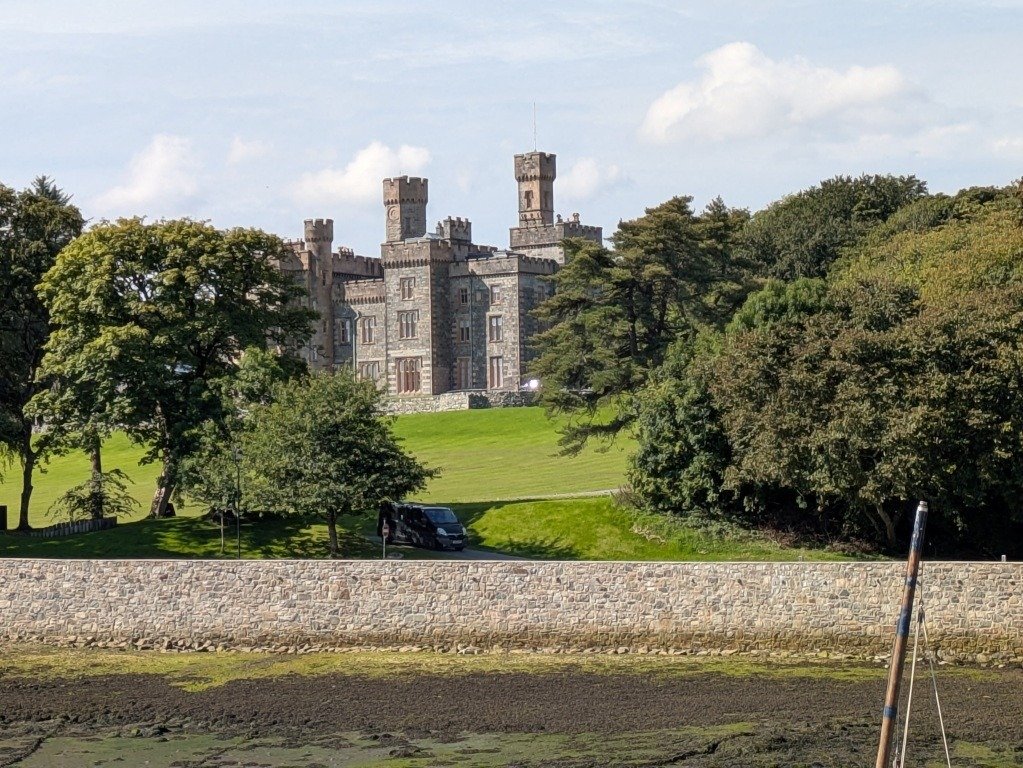
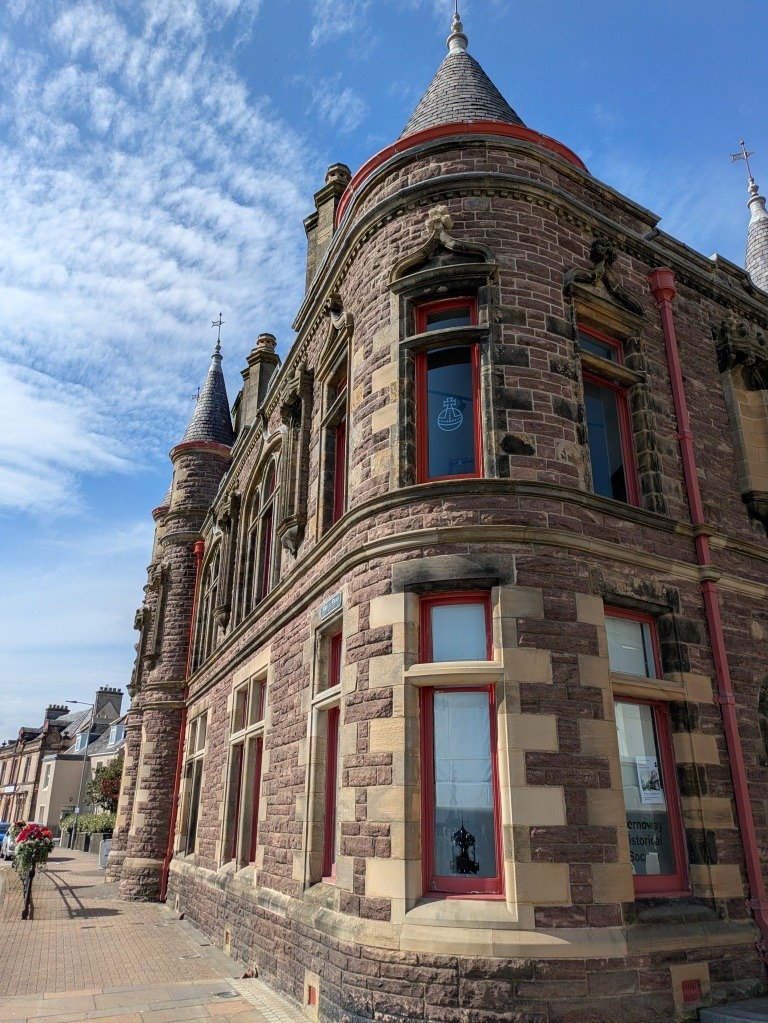
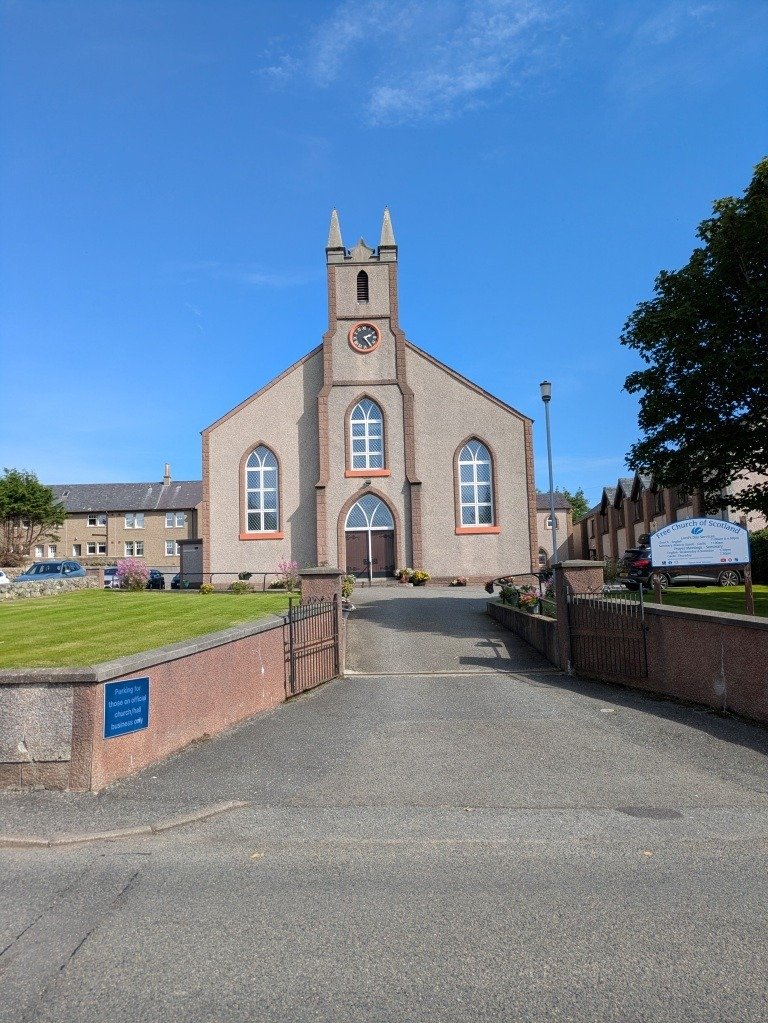
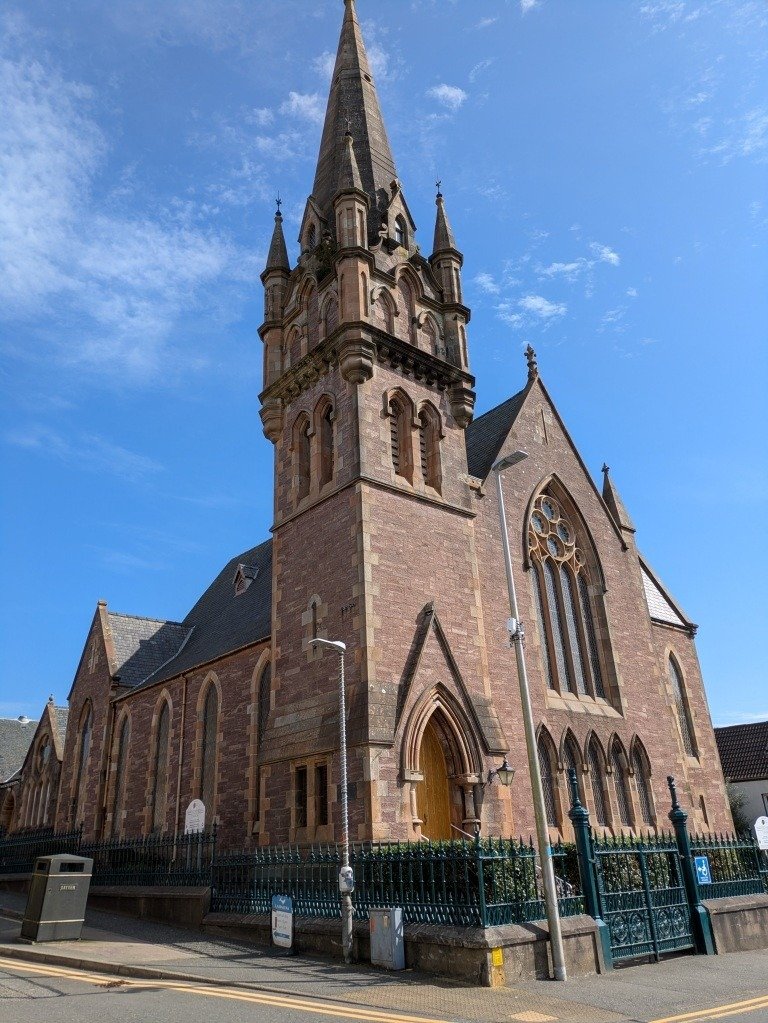
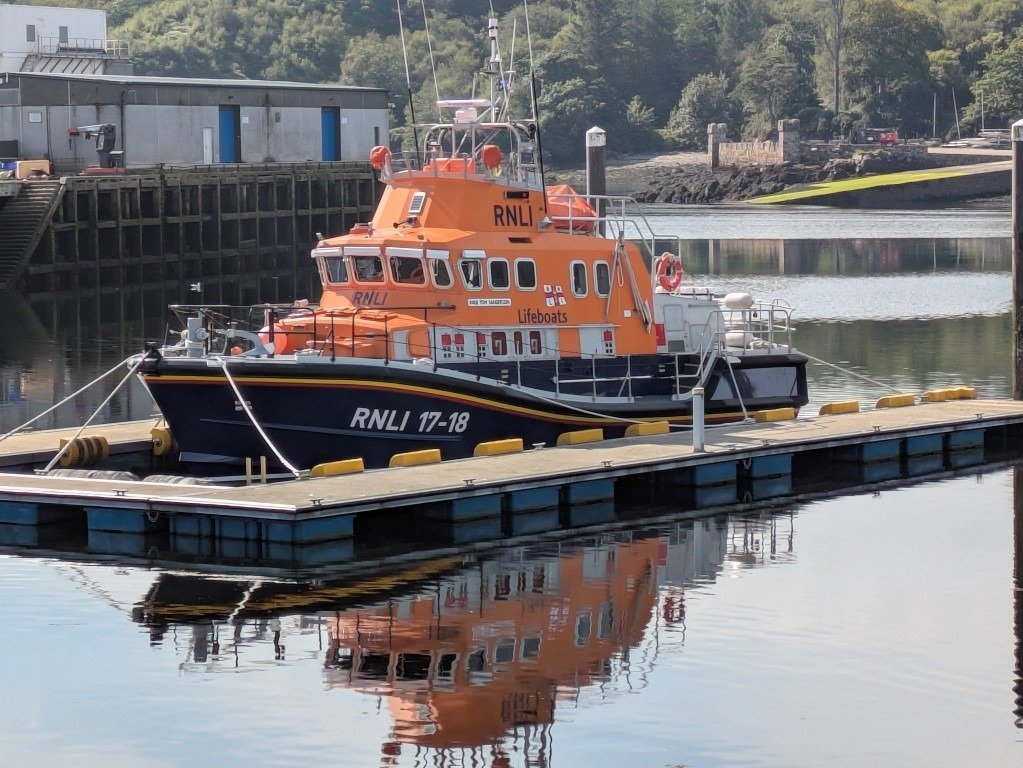
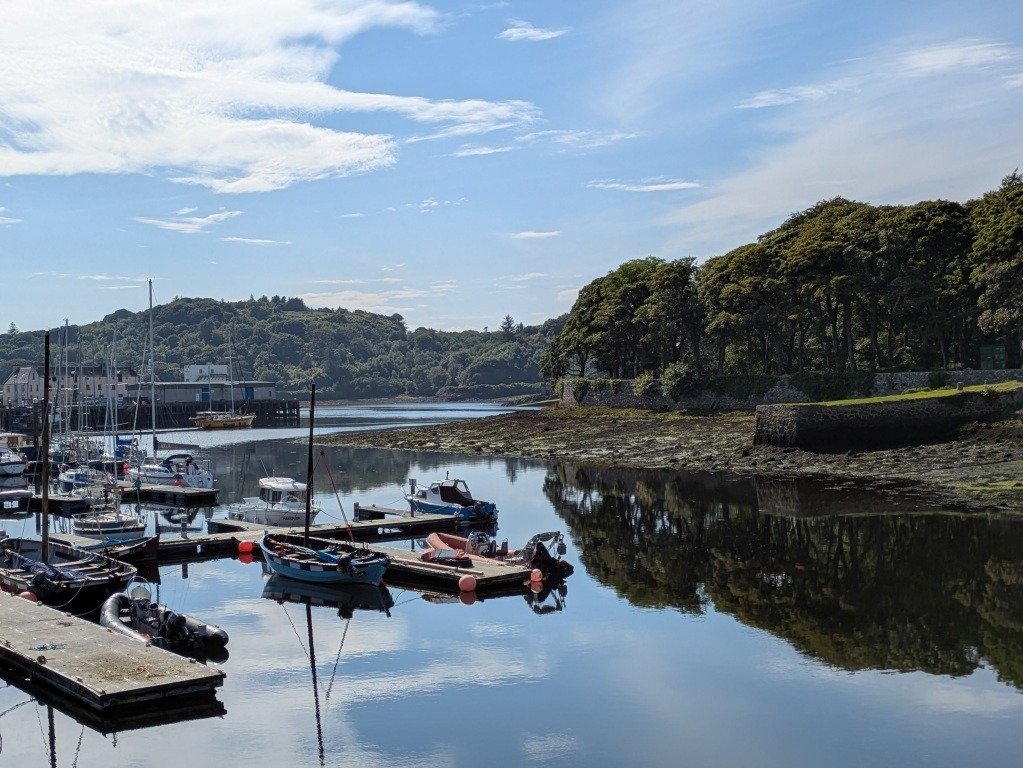
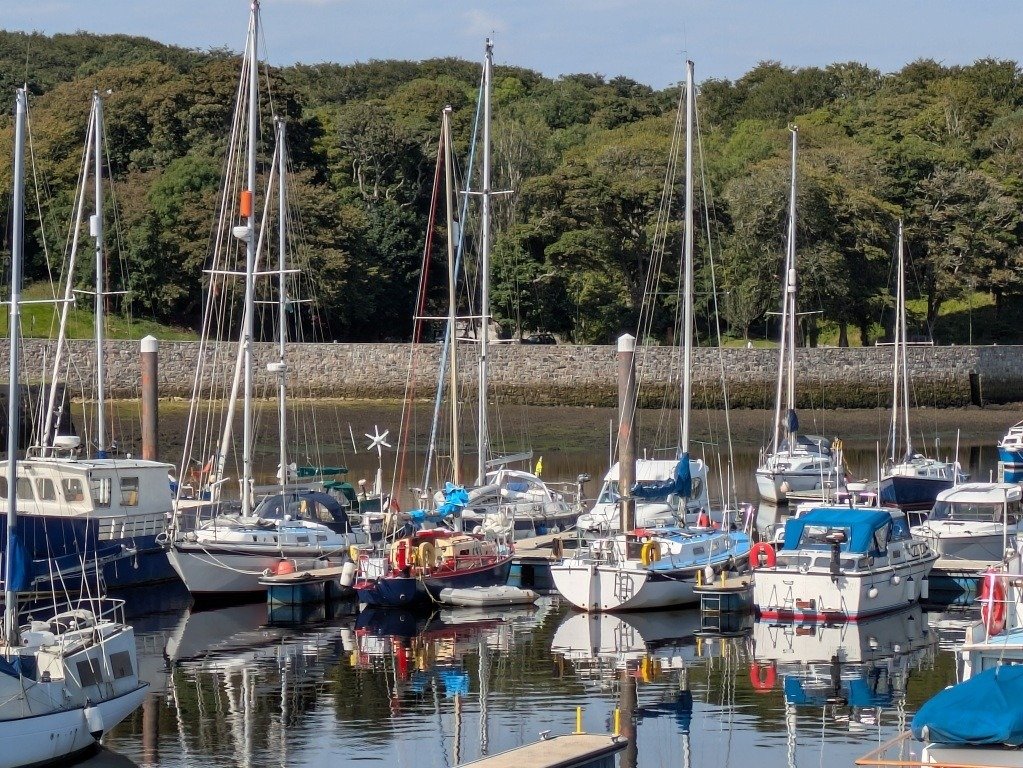
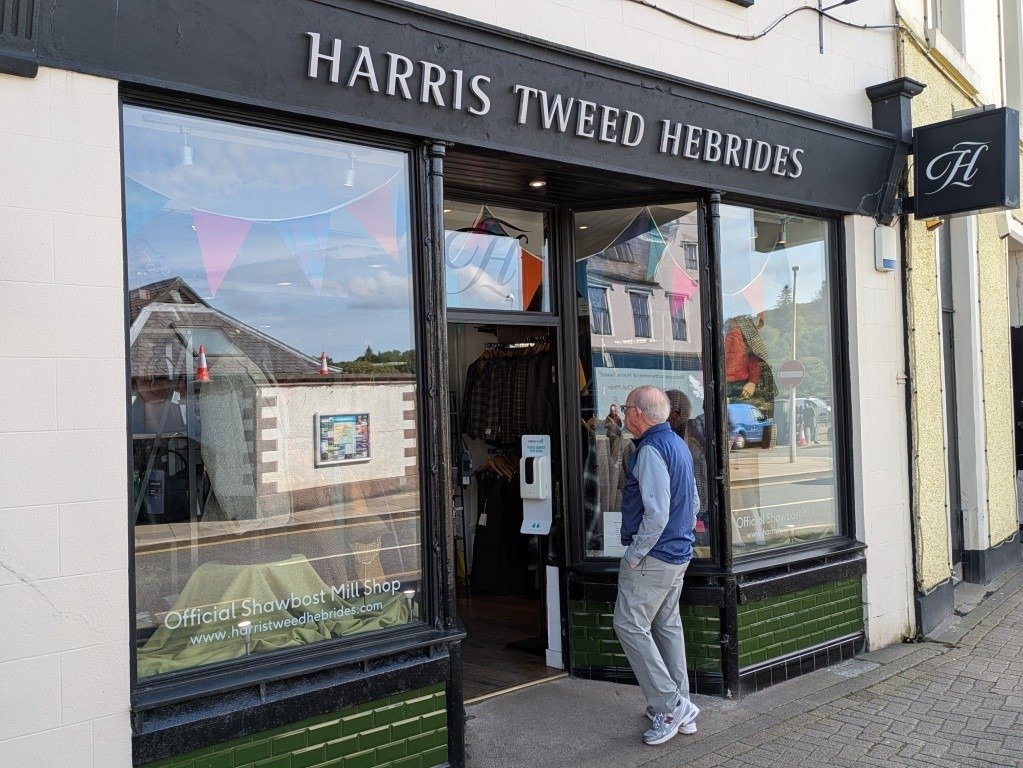
A brief 45-minute respite before heading back out on the shuttle bus into Stornoway. Ten minutes took us into the town and harbour. An interesting place with churches and tourist shops. Harris Tweed is the famous product from here. A good view of the RNLI lifeboat in the harbour but unfortunately the shop was closed. Lews castle and grounds were just across the water but unfortunately not enough time to explore them. After an hour reboarded the shuttle bus for our return.
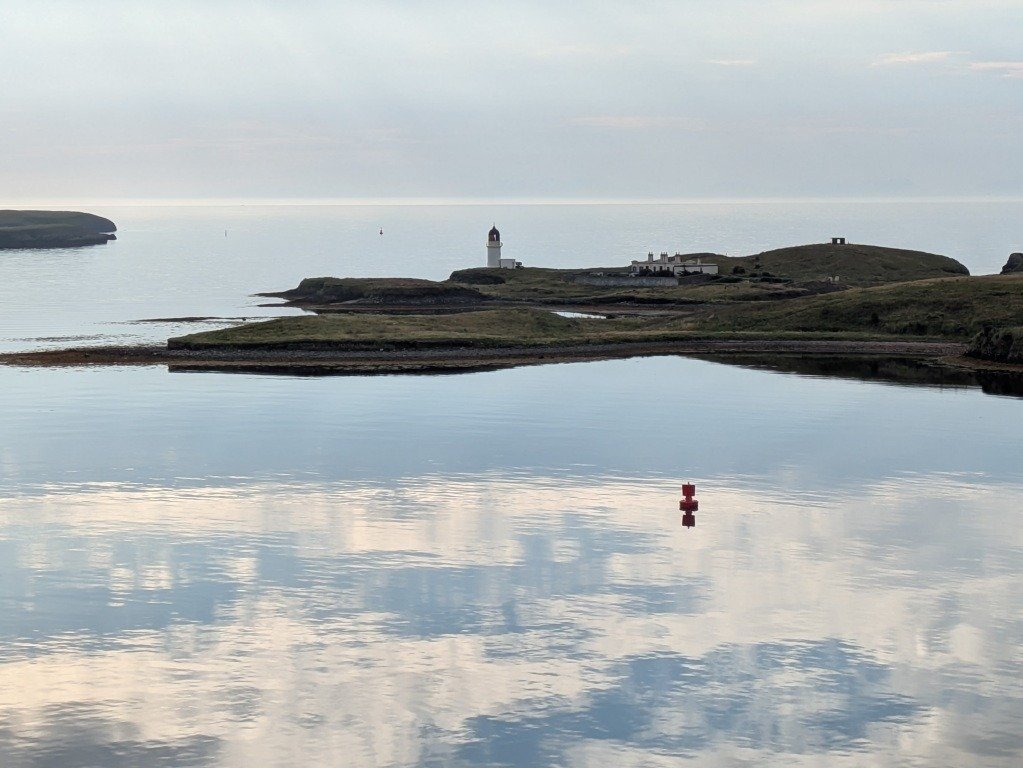
Highlight of the day: The lighthouse