Londonderry
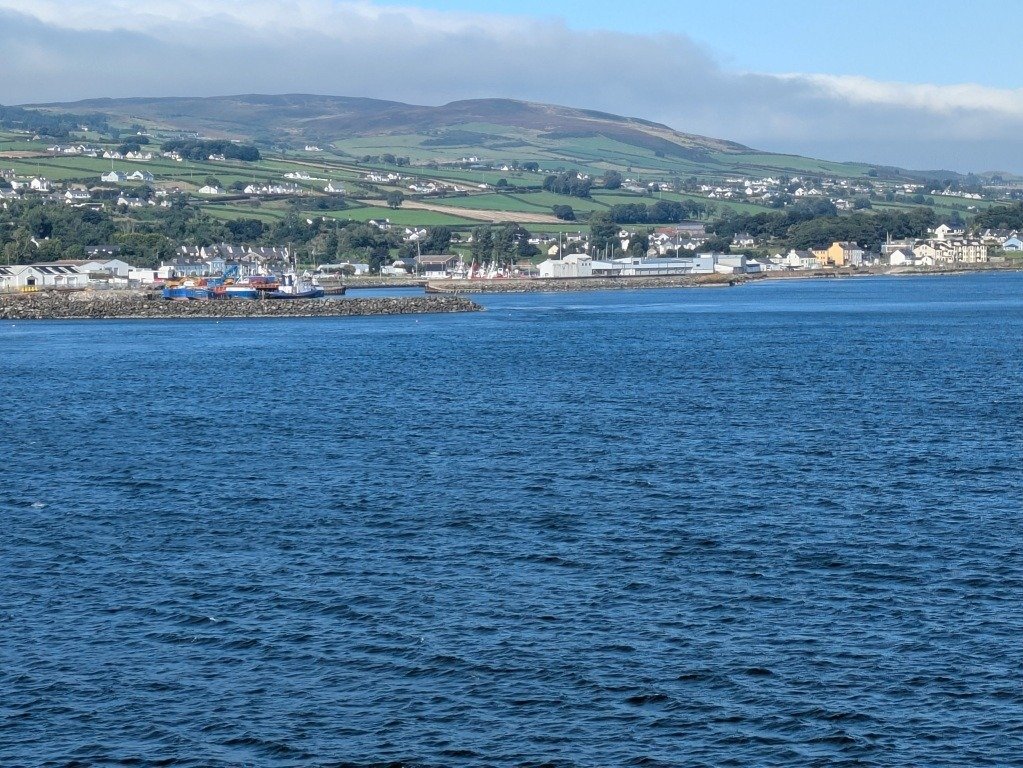
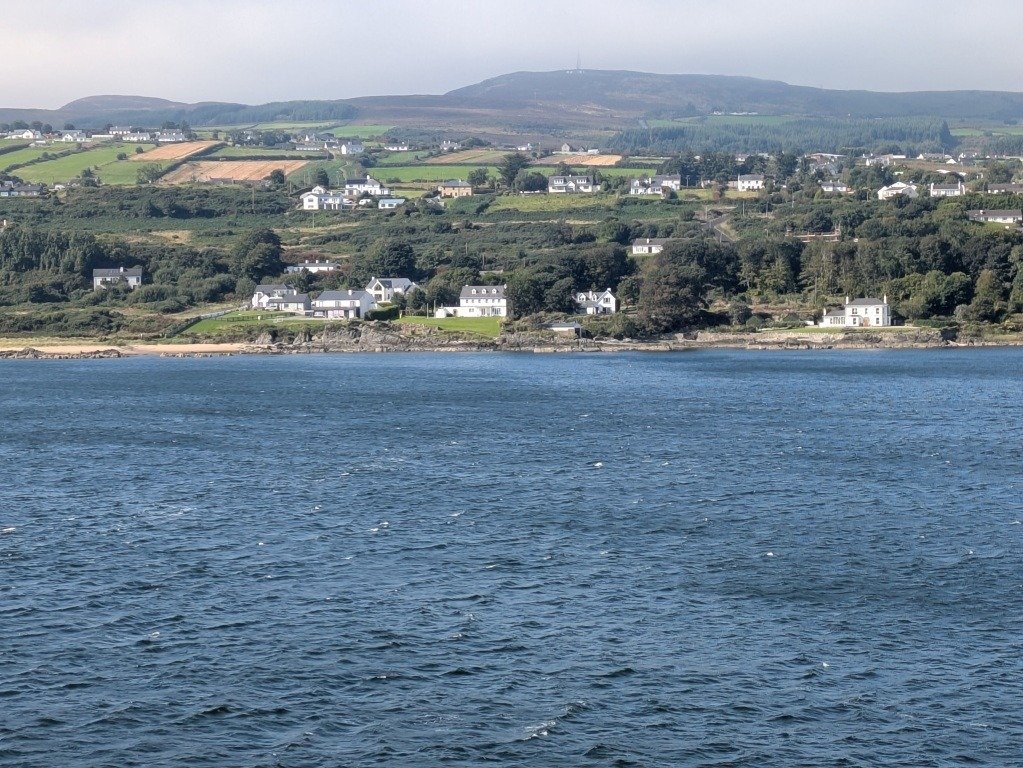
Early Friday morning sailing up the river Foyle with clear skies and temperature around 15c. We are unable to go right up the lough into Londonderry so anchored off Greencastle by 8am. Greencastle is a commercial fishing port located in the north-east of the Inishowen Peninsula on the north coast of County Donegal. The port is on the western shores of Lough Foyle.
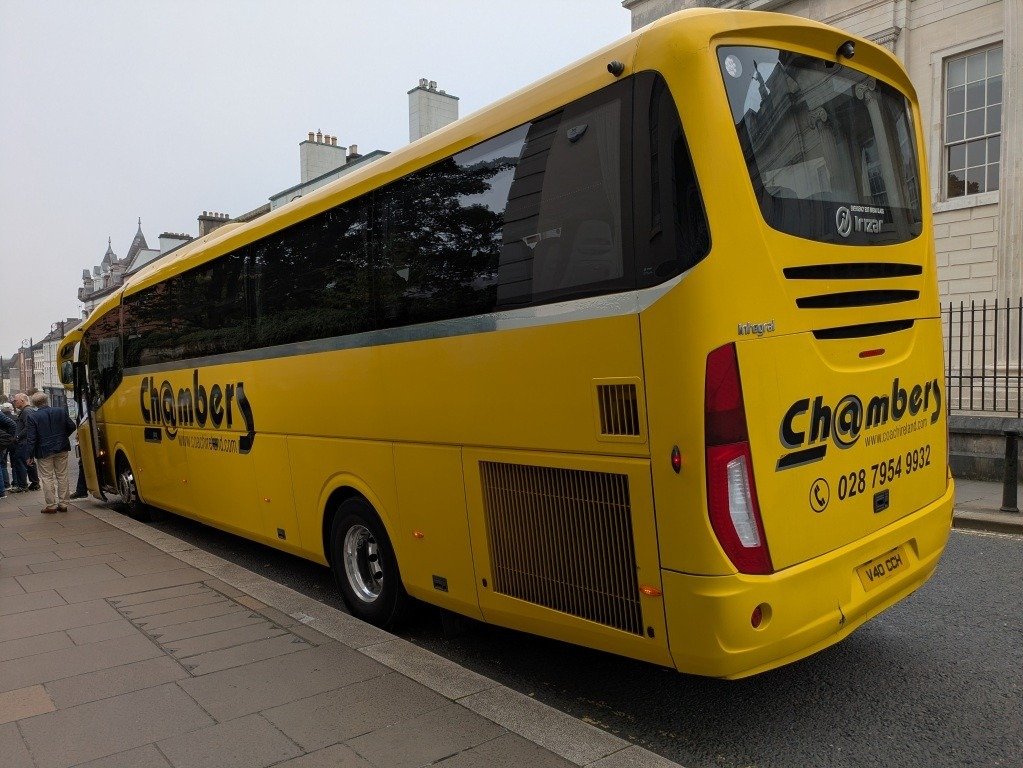
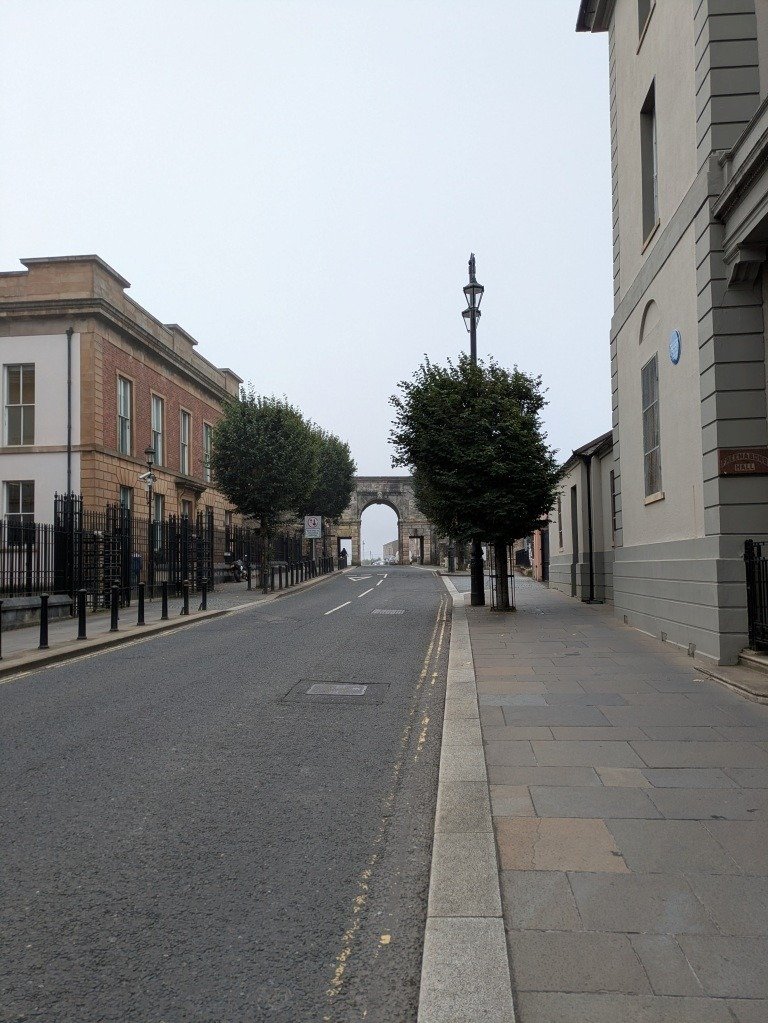
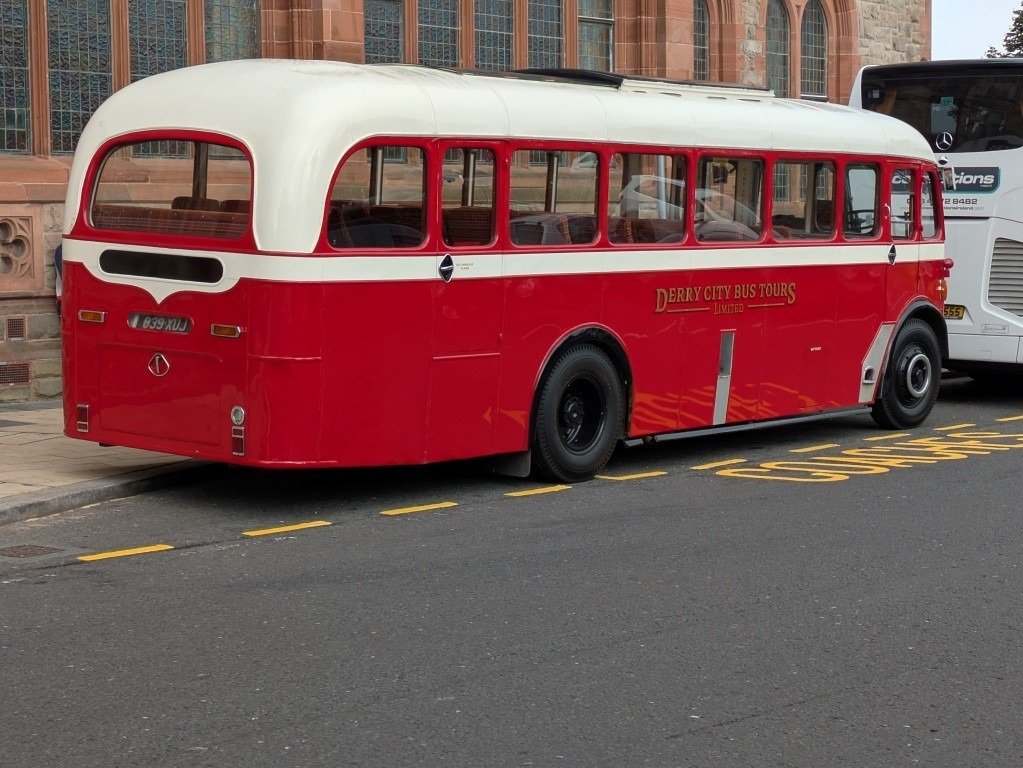
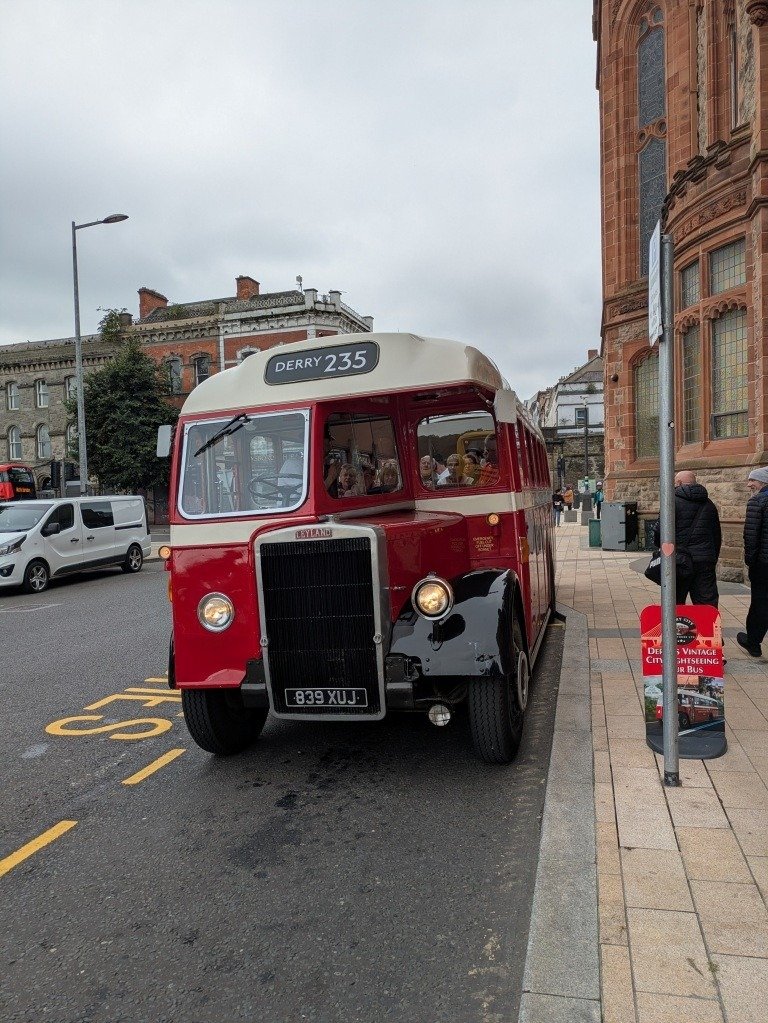
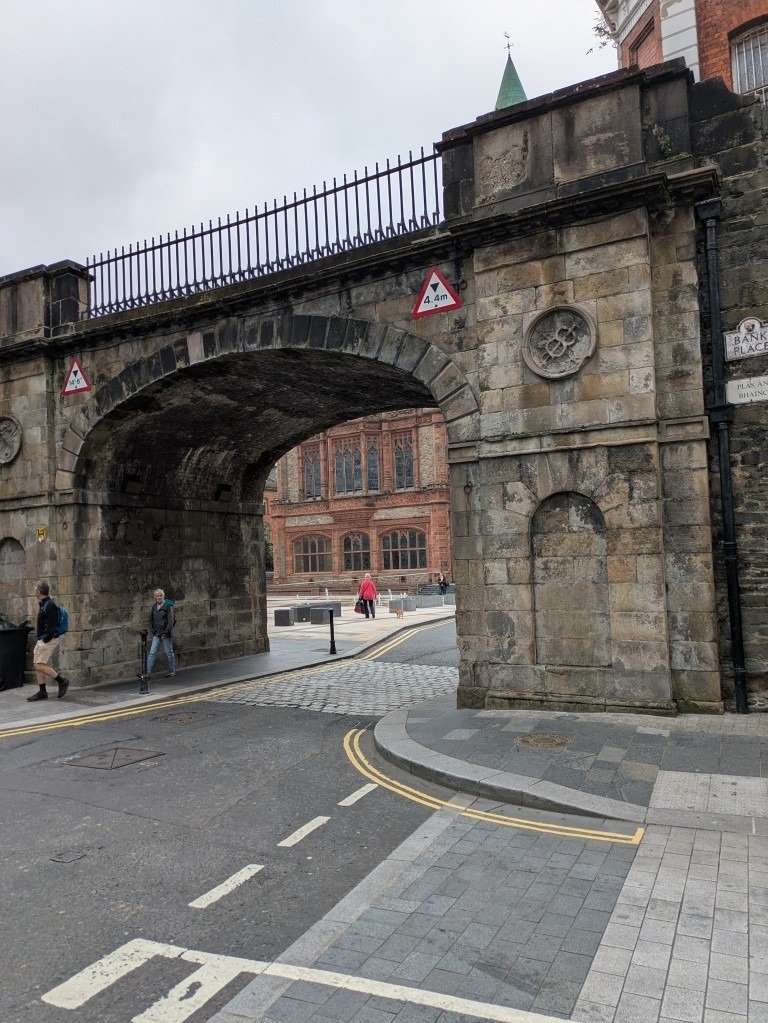
At 08:30am 34 of us set out on the Londonderry walking tour. Tendered ashore to Greencastle where our bus was waiting. Our guide today was Robin and our driver Mark. Of interest is the fact that we started in Republic of Ireland then drove along the banks of the Foyle crossing over the border into Northern Ireland on the way to Derry. There used to be a customs post here but now you just drive by! The weather slowly became misty as we neared Derry and stayed that way for the morning. Arrived in the centre of Derry, going through a very narrow bridge under the city wall, and parked near the cathedral at 09:25am.
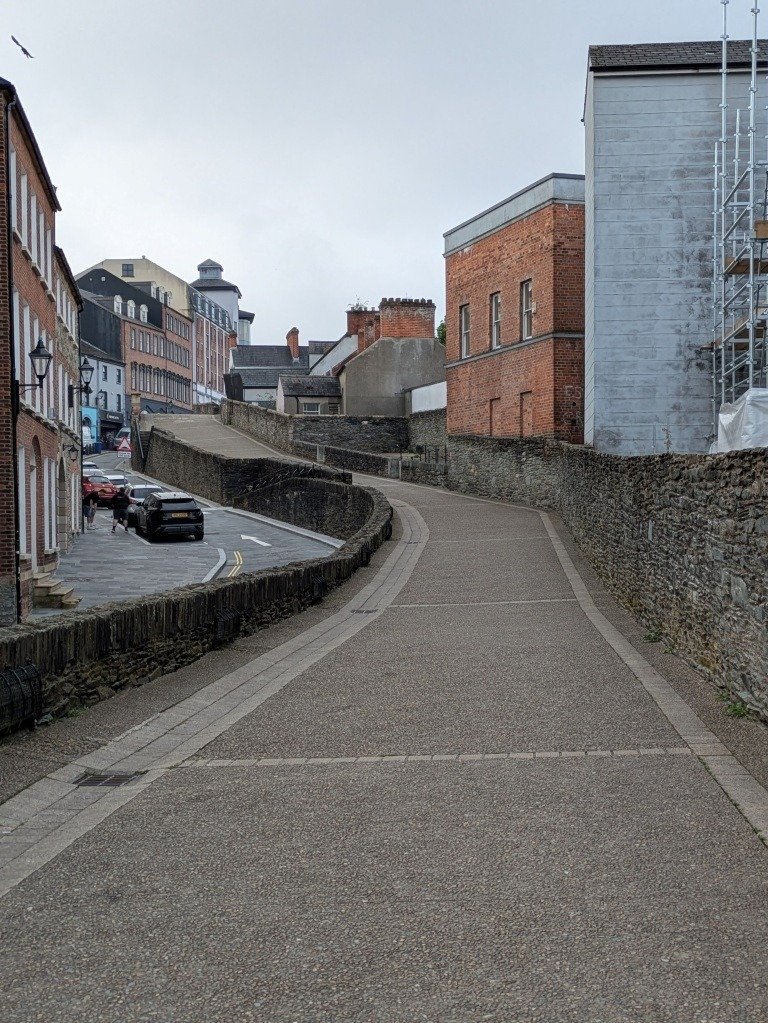
Derry, officially Londonderry, is a cathedral city in Northern Ireland. The city now covers both banks of the River Foyle. Cityside and the old walled city are on the west bank and Waterside is on the east, with two road bridges and one footbridge crossing the river in-between. The population of the city is around 85,000 making it the second-largest city in Northern Ireland after Belfast. The name Derry comes from the Irish word doire, meaning “oak grove.” “London” was appended as a prefix to the name in 1613 when King James 1 granted the city a royal charter. Centred on a hill on the west bank of the River Foyle, the old city is partially contained by well-preserved city walls (completed in 1618) 1.2 miles (2 km) in circumference.
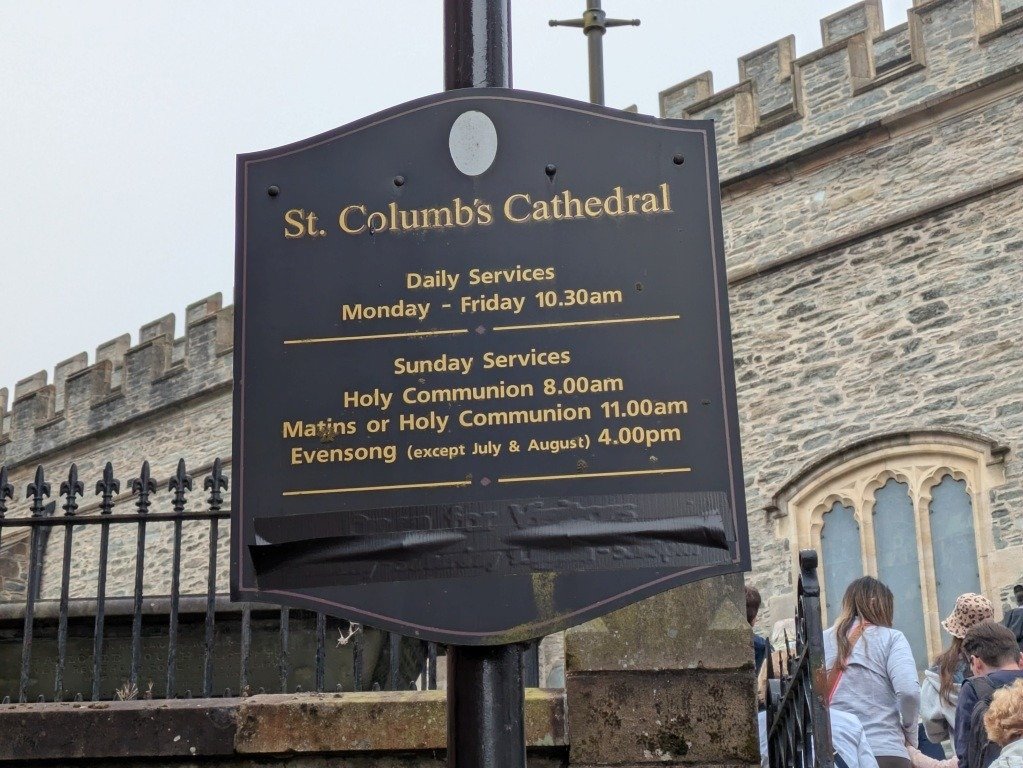
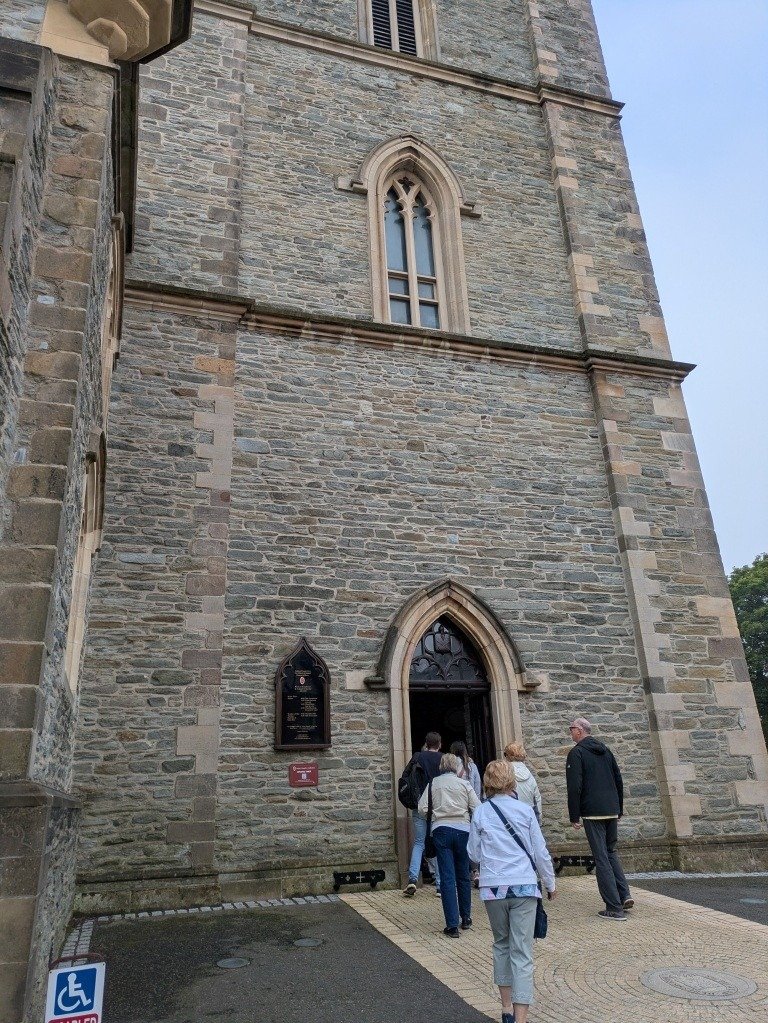
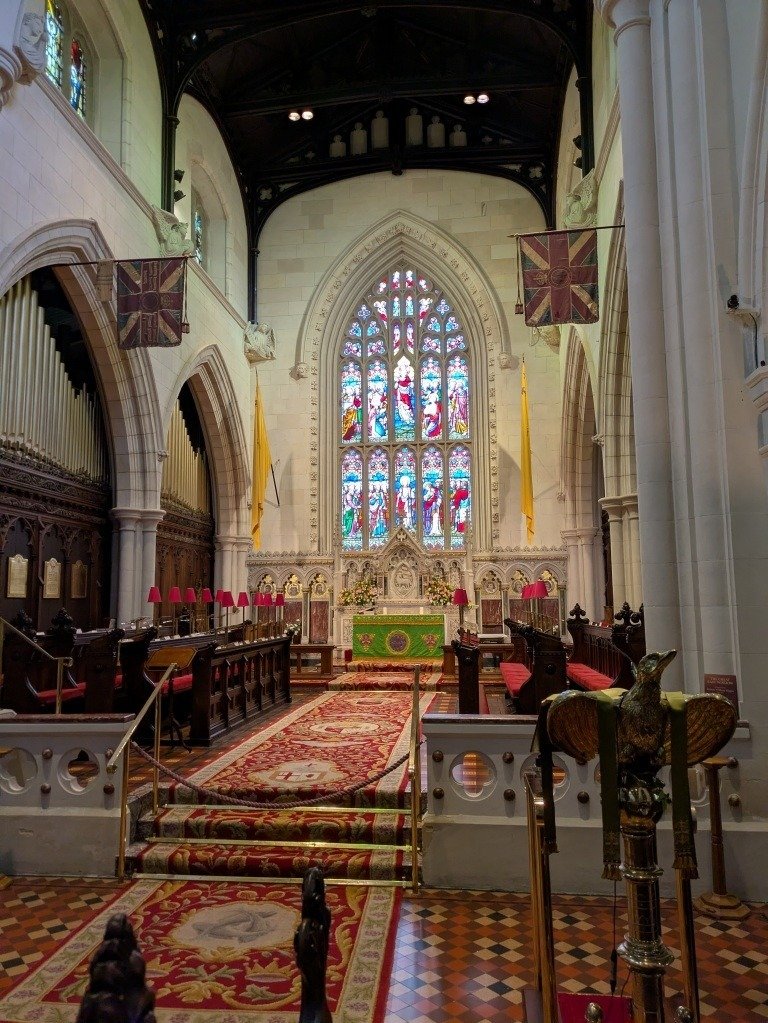
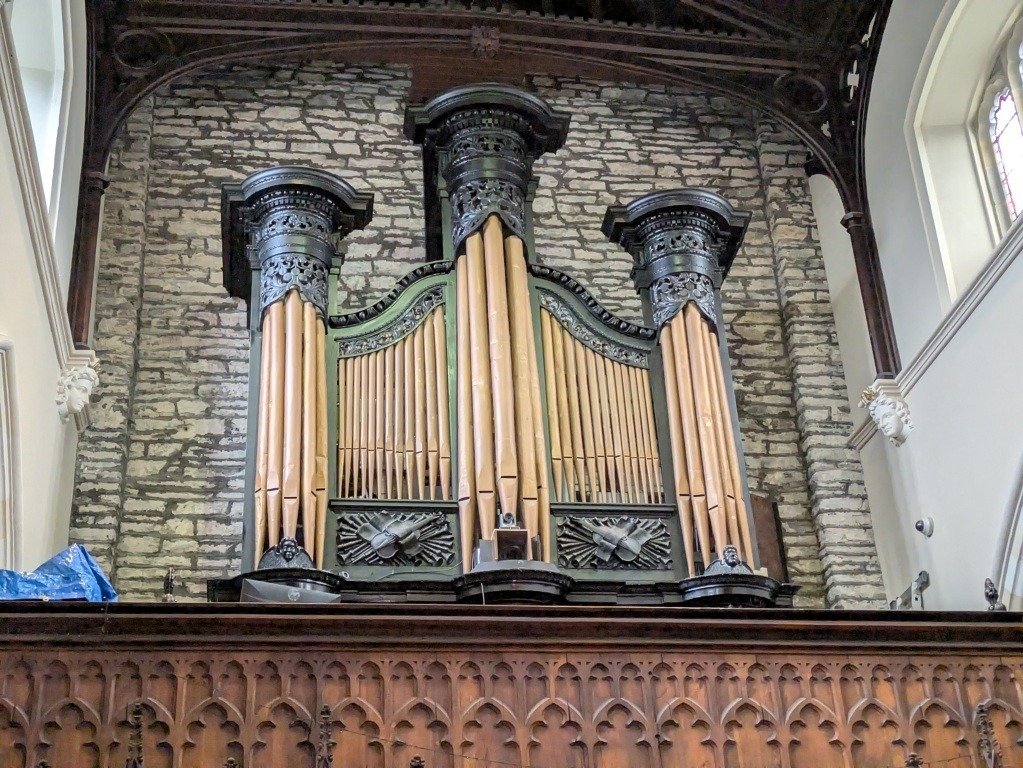
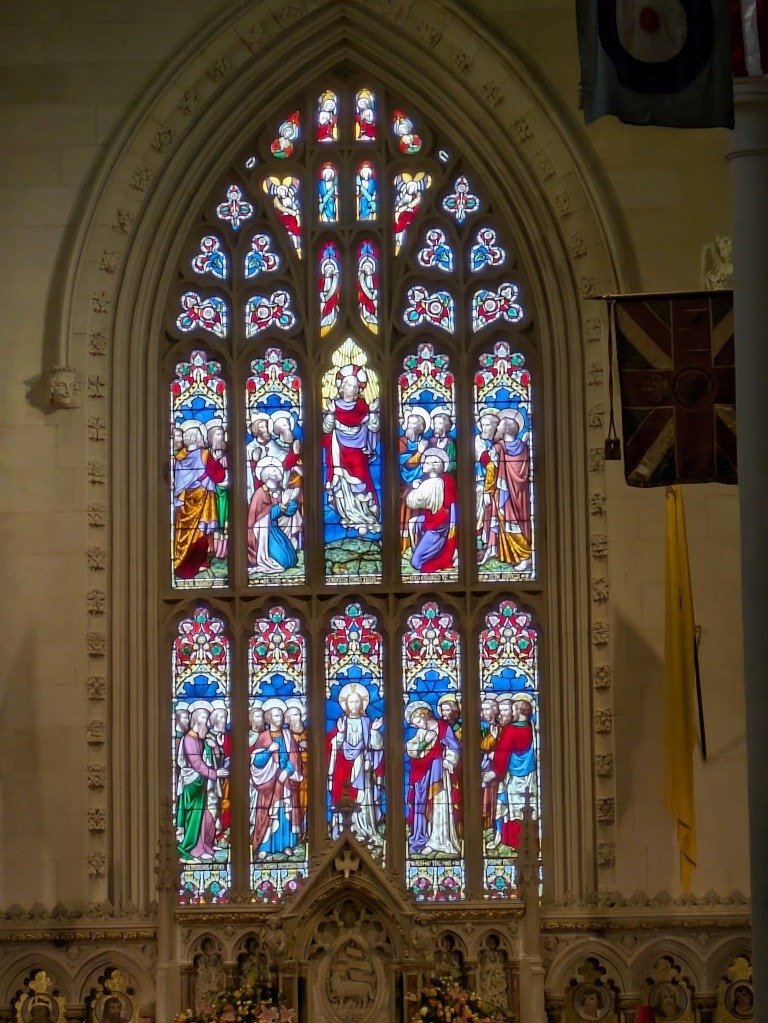
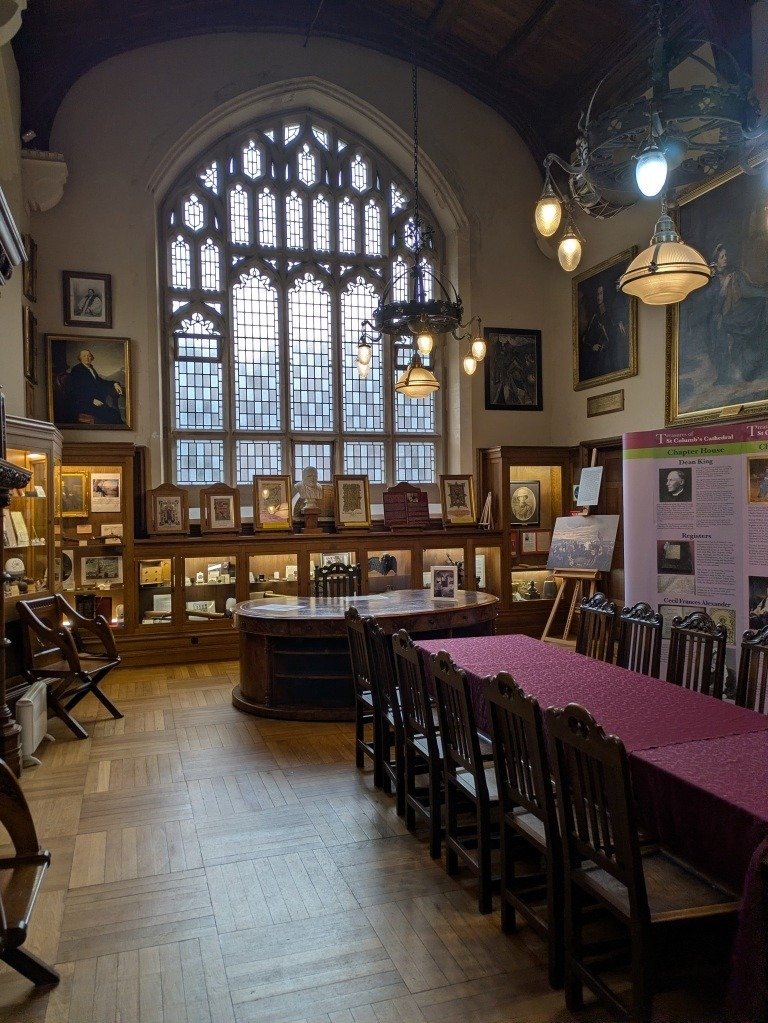
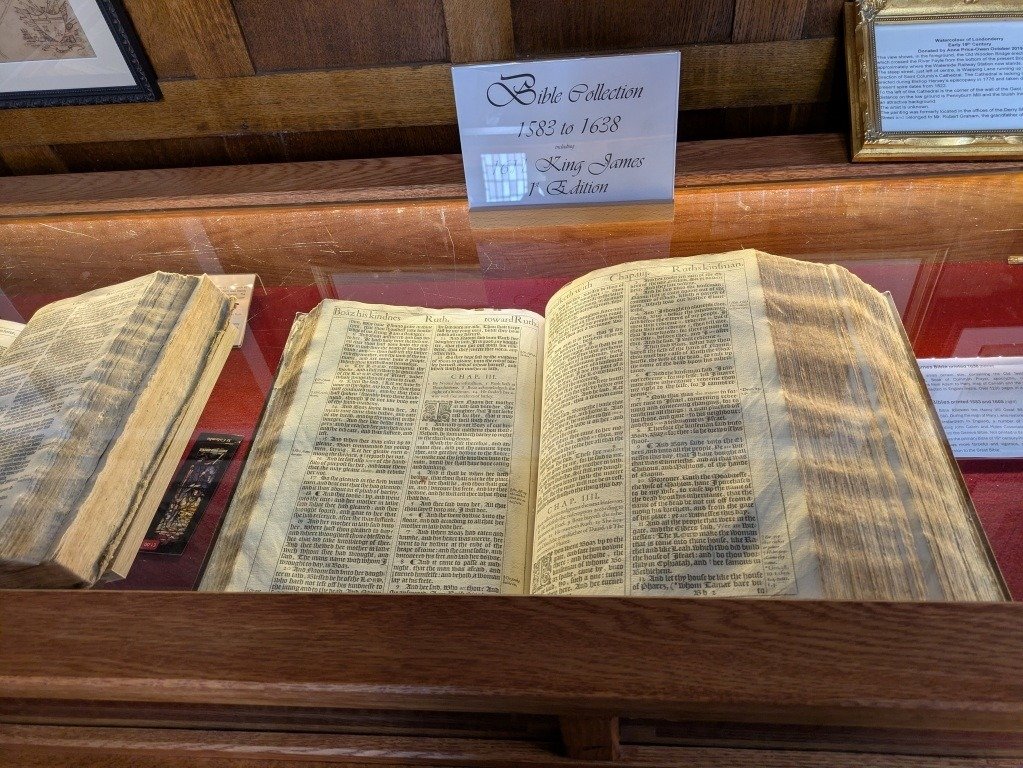
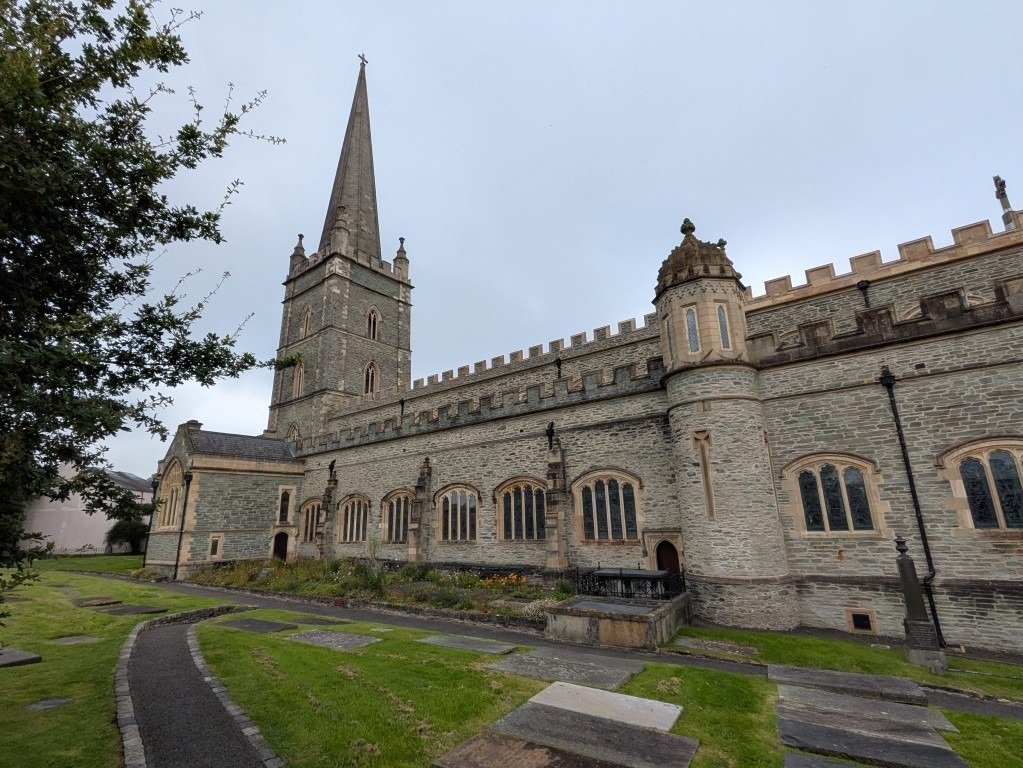
We were now joined by a second guide, Ann Marie, so were able to split into 2 groups for our city tour. I stayed with Robin for the tour. First we visited the nearby Church of Ireland St Columb’s Cathedral which was the first Protestant Cathedral to be built in the British Isles following the Reformation and holds a place of pride and distinction within the city walls. Named after St Columba, it was constructed between 1628 and 1633 by William Parrot. We had a guided tour of the cathedral learning all about its history and particularly the 1989 siege. Some great stained-glass windows and 2 organs. The chapter house displayed much from the cathedral history including an original King James bible. The foundation stone in the porch is inscribed: ‘If stones could speake, then London’s prayse should sound, Who built this church and cittie from the grounde.’ Perched atop a commanding hill, the cathedral’s lofty spire made it the tallest building in the city and a target for the Jacobites during the Siege of Derry 1688-89. The lead of the wooden spire was used for musket balls during the siege and the cathedral sustained much damage. The end of the Siege was reportedly heralded by a boy named James McGregor who climbed to the top of the city Cathedral to fire a cannon. The Siege of Derry in 1689 was a 105-day military blockade where Protestant defenders held the walled city of Londonderry against the Catholic army of King James II. On December 7, 1688, 13 apprentice boys shut the city gates to bar King James II’s approaching soldiers, an act of open rebellion. The formal siege started on April 18, 1689, when James II arrived with an army demanding surrender. The town refused and fired cannons at the king’s men. Jacobite forces blockaded the River Foyle and tried to starve the town, leading to severe famine and thousands of deaths from hunger and disease. On July 28, 1689, Williamite supply ships finally broke through the river boom to deliver food to the starving residents. With provisions restored, the Jacobite forces abandoned the siege and retreated on August 1, 1689, marking a major early victory for Protestant King William III.
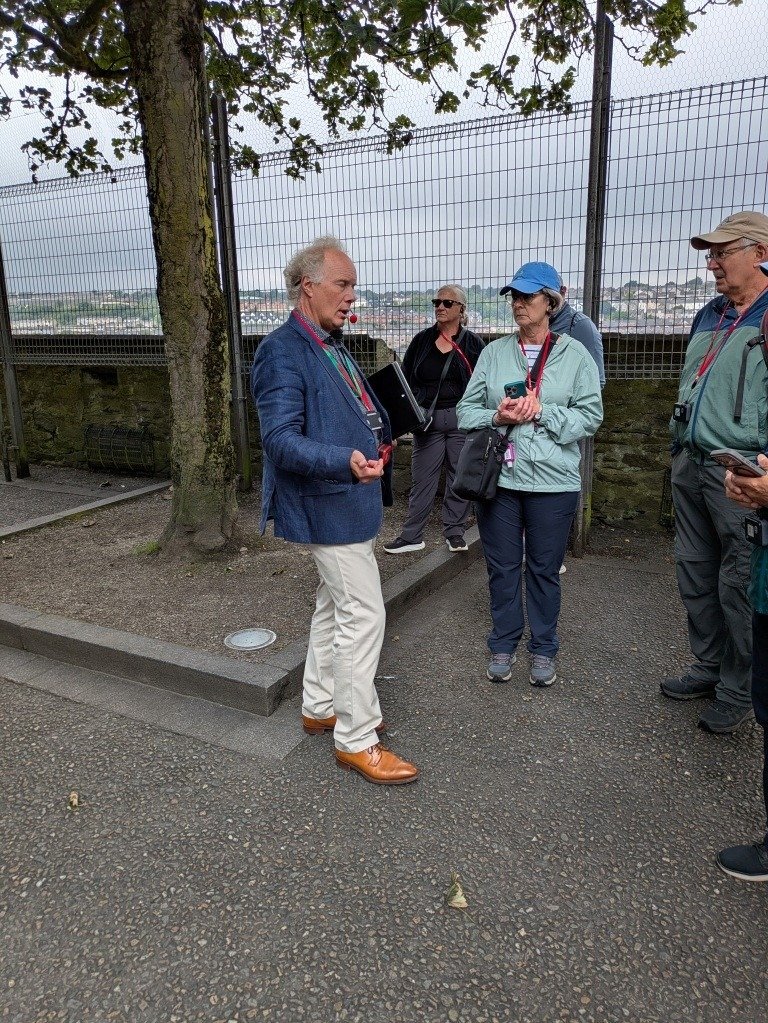
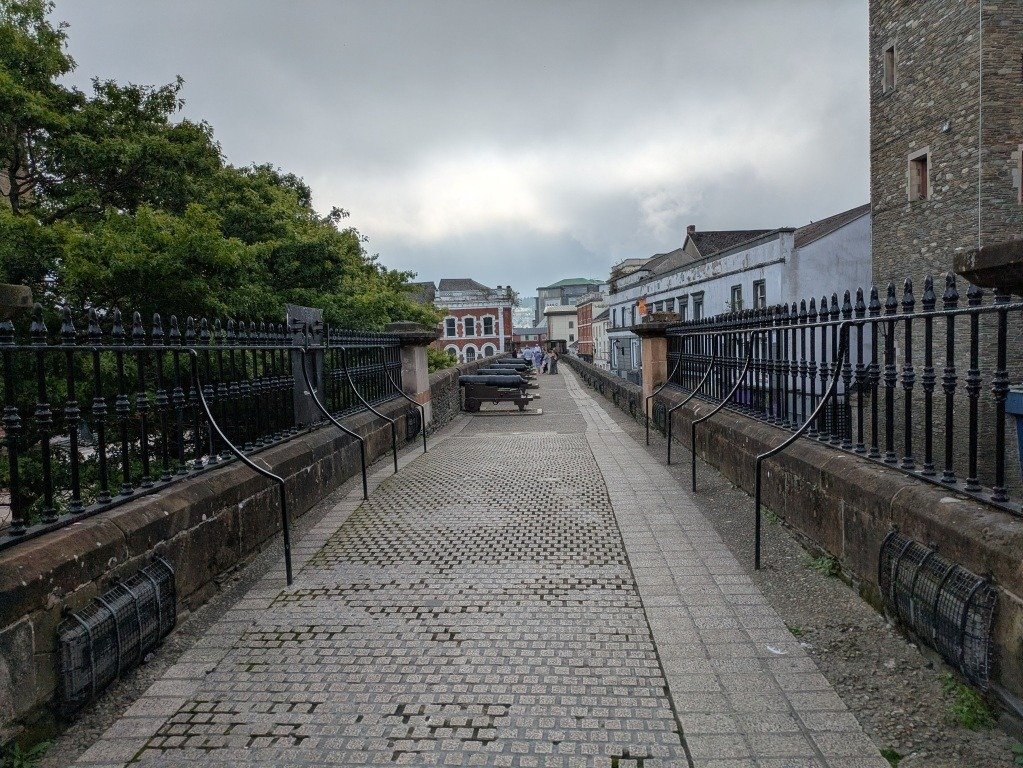
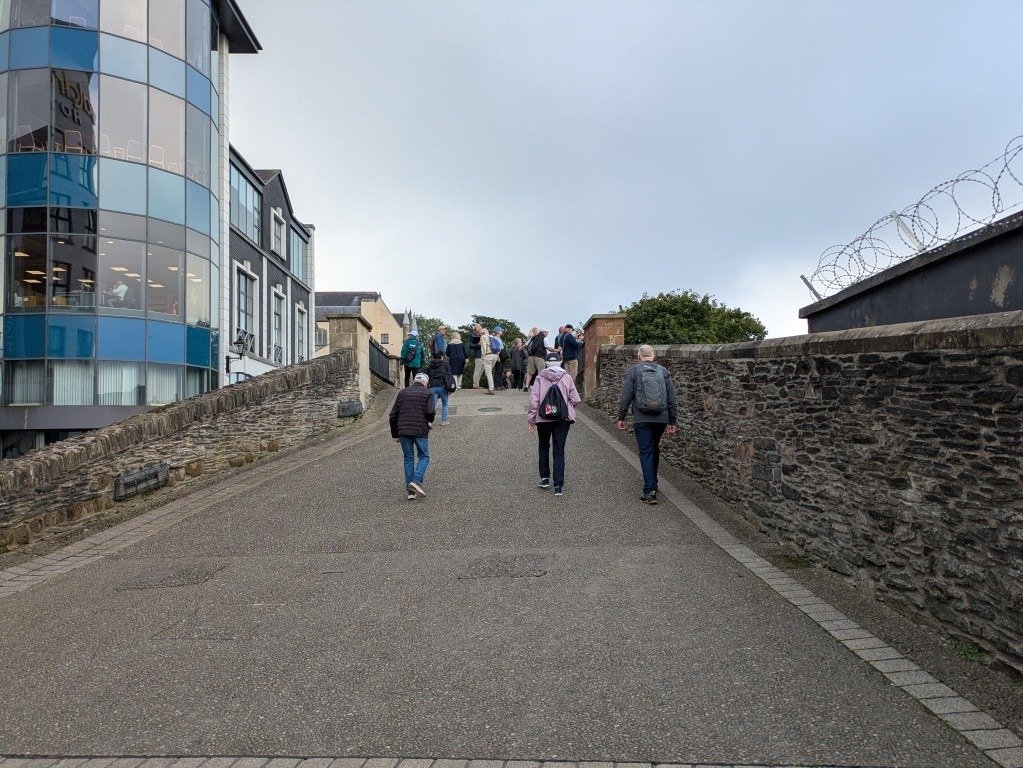
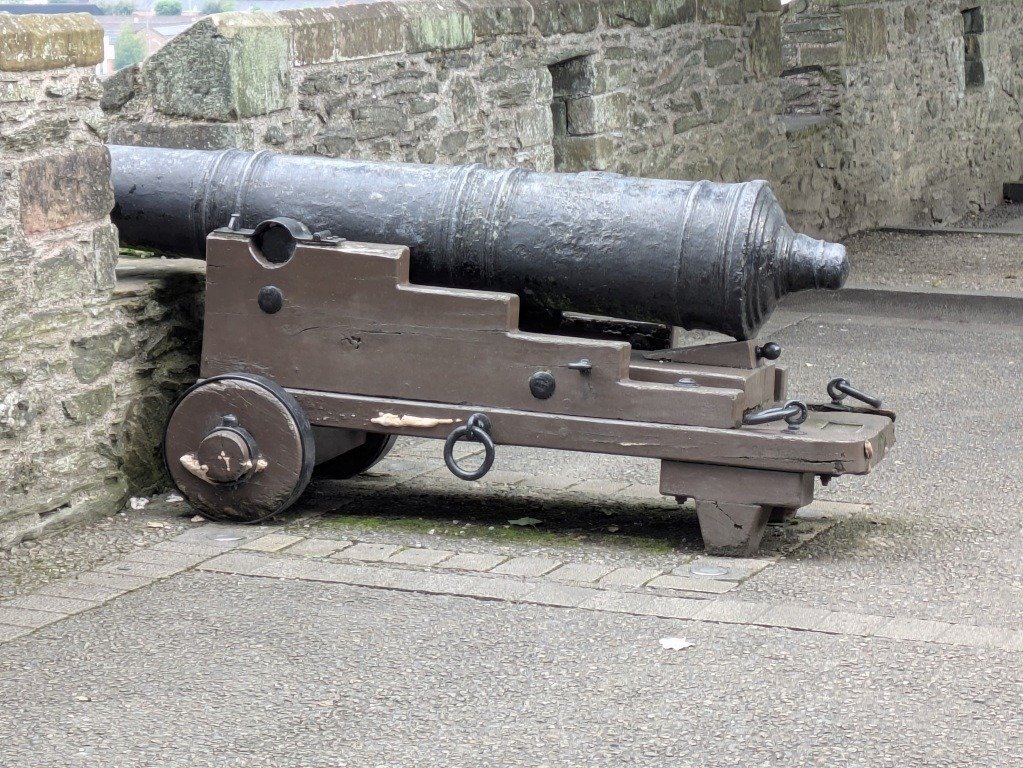
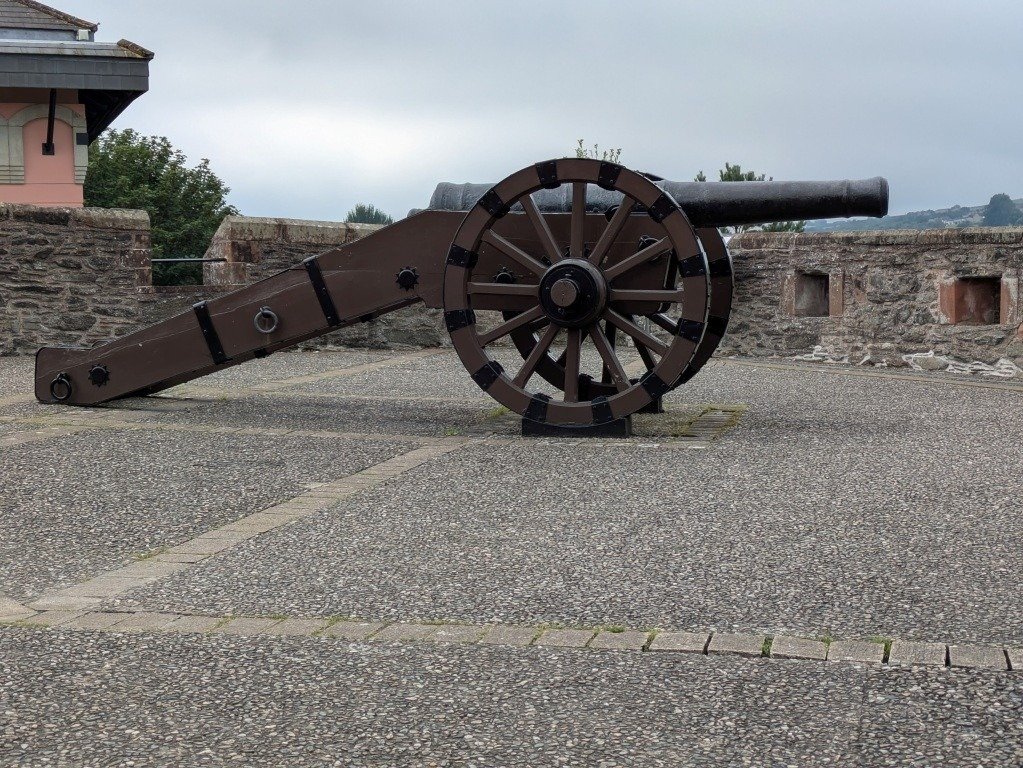
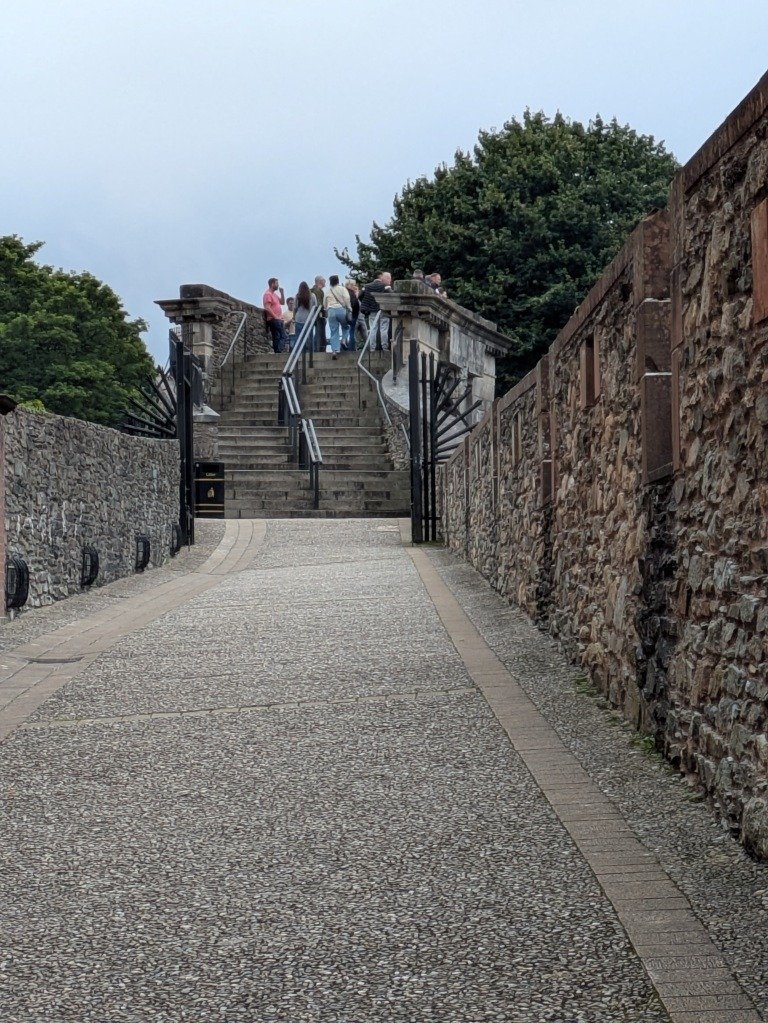
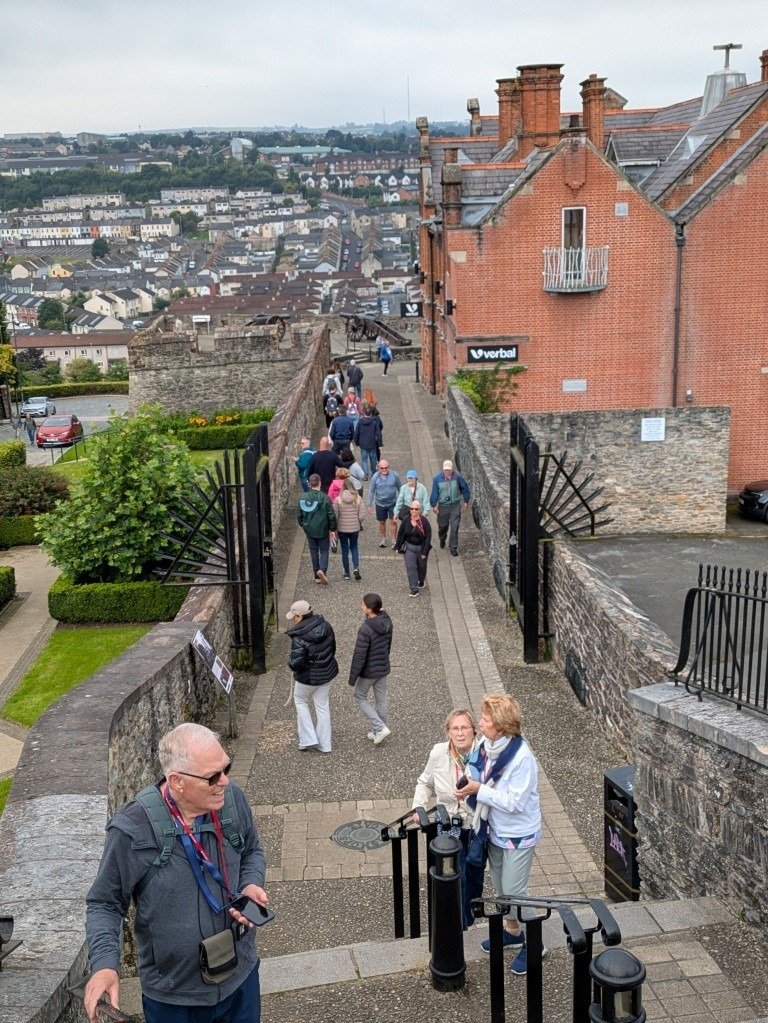
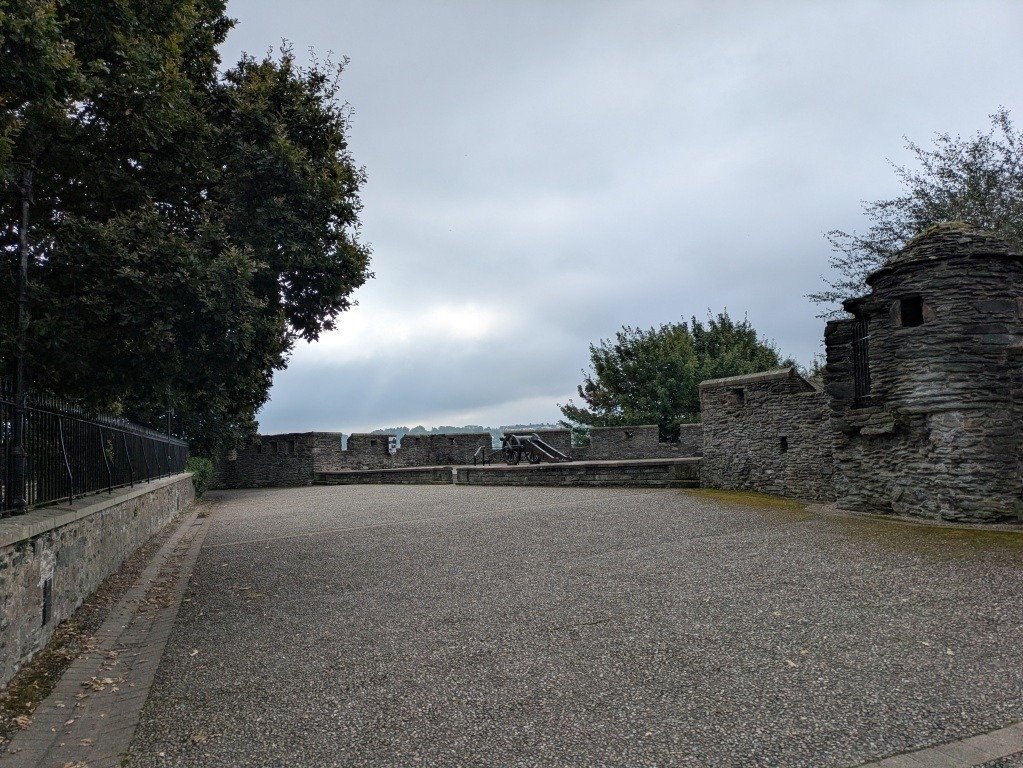
Leaving the Cathedral, we returned to the bus for a quick ride to the Guildhall where we disembarked for our tour of the old city walls. We walked along the top of the walls learning about the city and its history. This is the only remaining completely walled city in Ireland and one of the finest examples of Walled Cities in Europe. The Walls were built during the period 1613-1618 by the Irish Society as defenses for early seventeenth century settlers from England and Scotland. The Walls, which are approximately 1.5km in circumference, form a walkway around the inner city and provide a unique promenade to view the layout of the original town which still preserves its Renaissance Style street plan to this day. The four original gates to the Walled City are Shipquay Gate, Butcher Gate, Bishop’s Gate and Ferryquay Gate. Three further gates were added – New Gate, Castle Gate and Magazine Gate.
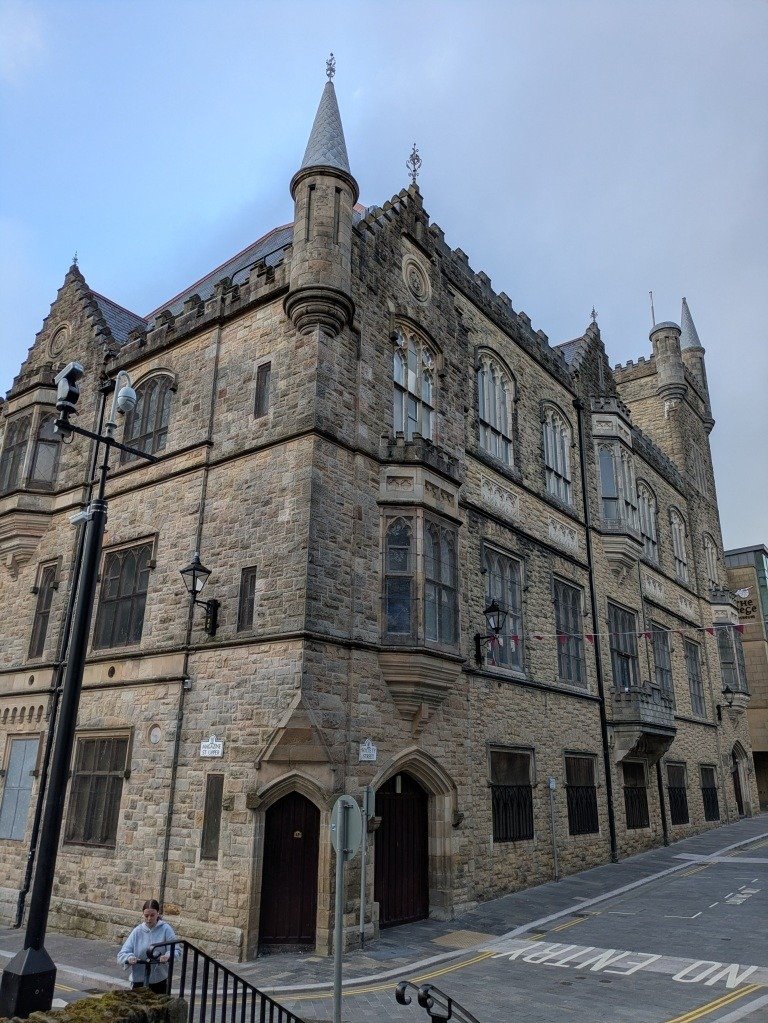
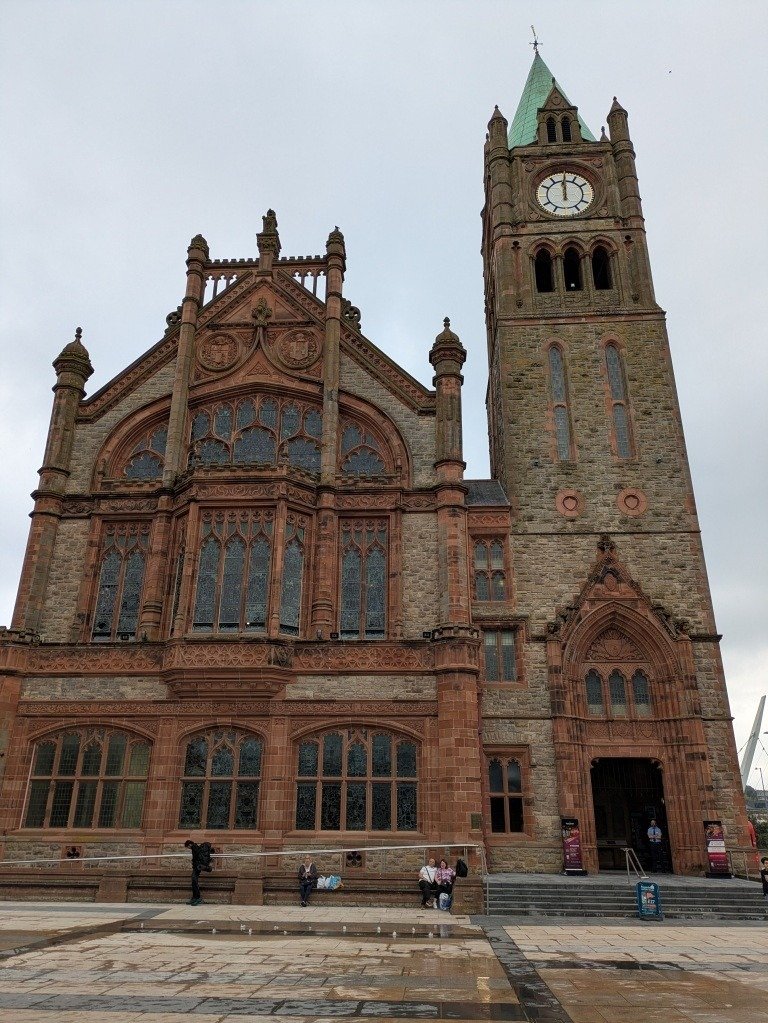
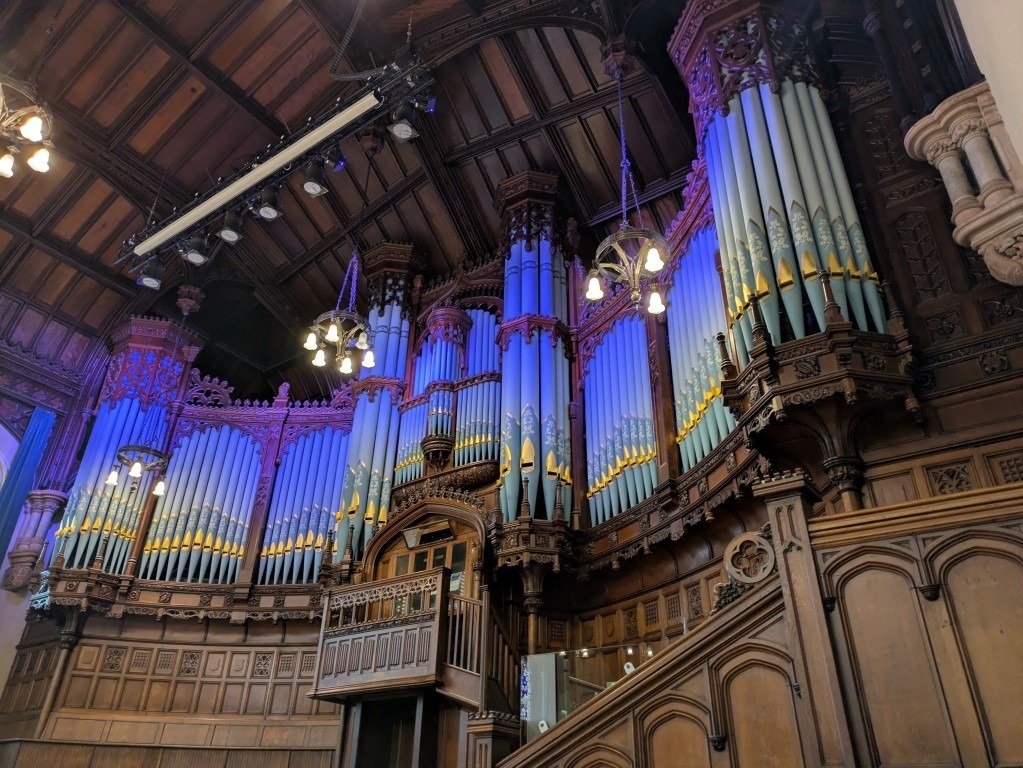
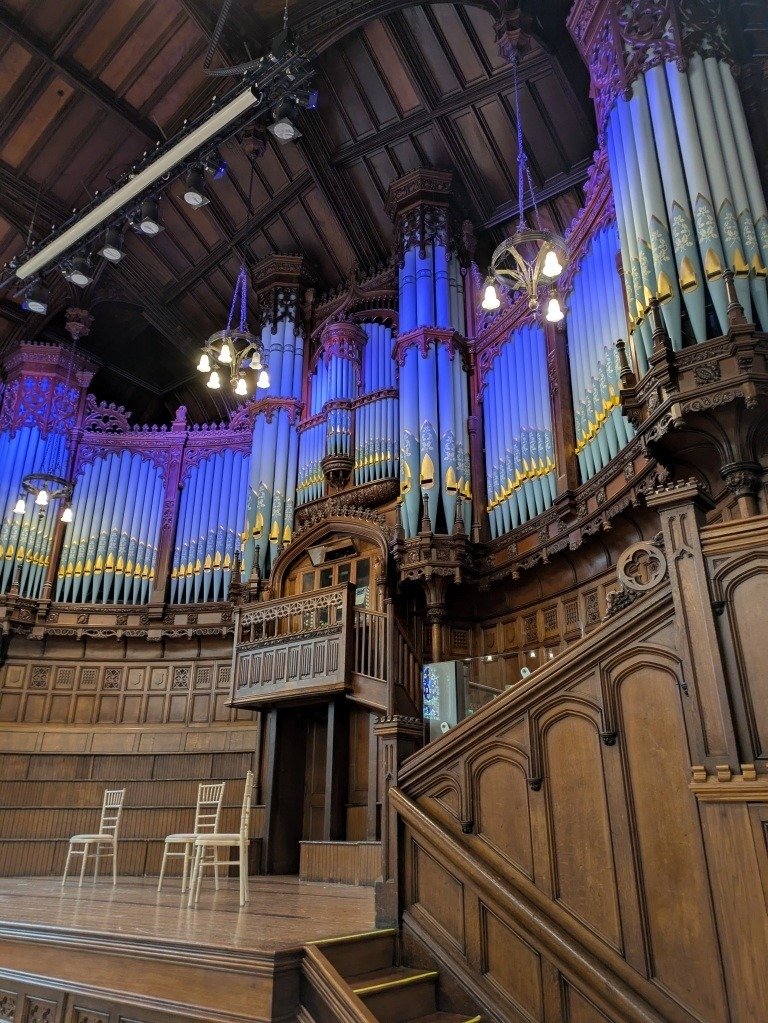
We completed our walk by 11:30am and then had a visit to a nearby pub for a Guinness. The conclusion was a short visit to the Guildhall. The current building, which was designed by John Guy Ferguson and financed by The Honourable The Irish Society , was completed in 1890. It has a wonderful organ built by William Hill & Son to a design by Sir Walter Parratt has 3,132 pipes and was installed in 1914.
Back on the bus at 12:15pm and returned to the tender dock by 1pm.
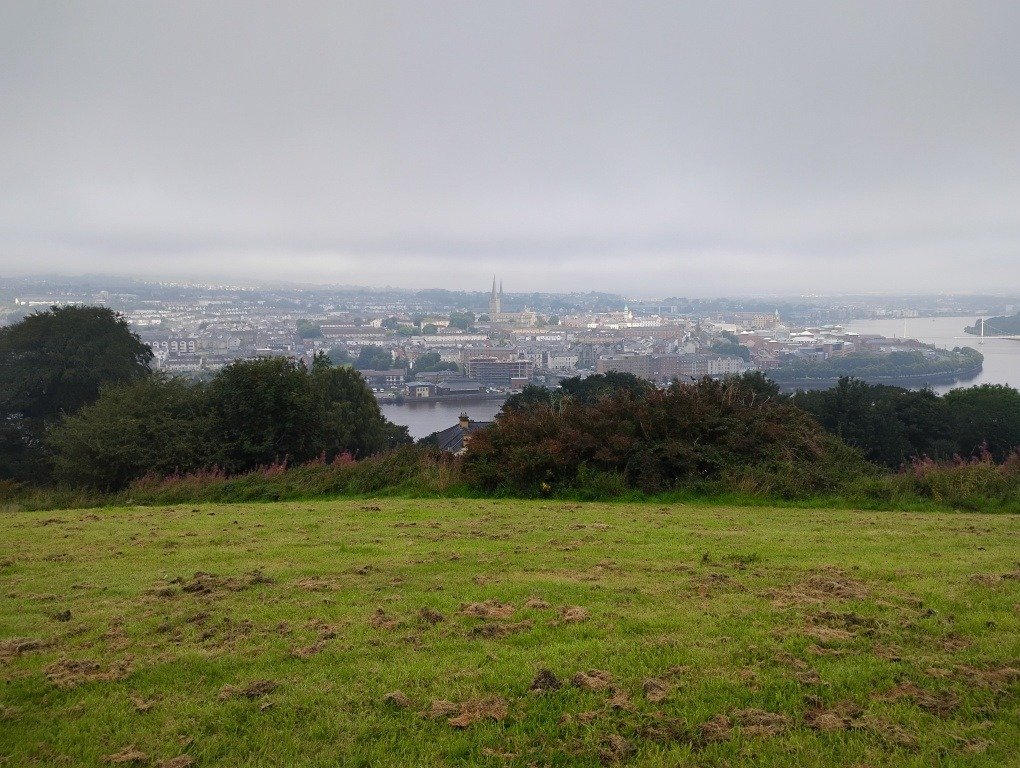
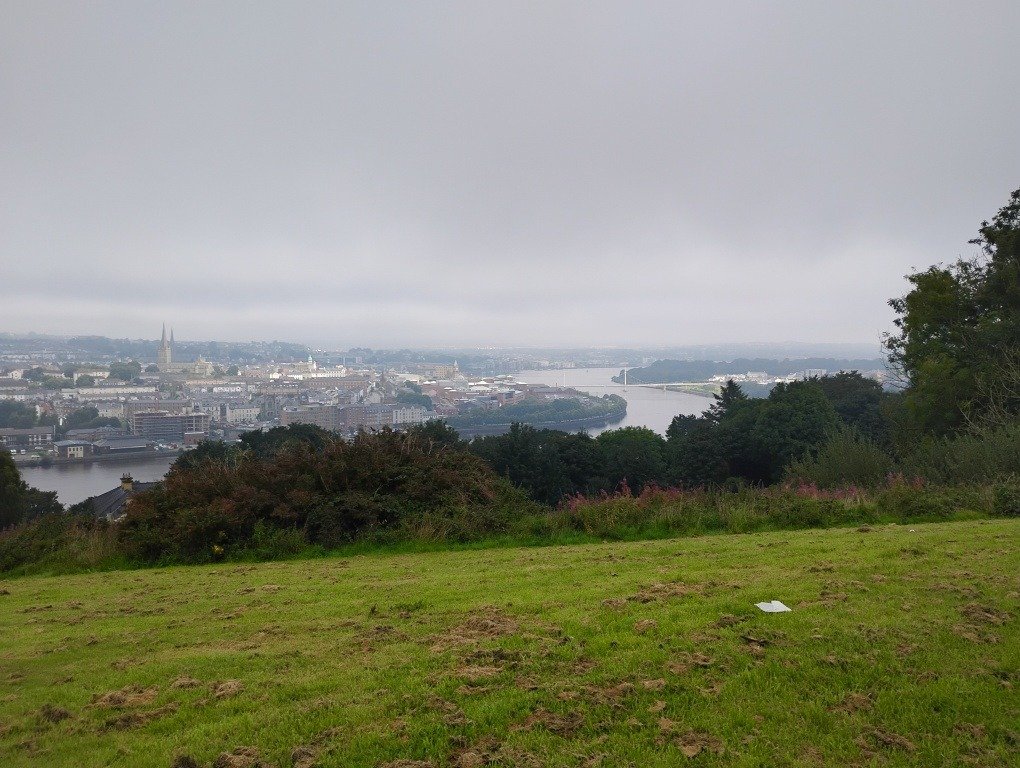
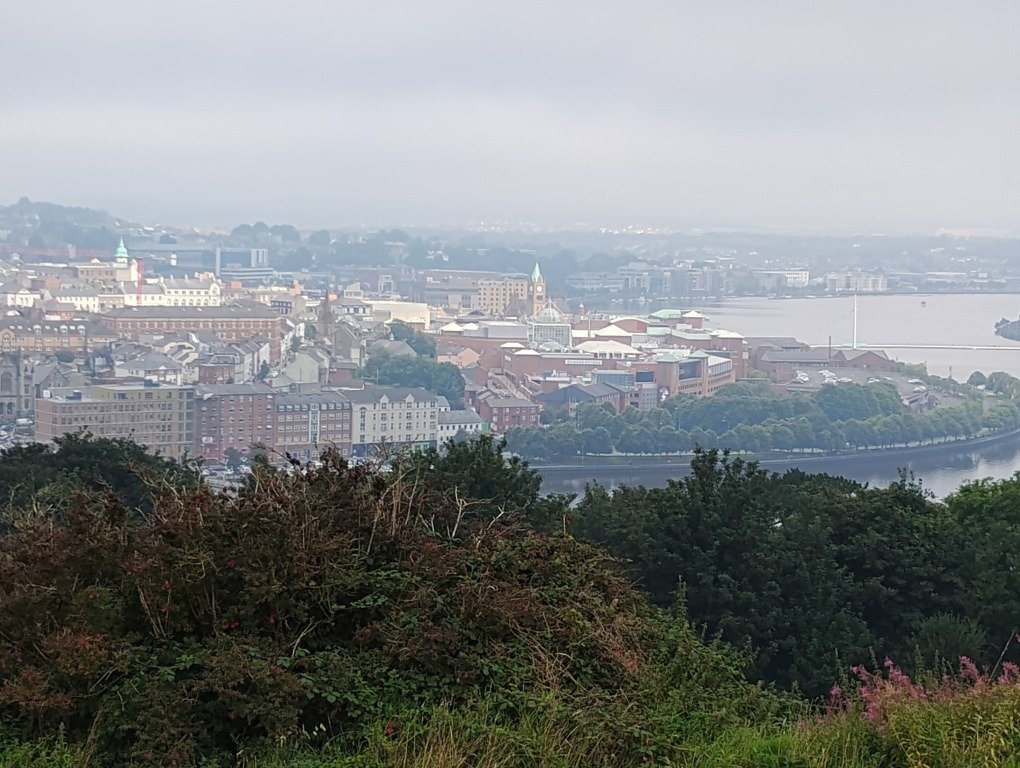
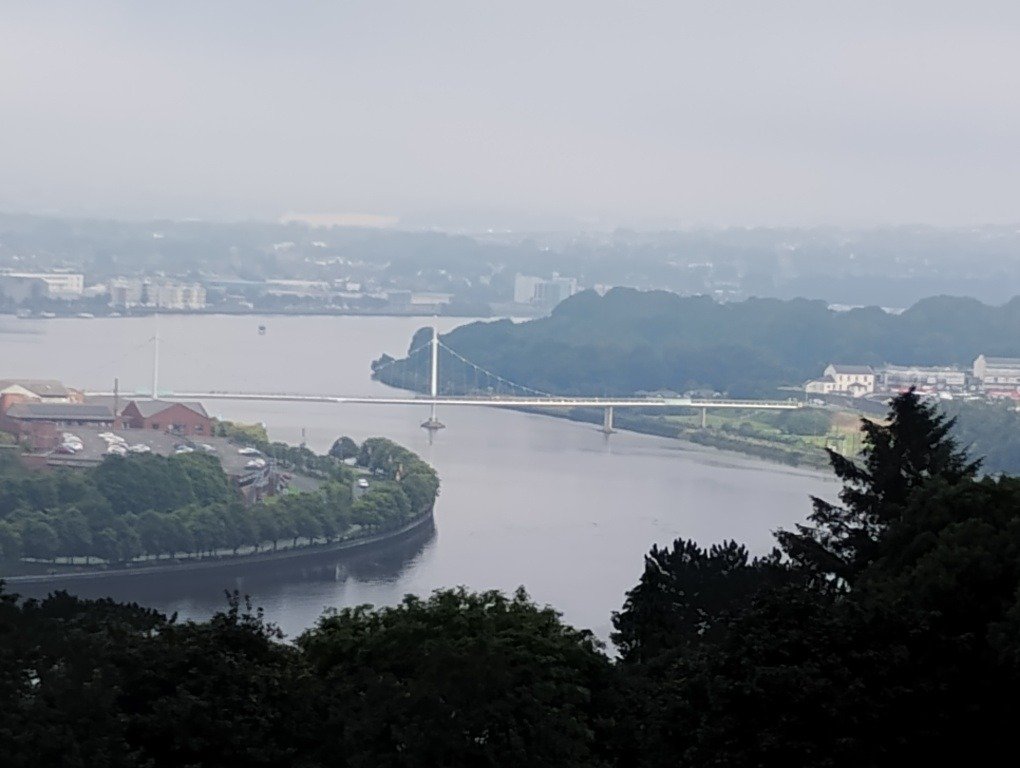
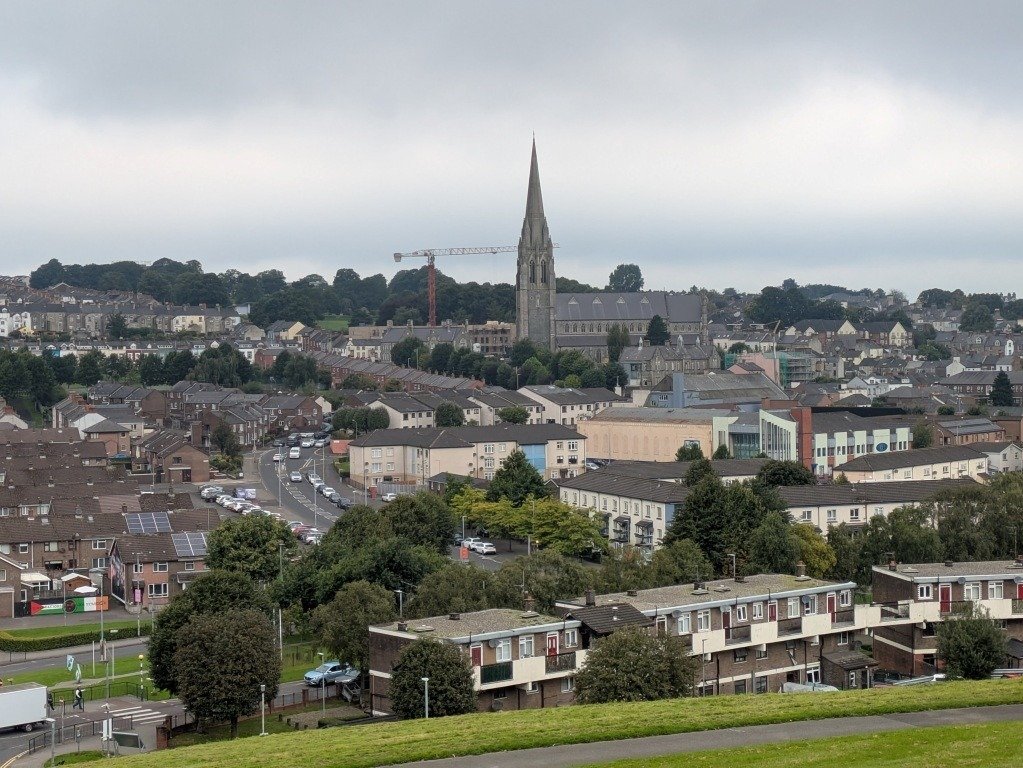
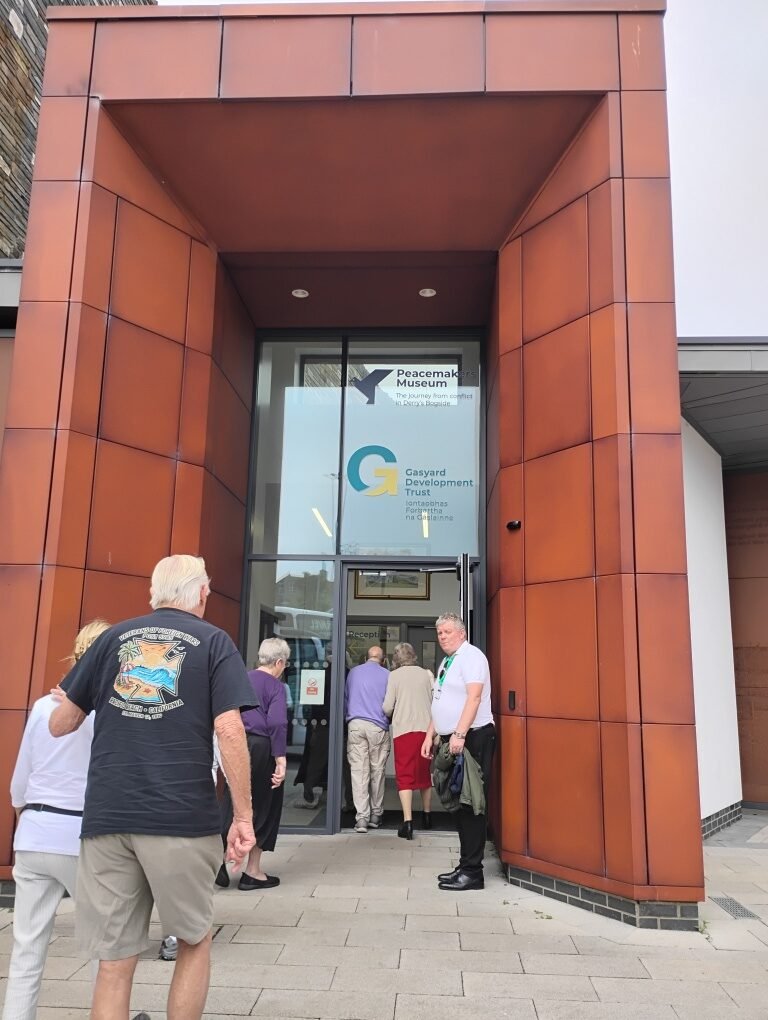
Patti went off on her different tour with 40 others at 9am. Tendering and then bus into Derry. Stopped at a photo viewpoint overlooking the city and river. Then on to the Peacemakers Museum, located in the famous Bogside area of Derry. The small working-class area witnessed some of the key events of the conflict including the Battle of the Bogside and Bloody Sunday. The Peacemakers Museum focuses on how the North of Ireland moved from decades of violent conflict to the peace we all enjoy and maintain today.
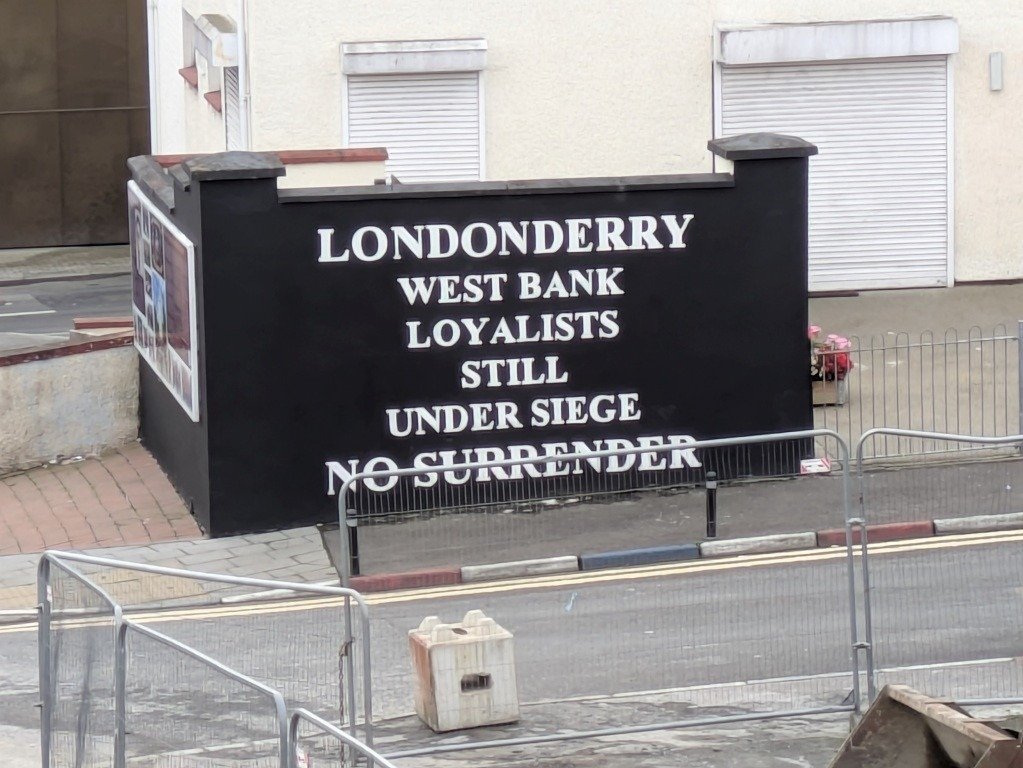
The Troubles, violent sectarian conflict from about 1968 to 1998 in Northern Ireland between the overwhelmingly Protestant unionists (loyalists), who desired the province to remain part of the United Kingdom, and the overwhelmingly Roman Catholic nationalists (republicans), who wanted Northern Ireland to become part of the Republic of Ireland. The other major players in the conflict were the British Army, Royal Ulster Constabulary (RUC), and Ulster Defence Regiment (UDR) and their avowed purpose was to play a peacekeeping role, most prominently between the nationalist Irish Republican Army (IRA), which viewed the conflict as a guerrilla war for national independence, and the unionist paramilitary forces, which characterized the IRA’s aggression as terrorism. Marked by street fighting, sensational bombings, sniper attacks, roadblocks, and internment without trial, the confrontation had the characteristics of a civil war, notwithstanding its textbook categorization as a “low-intensity conflict.” Some 3,600 people were killed and more than 30,000 more were wounded before a peaceful solution, which involved the governments of both the United Kingdom and Ireland, was effectively reached in 1998, leading to a power-sharing arrangement in the Northern Ireland Assembly at Stormont.
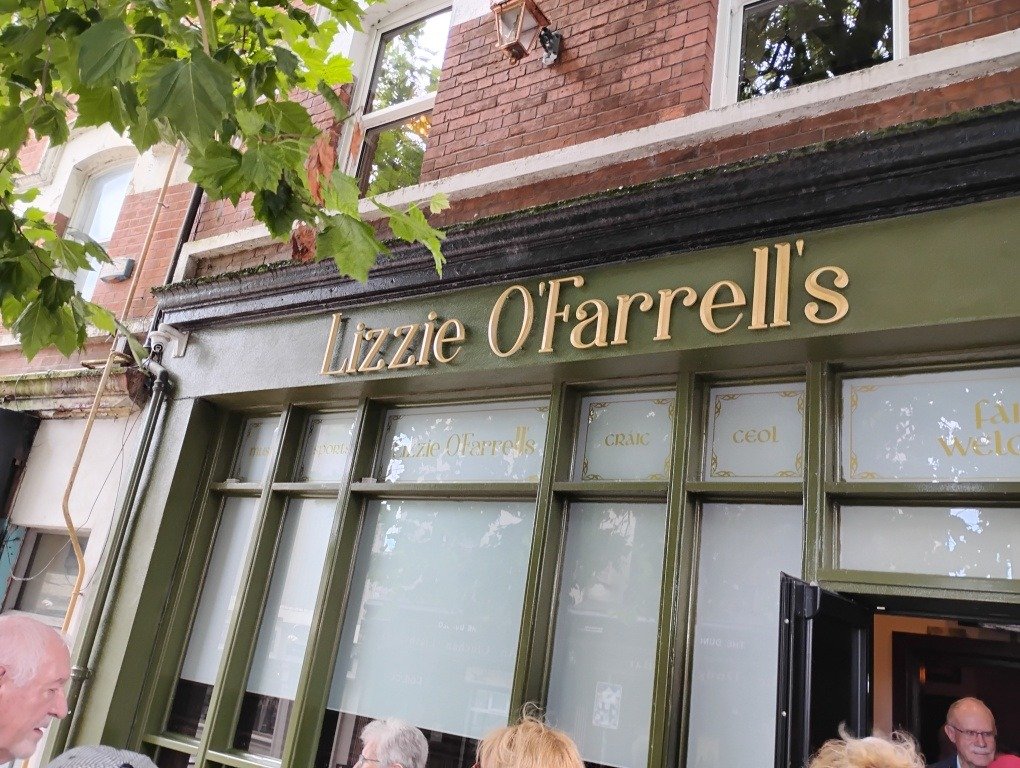
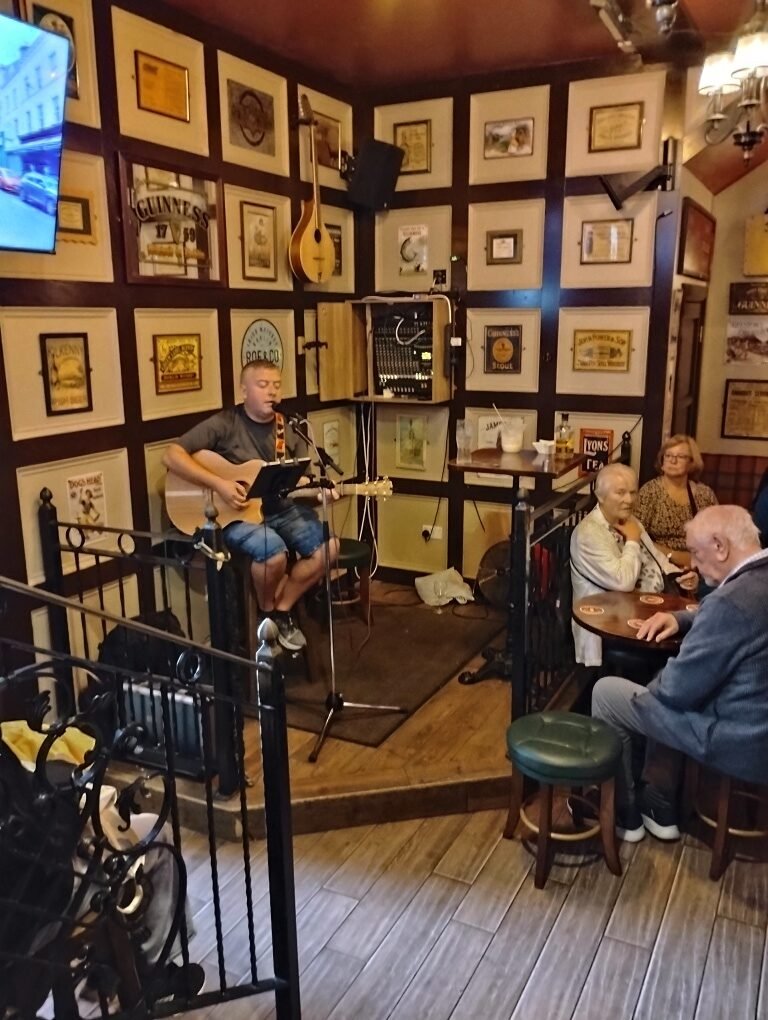
Following the museum visit went on to Lizzie O’Farrell’s pub near the Guildhall to sample genuine Irish Coffee made with local craft whisky. While there entertained by one of the owners playing his guitar and singing traditional Irish songs. Back to the bus for the return to the tender dock by 2pm.
Highlight of the day: Magnificent Guildhall organ