Seyðisfjörður-Day2
Tuesday morning still at Seyðisfjörður for our 2nd day. A bright sunny start to the day with temperature of 10c
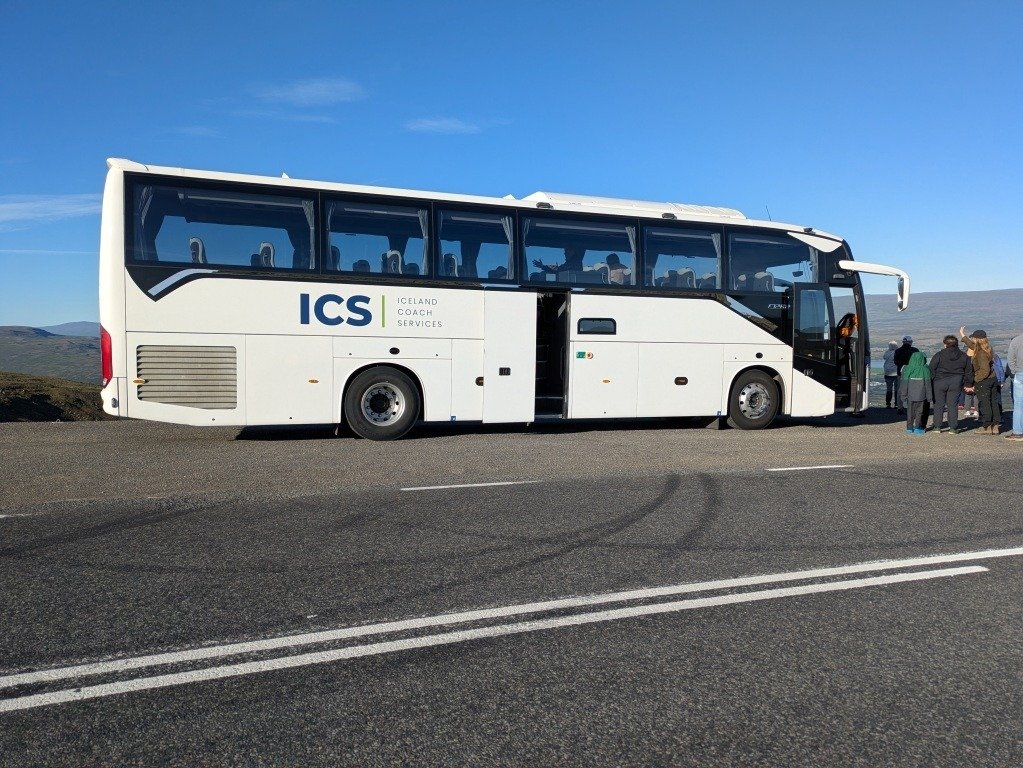
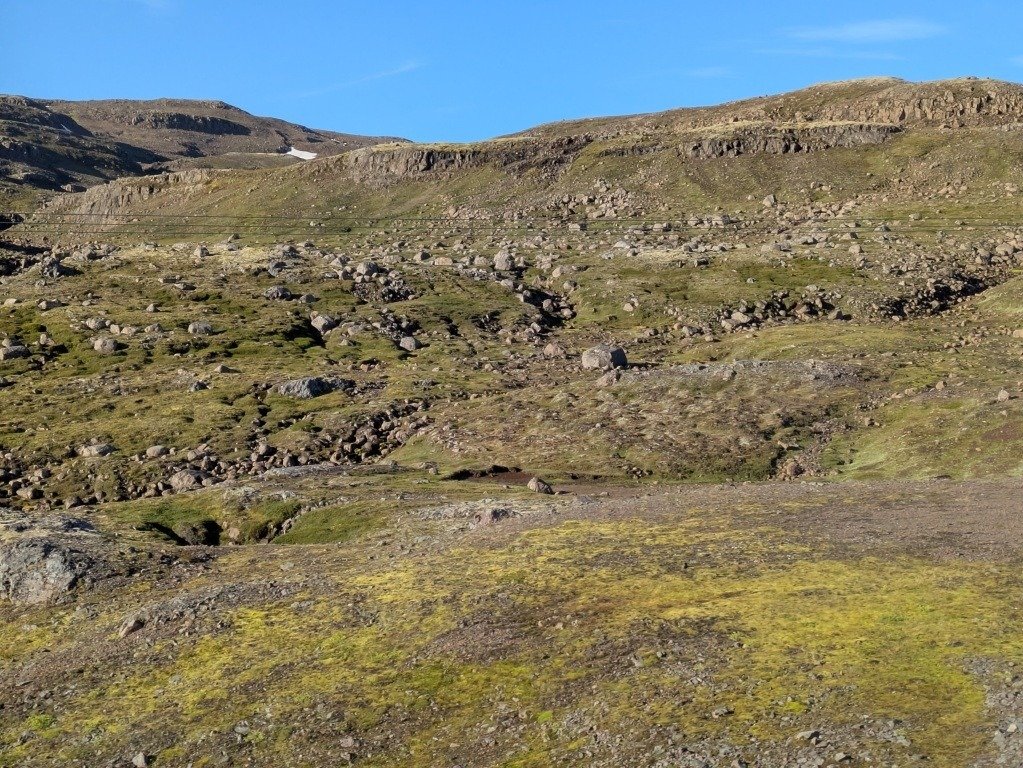
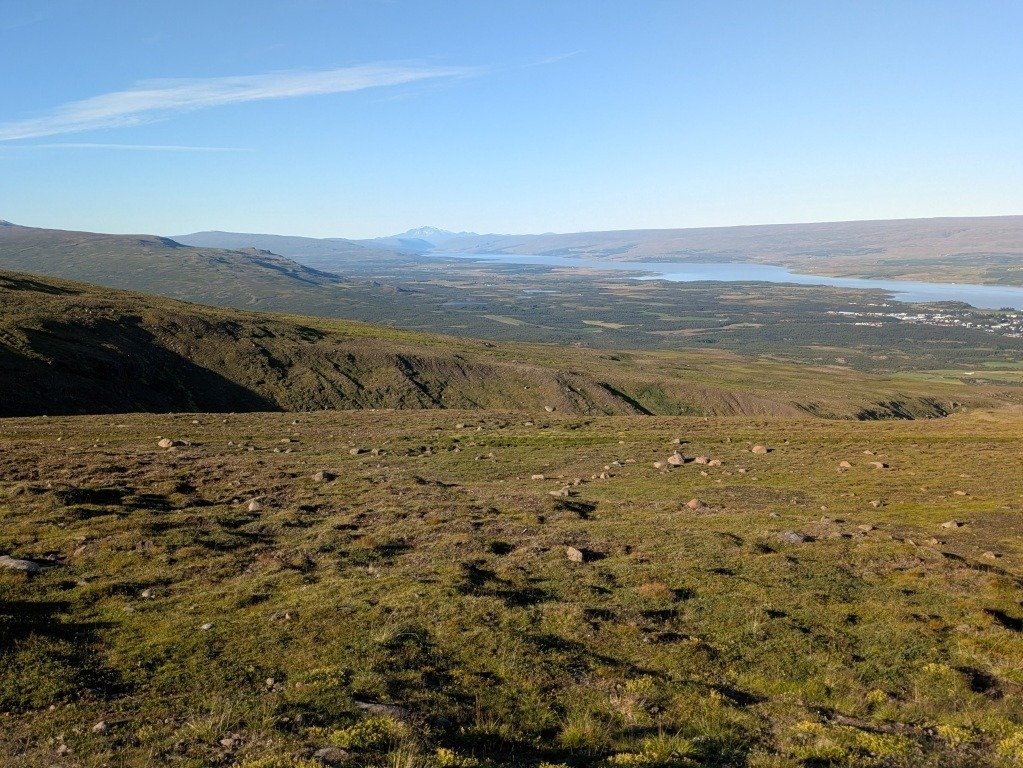
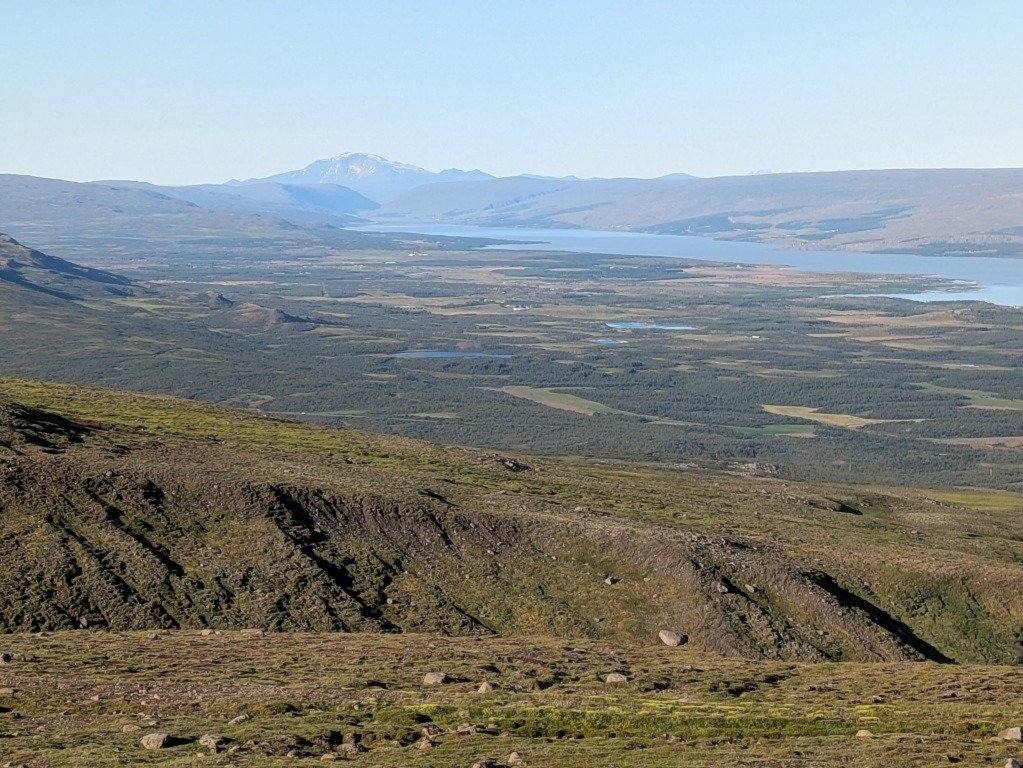
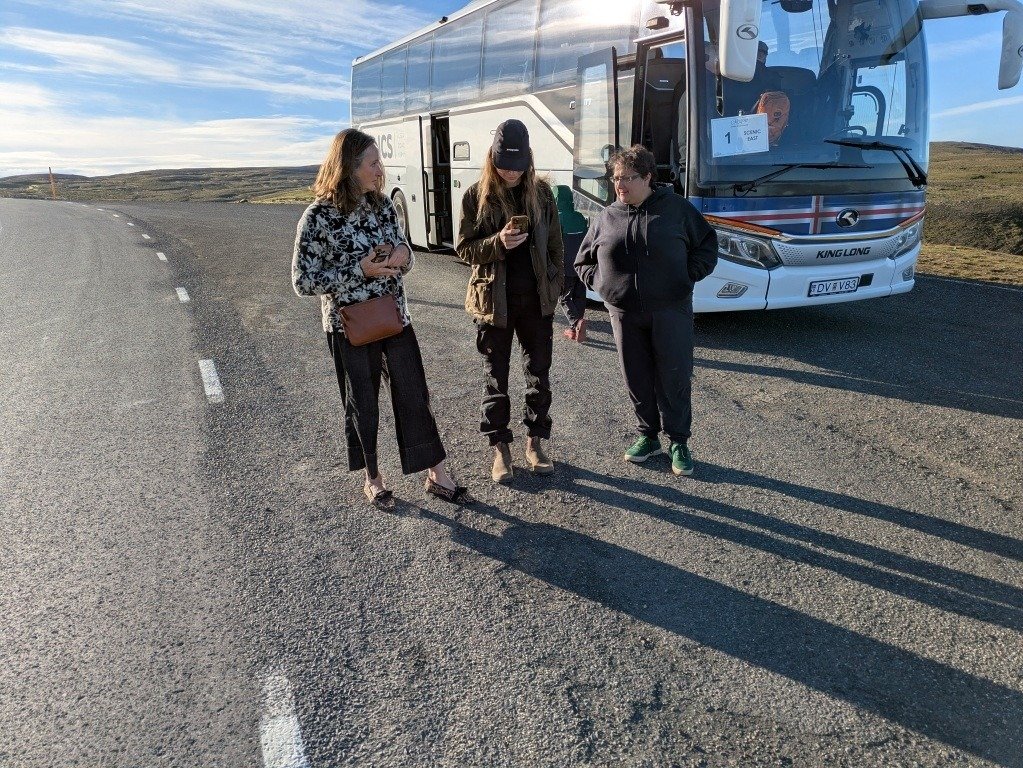
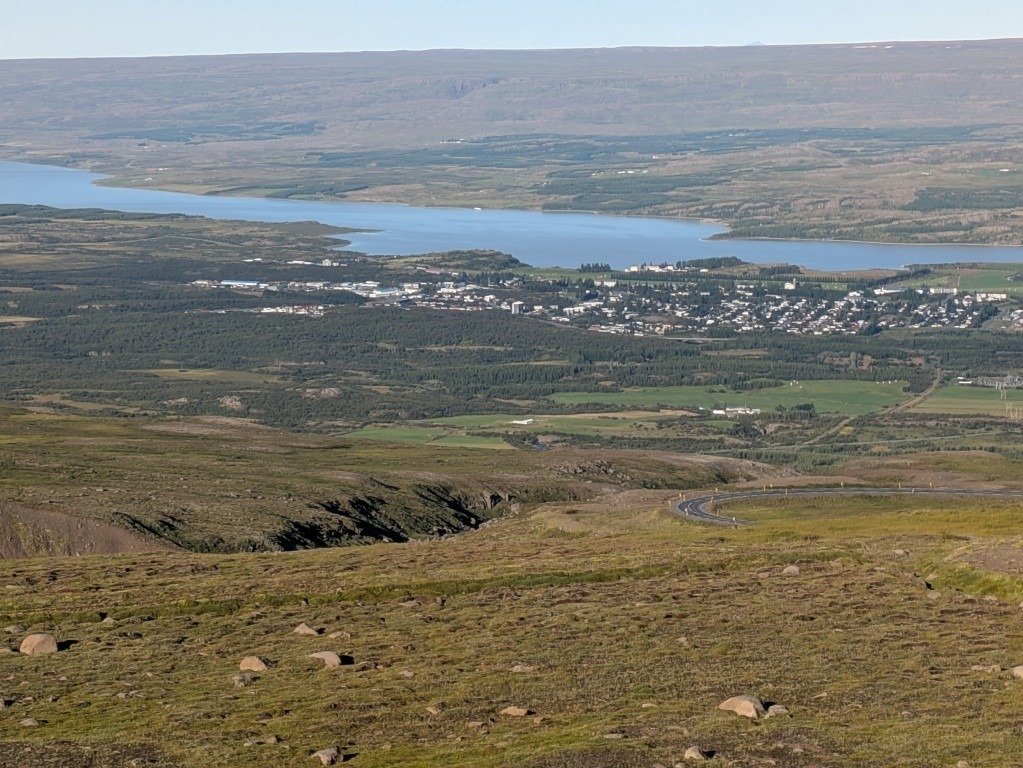
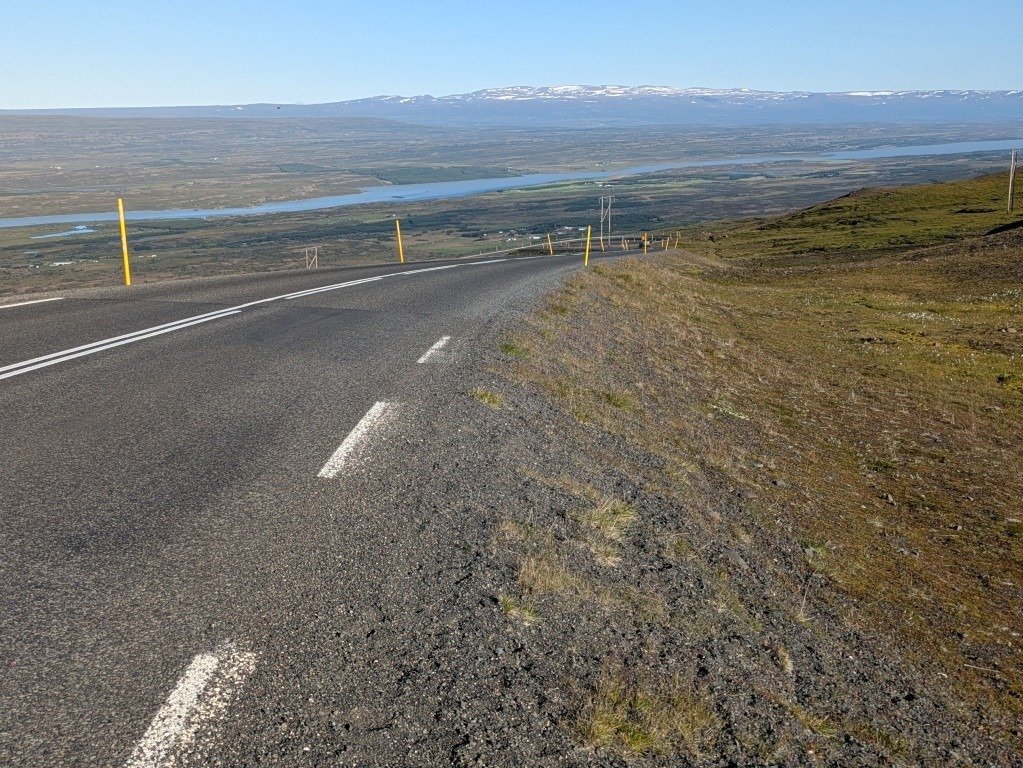
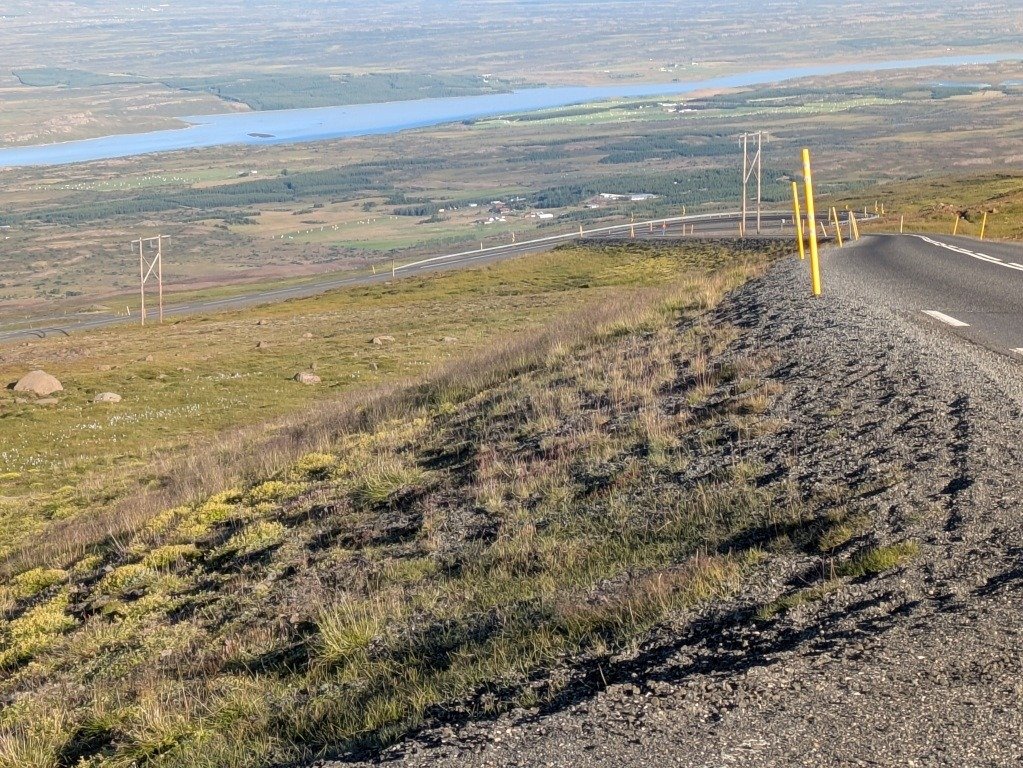
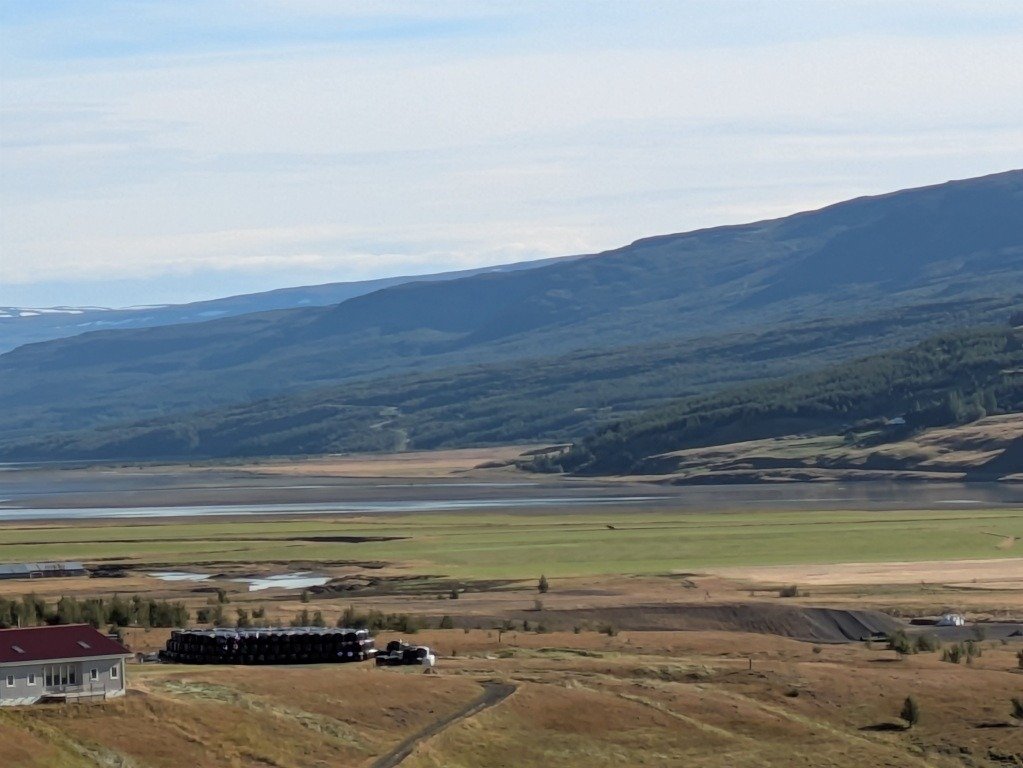
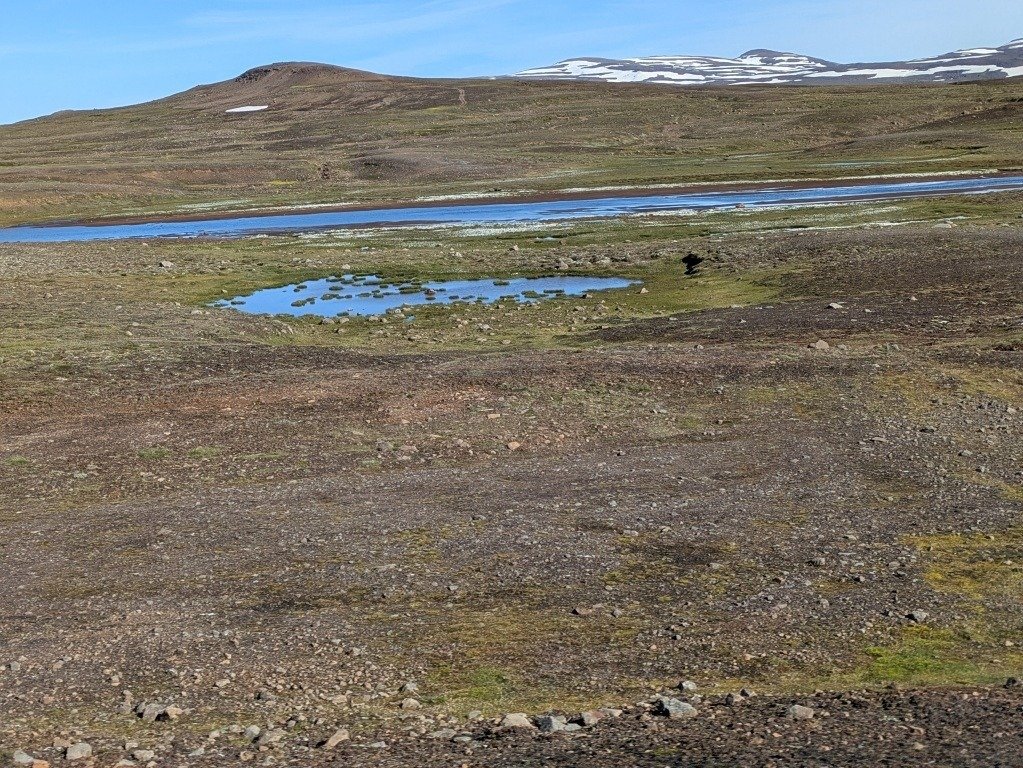
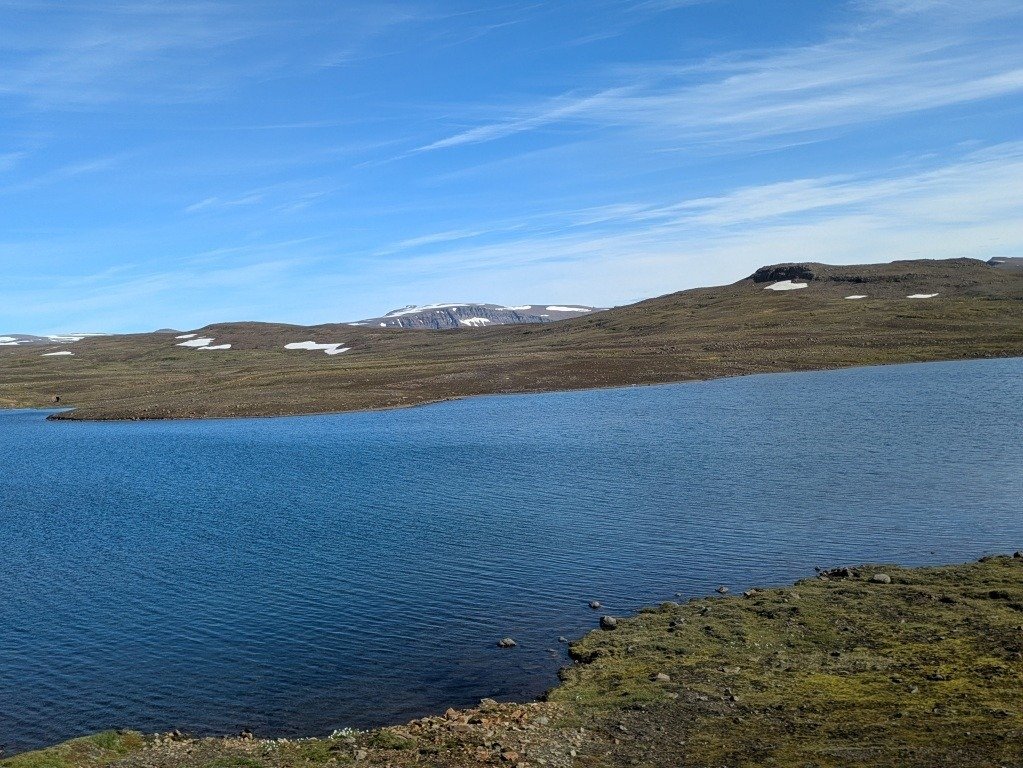
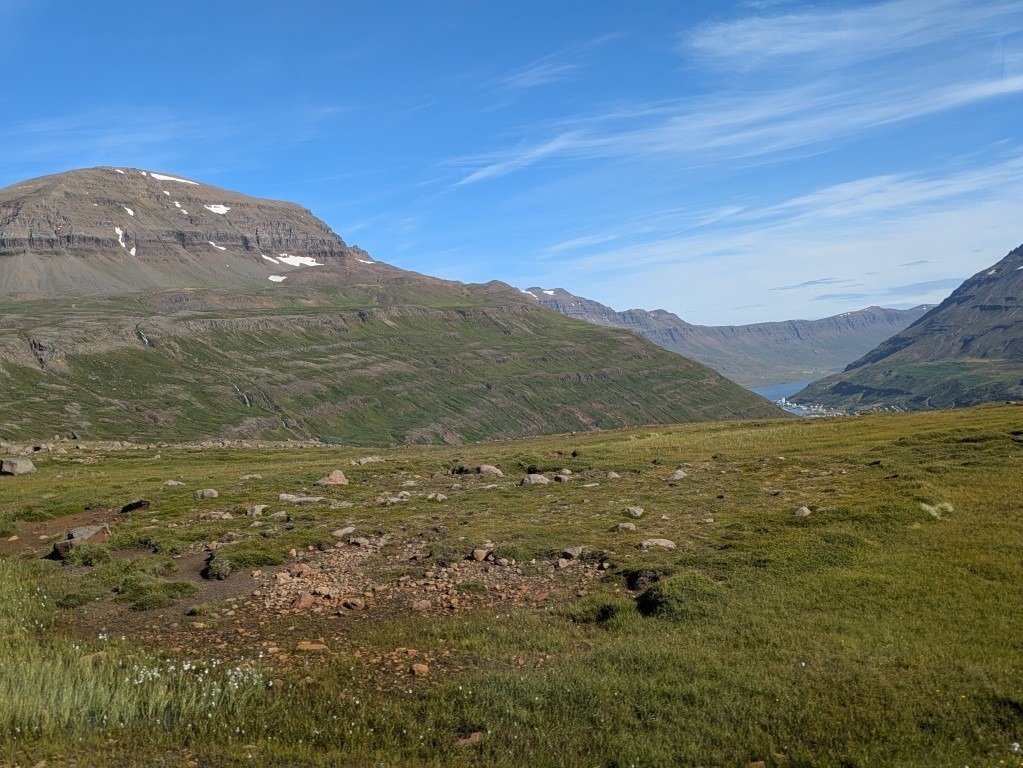
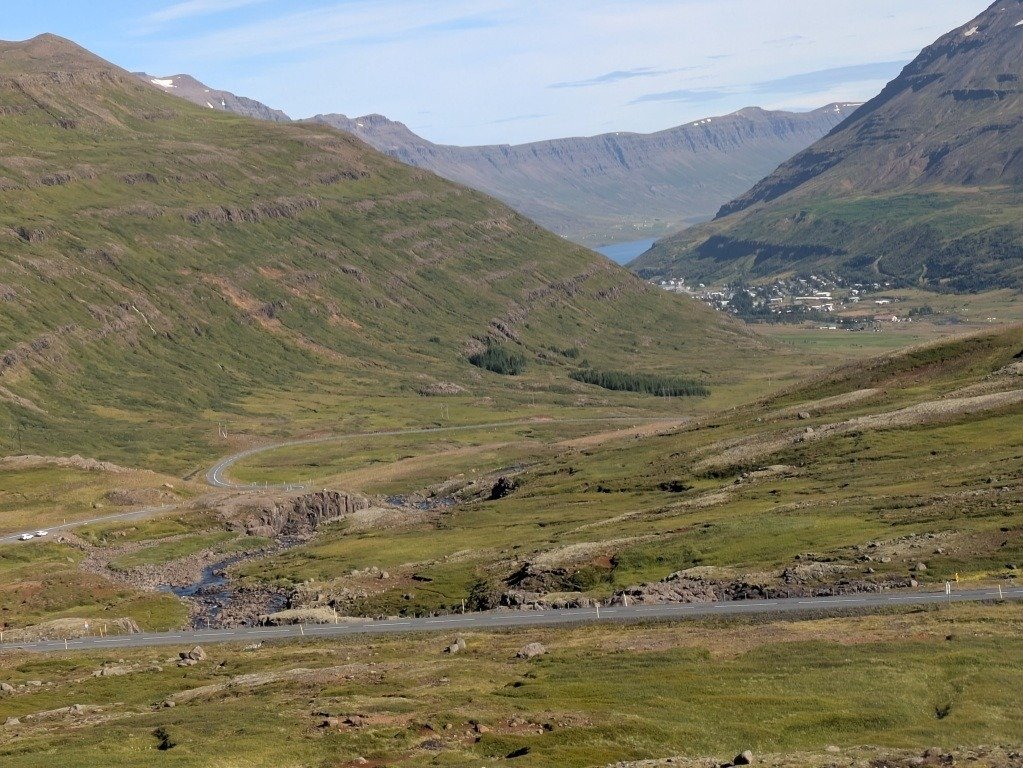
We started out at 8am when 30 of us boarded the bus for the “scenic east” tour. The weather continued sunny and warm throughout the day with temperature reaching 61c by the afternoon. Our guide today was Sophie along with Simon our driver. We set out on the only road over the mountain. Seyðisfjörður. Fjarðarheiði is a mountain pass road connecting Egilsstaðir and Seyðisfjörður via Road 93. The pass is 24.5km (15.22 miles) long. At around 623m (2,043ft) elevation, conditions on the pass can be challenging, particularly in winter when the road closes regularly due to severe weather. Today being clear and sunny the drive was spectacular as we climbed slowly up to the summit where we stopped for a 15- minute photo opportunity, before continuing down the other side and into Egilsstaðir about 45 minutes after leaving. Egilsstaðir is the largest town in East Iceland on the banks of the Lagarfljót river and has a population around 3,000. Located at 65.17N the town is young, even by Icelandic standards. It was established in 1947 as an effort by the surrounding rural districts recognizing it had become a regional service centre. The Lagarfljót river is situated in the east of Iceland near Egilsstaðir. Its surface measures 53 square kilometres (20 sq mi) and it is 25 kilometres (16 mi) long; its greatest width is 2.5 km (1.6 mi) and its greatest depth 112 m (367 ft). The 27 MW Lagarfossvirkjun hydropower station is located at its lower end. As with the Scottish Loch Ness, a cryptid serpent, called Lagarfljótsormurinn by locals, is believed by some to live in the depths of Lagarfljót.
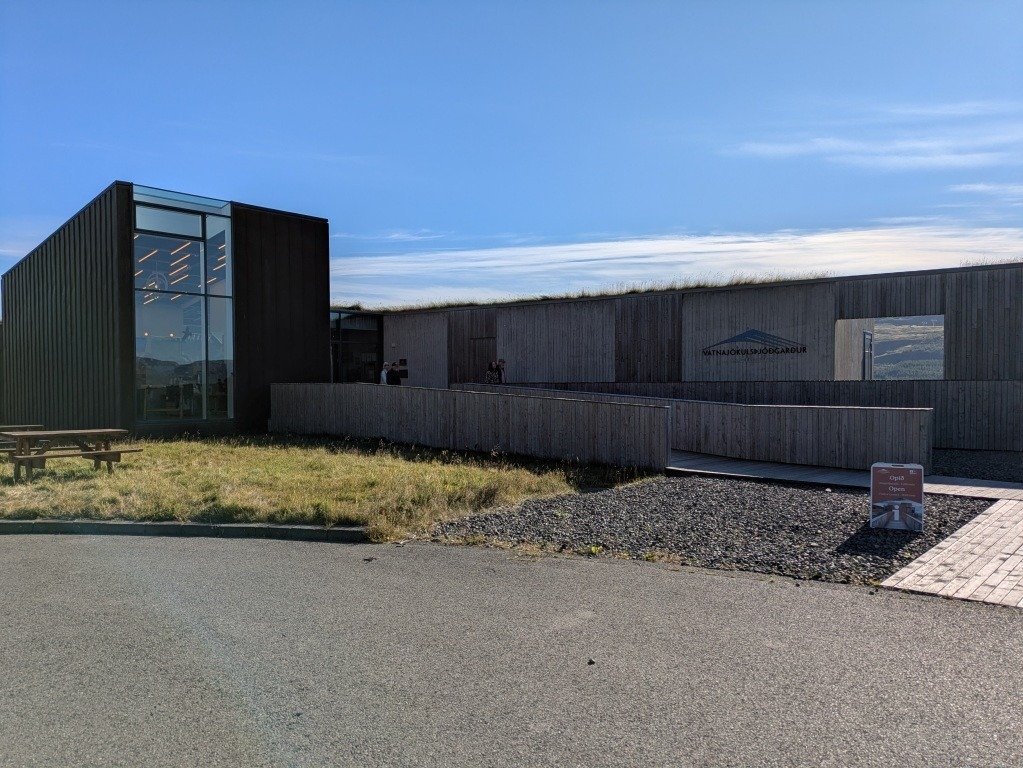
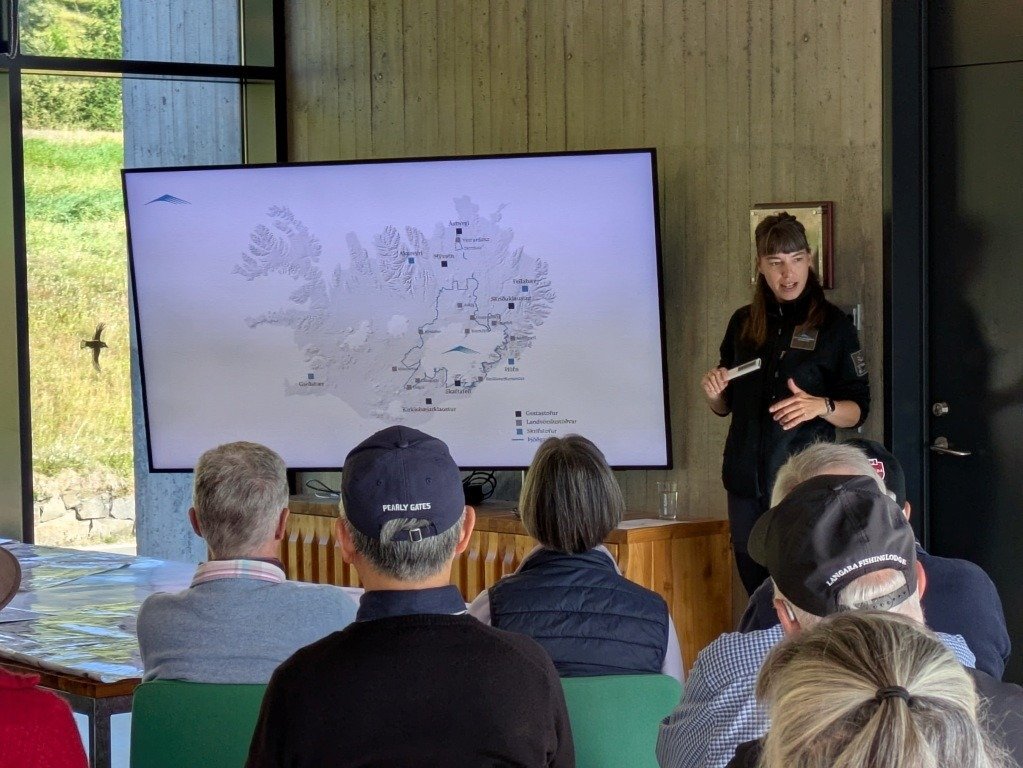
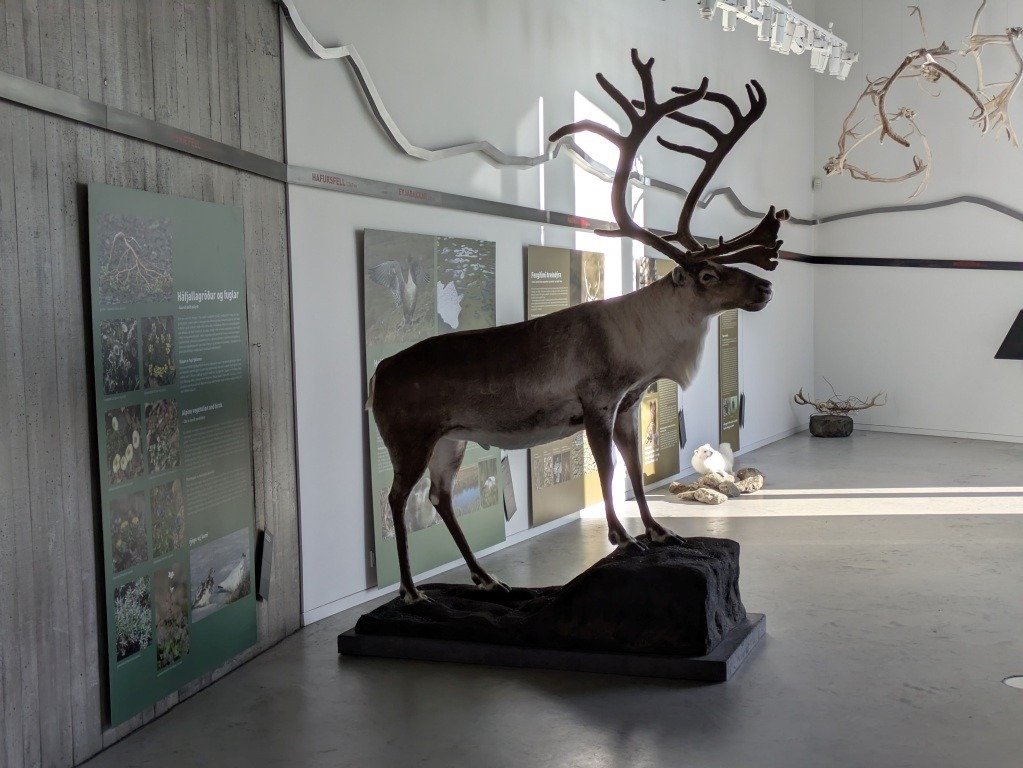
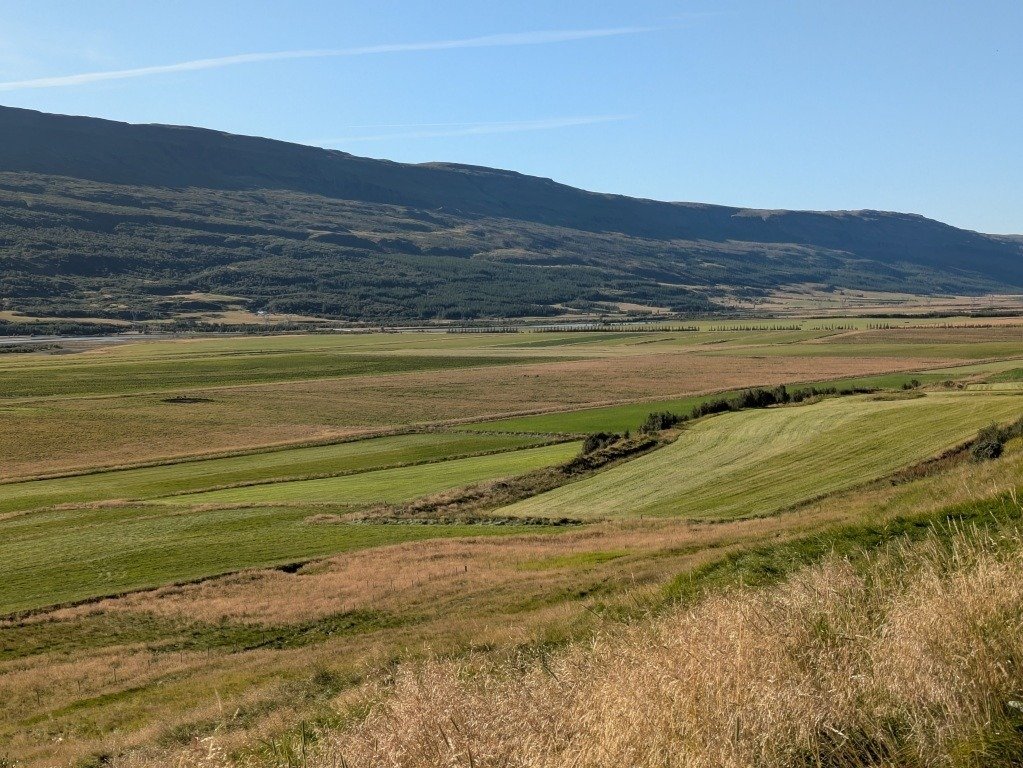
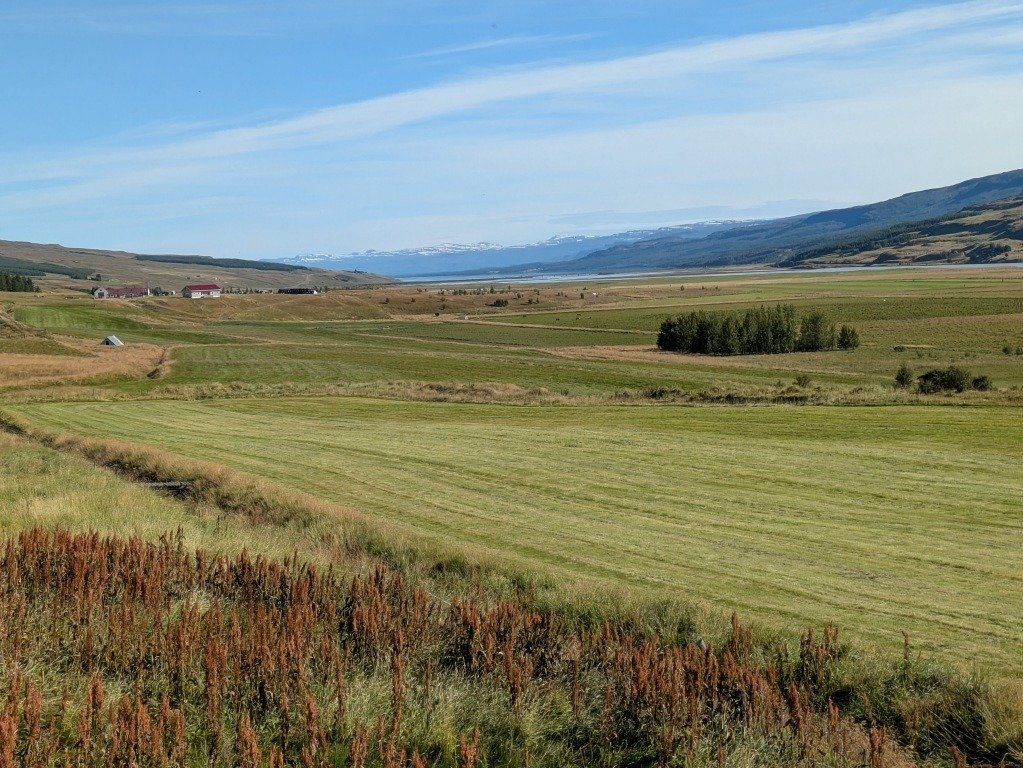
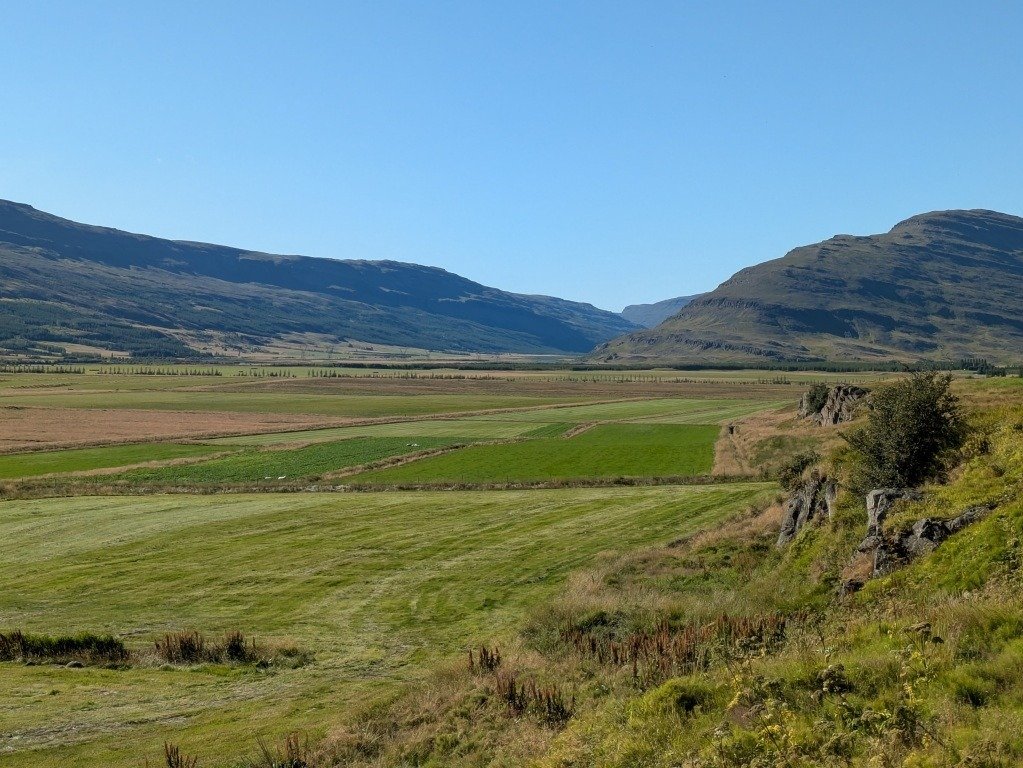
We now proceeded down the valley following the river, eventually crossing over the bridge to the other bank before arriving at the Snæfellsstofa visitor center. We stopped here for 30 minutes and listened to a presentation about the park by one of the Rangers. Unfortunately we did not have time to go into the Park, but it sounded like an amazing place. In the center there is reindeer model. Reindeers are not native to Iceland, but they have become one of the country’s most distinctive wild animals. The free-ranging population lives in East Iceland, where open highland plateaus, valleys and winter grazing grounds give travellers a genuine chance of seeing a herd rather than a fenced attraction. They were brought from northern Norway in several 18th-century attempts. Most early groups disappeared, but a population in the east endured and grew. Today, the herd is carefully managed and remains closely tied to the landscapes east of Jökulsá á Fjöllum and north of Vatnajökull.
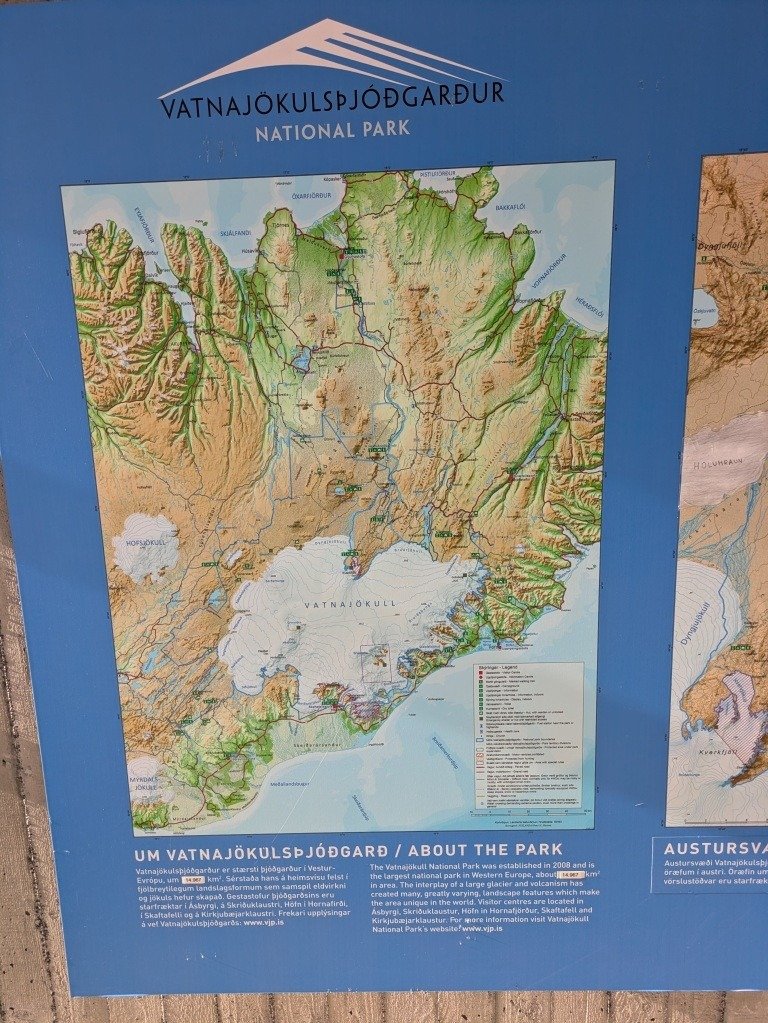
Snæfellsstofa is a visitor centre for Vatnajökull National Park in the eastern region. It is situated at Skriðuklaustur in an environmentally friendly building. The house itself is the first of its kind in the country. Vatnajökull National Park is one of the largest National Parks in Europe. It was established in 2008 and covers an area of around 15000 square kilometers which is about 15% of the surface of Iceland. The glacier covers about half of the Park, offering a unique interplay between fire and ice, volcanic activity, glacial and geological formations and waterfalls. The Park contains many areas of historical interest and an extraordinary variety of landscapes which contain some of the nation´s greatest natural treasures. It occupies a very important place in the world of natural science, due to, among other things, the dynamic interaction between fire and ice, which is still very much at work today. In 2019, Vatnajökull National Park was inscribed upon the UNESCO World Heritage List.
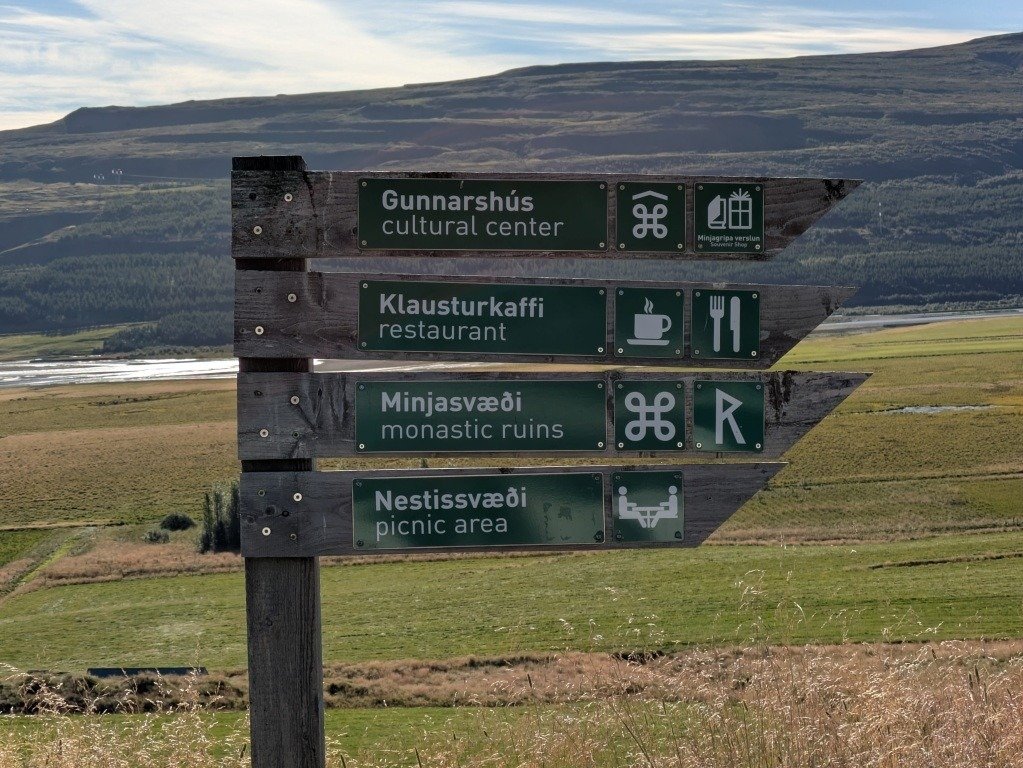
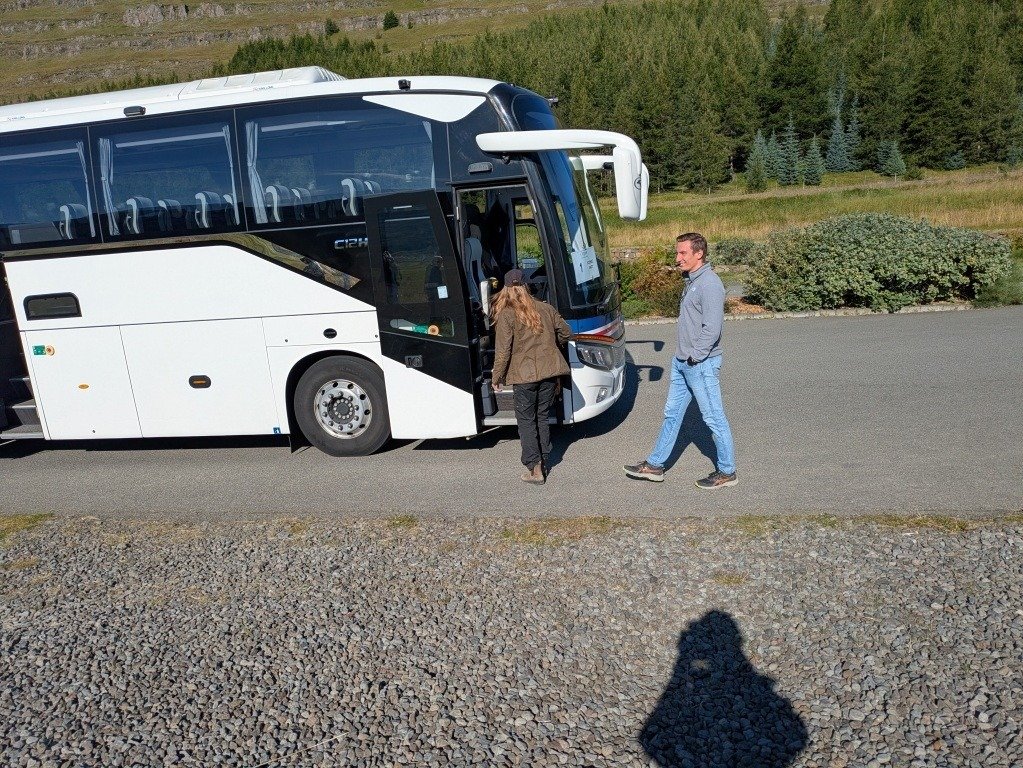
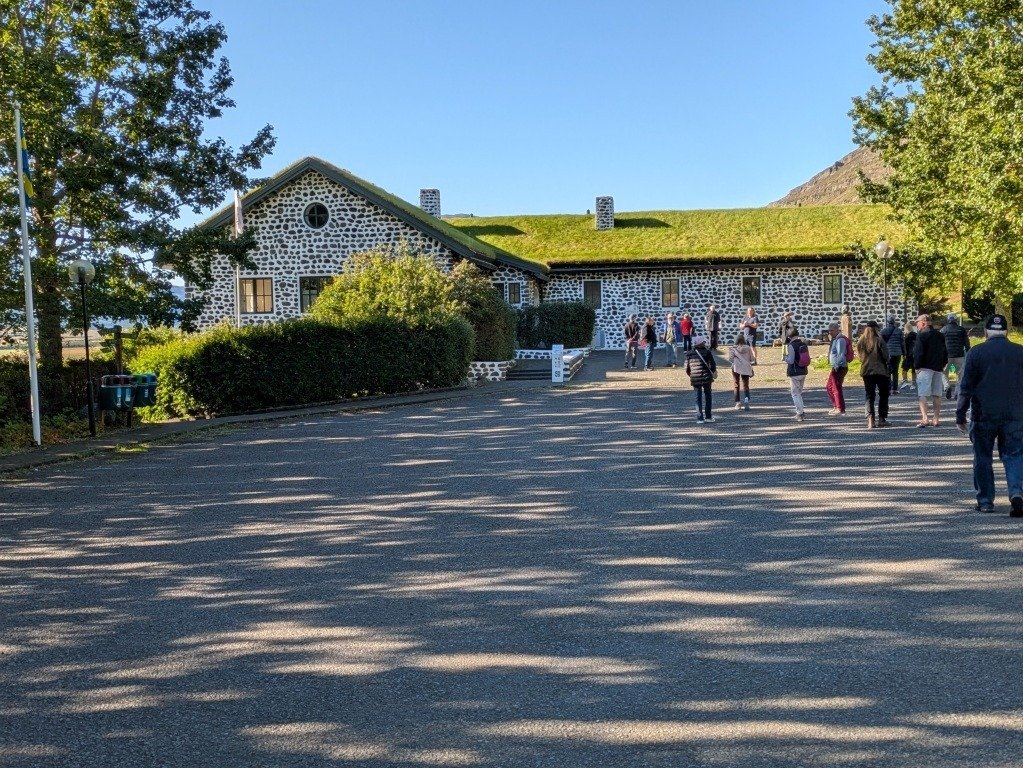
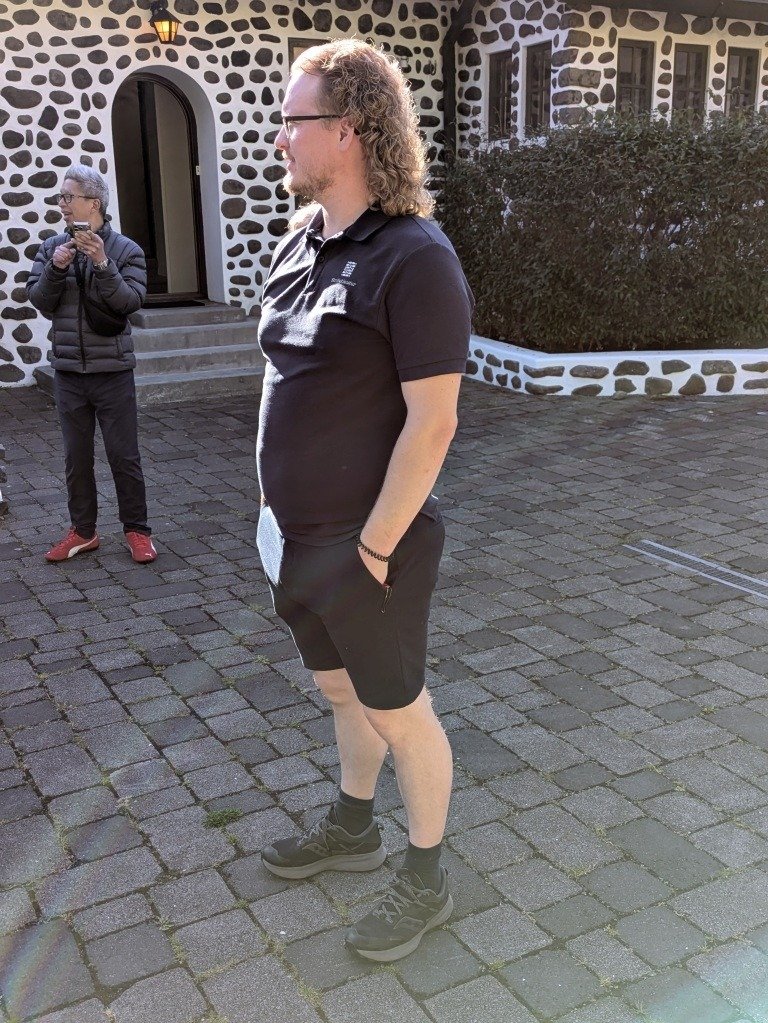
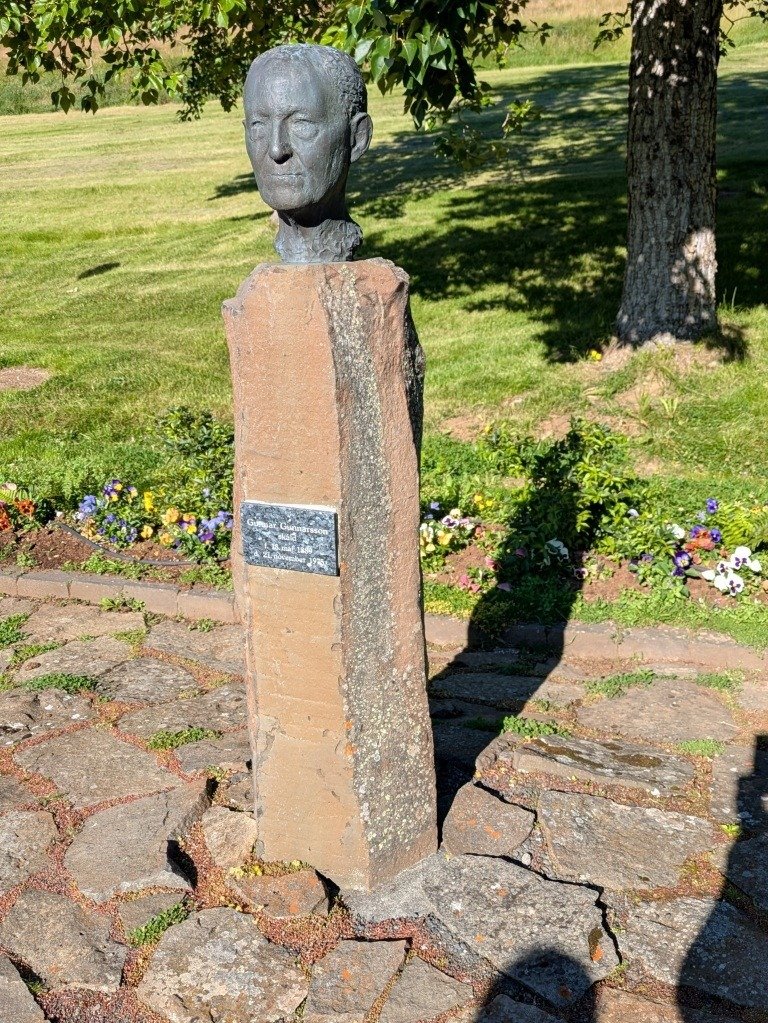
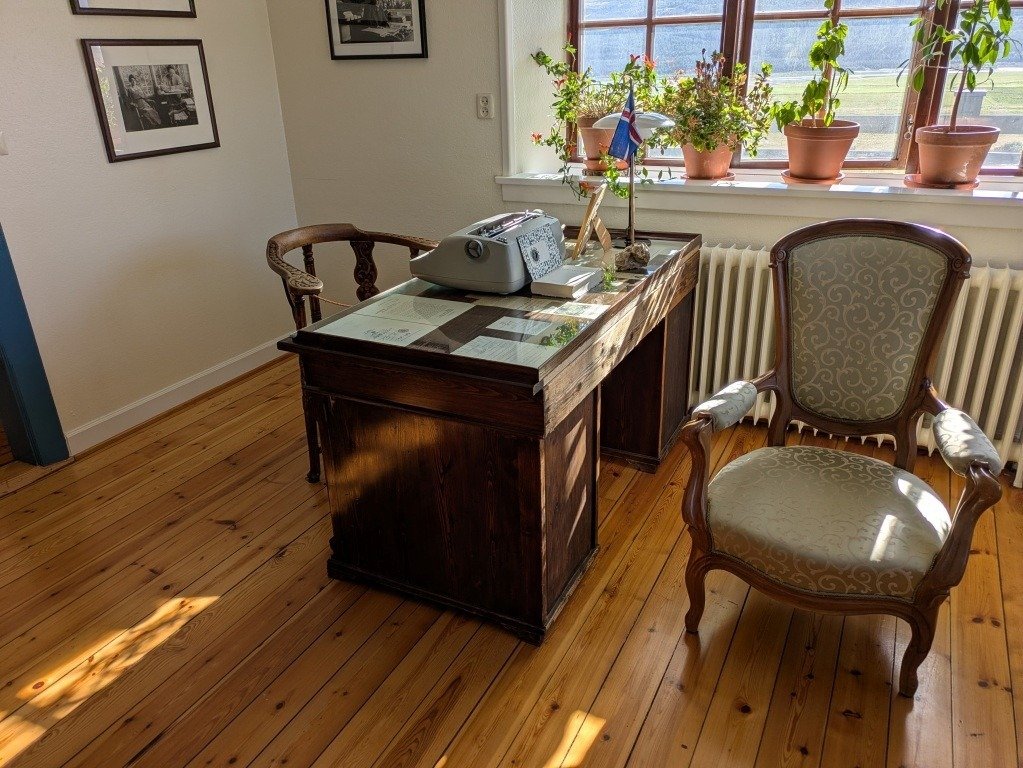
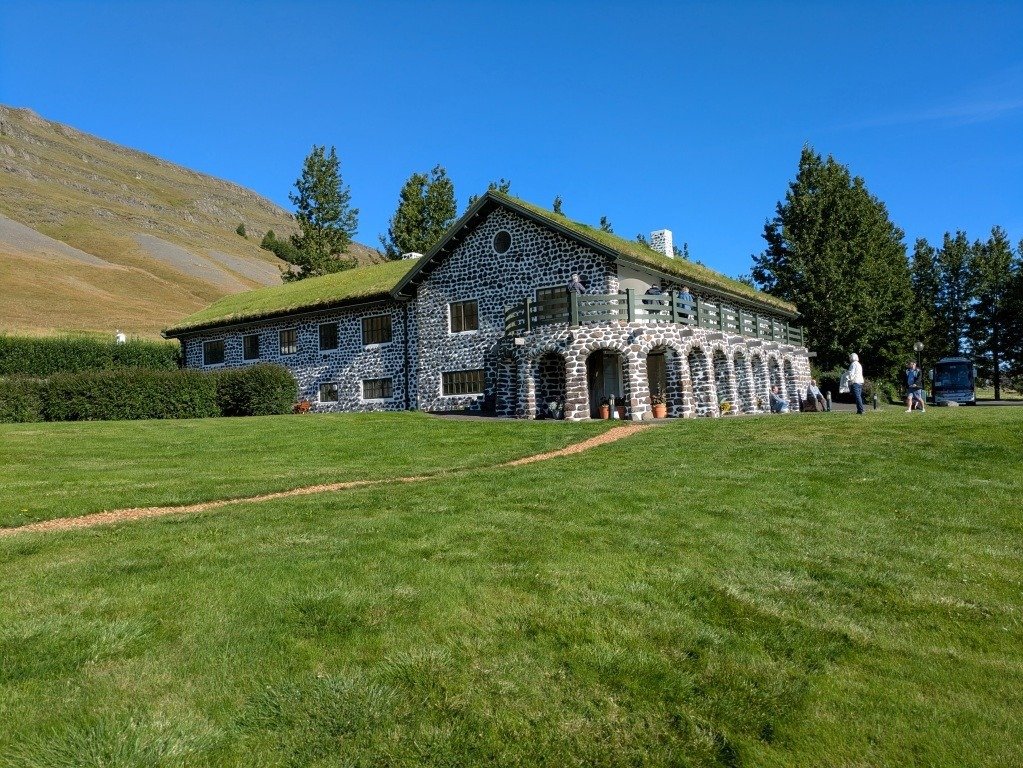
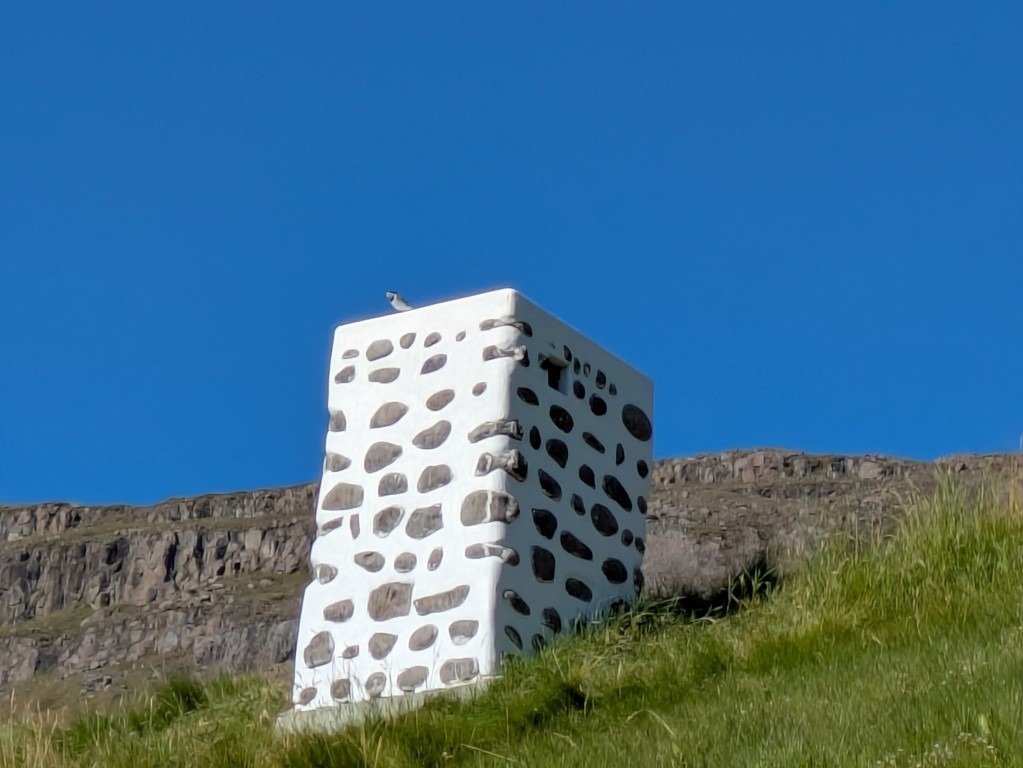
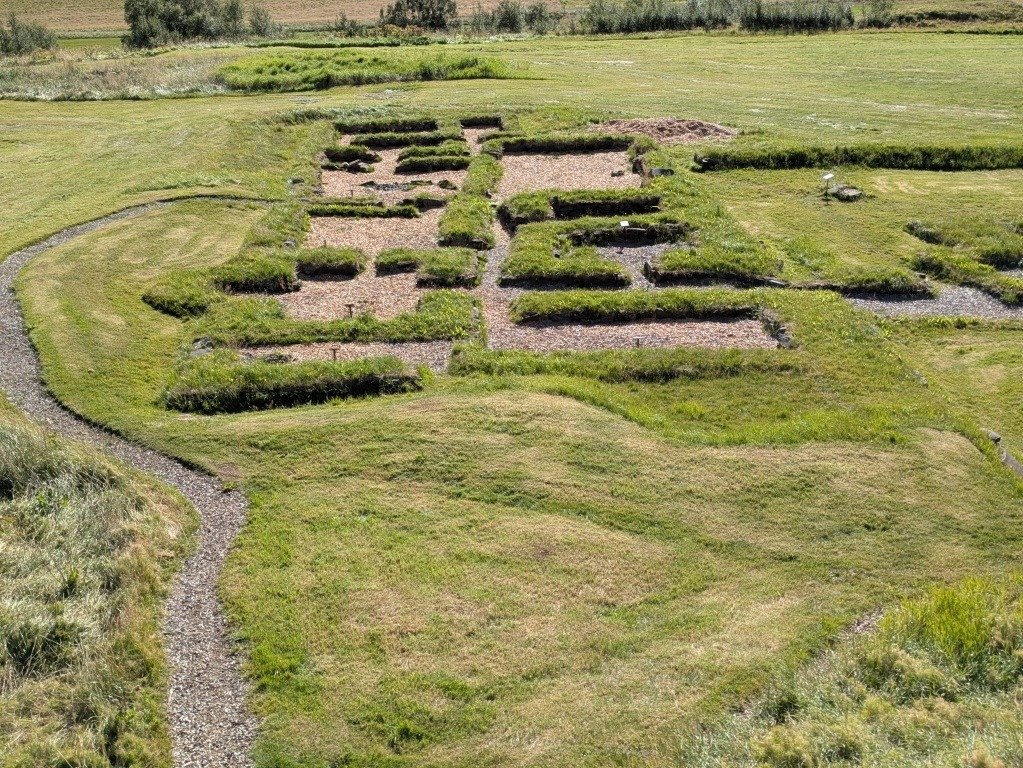
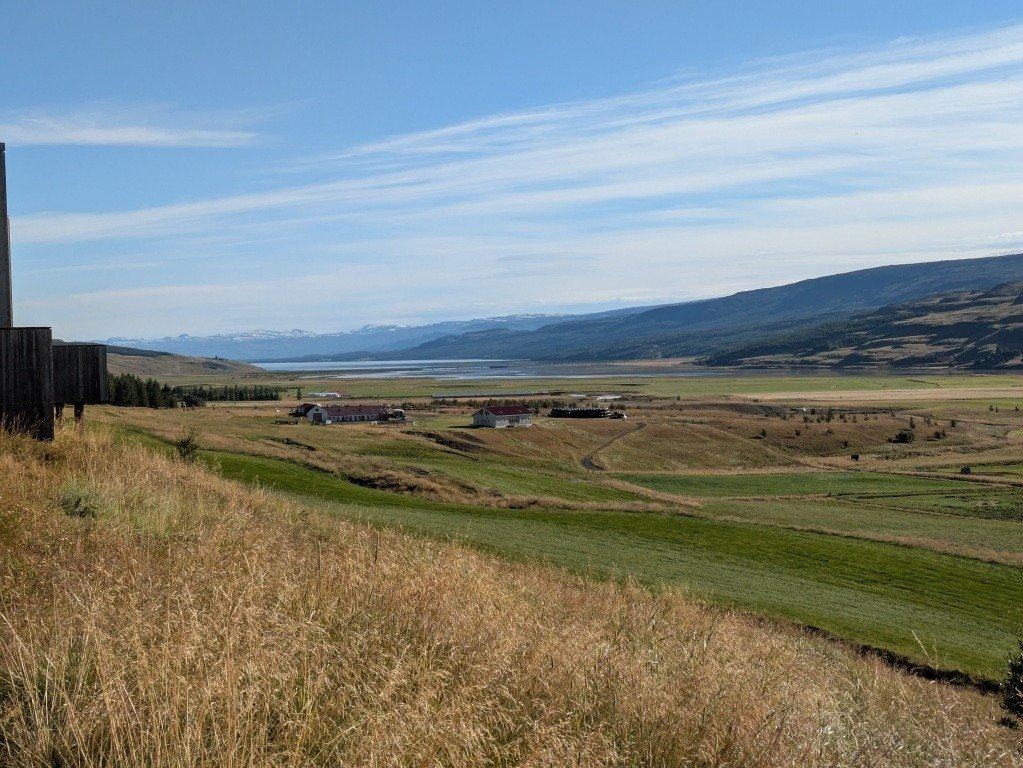
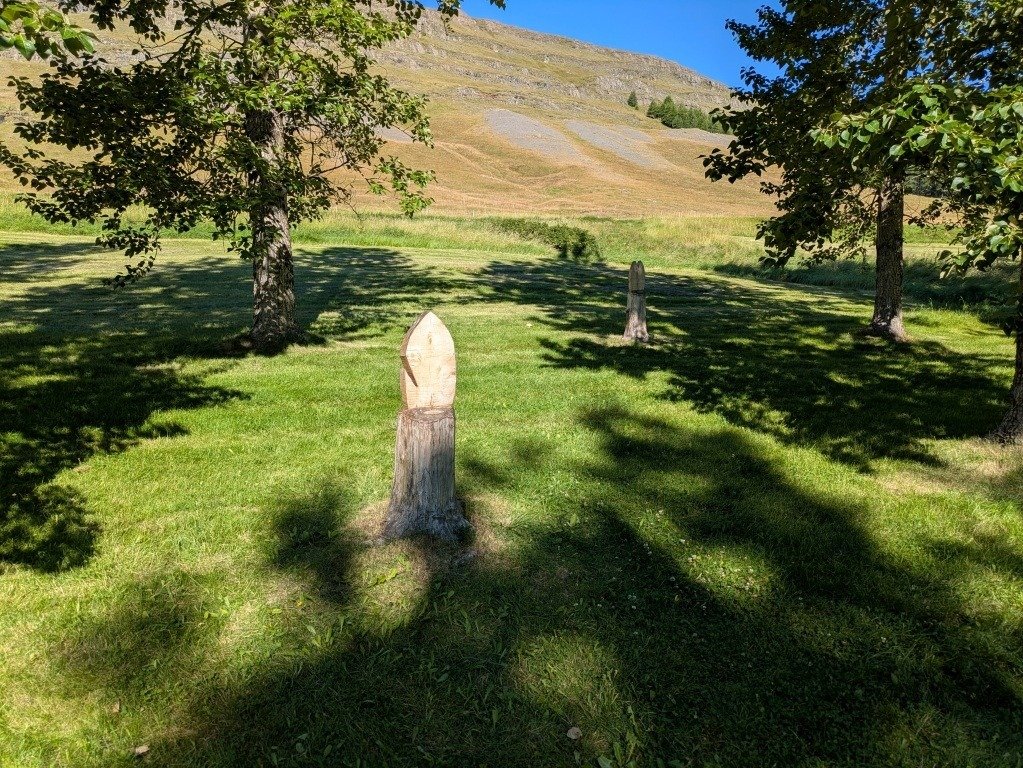
From the visitor center we then had a short walk to the nearby building. This was the Skriðuklaustur, a historic site featuring the ruins of a 16th-century monastery and The Writer’s House, built in 1939 by the writer Gunnar Gunnarsson. A guide gave us an explanation about the building and author before we were allowed to wander inside and then take in the grounds and monastery ruins. Gunnar Gunnarsson (18 May 1889 – 21 November 1975) was an Icelandic author who wrote mainly in Danish. He grew up in considerable poverty. During the first half of 20th century he became one of the most popular novelists in Denmark and Germany. He is often considered one of the most important Icelandic writers. The building is an unusual black and white style which our guide described as the dalmatian building. Another guest and I noticed a small bird on the building chimney which we were able to identify as a white wagtail. There are great views of the river and valley from here. At 11:50am we boarded our bus for the return journey. Back over the high pass from where we had spectacular views before descending back into Seyðisfjörður by noon.
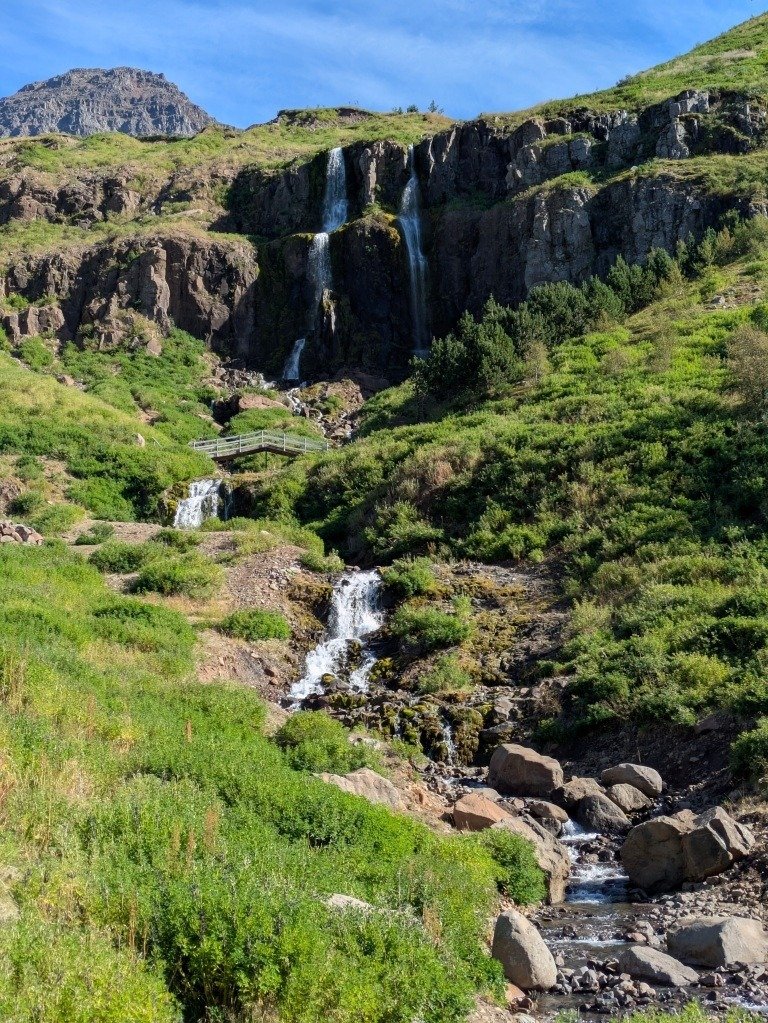
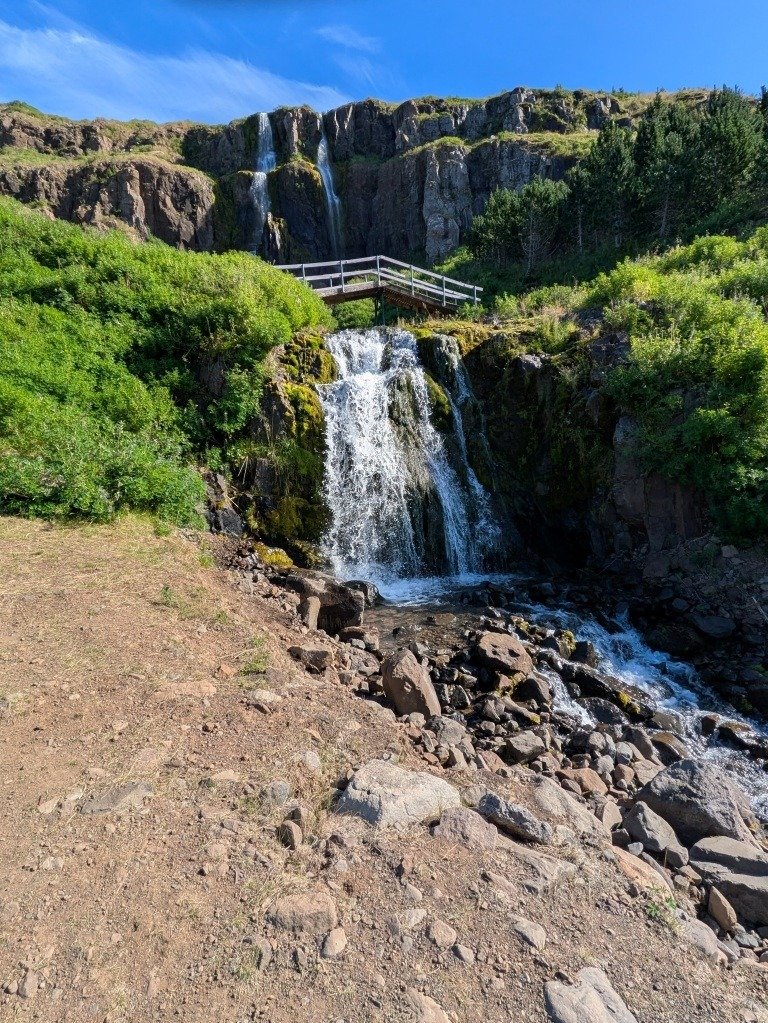
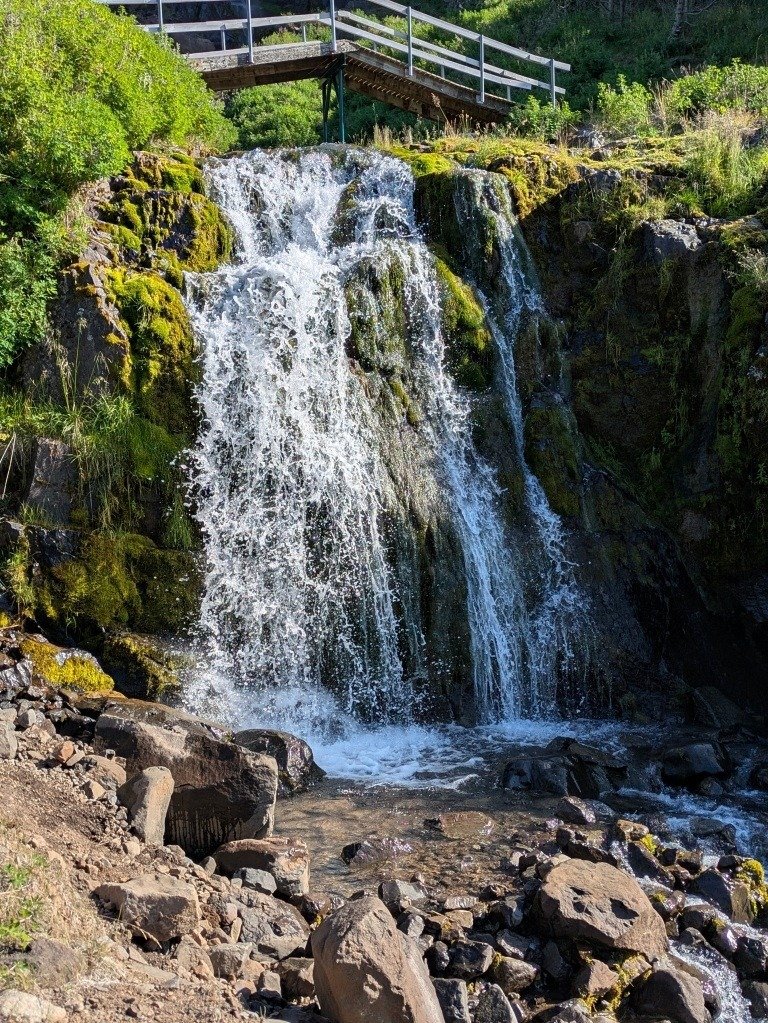
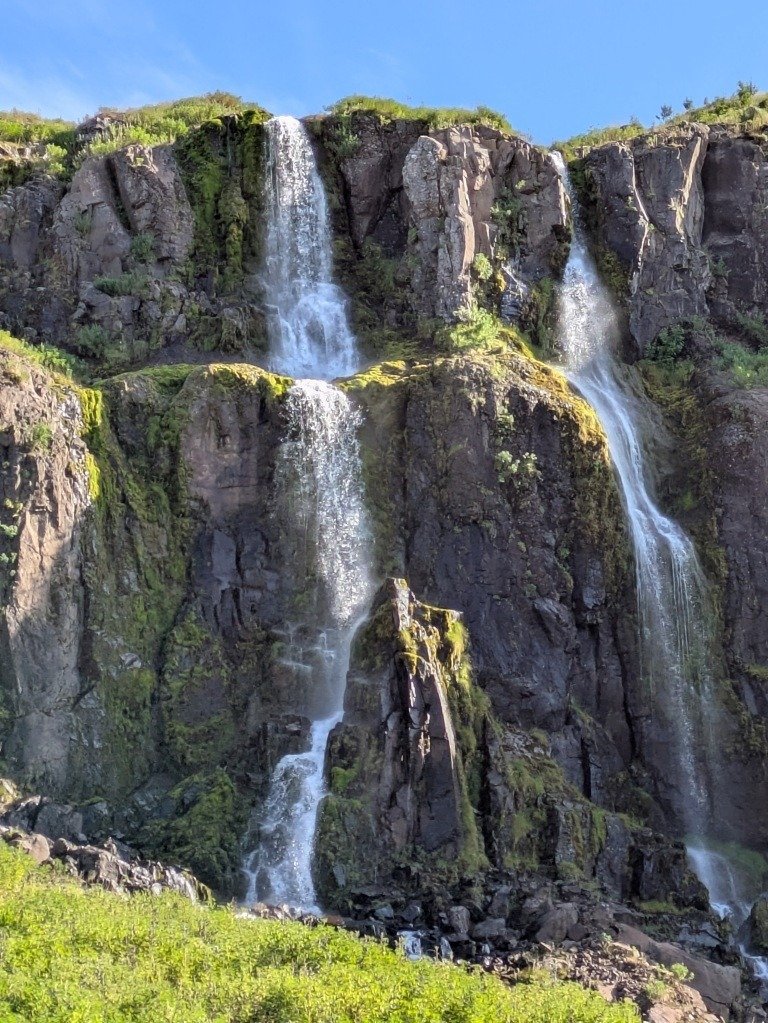
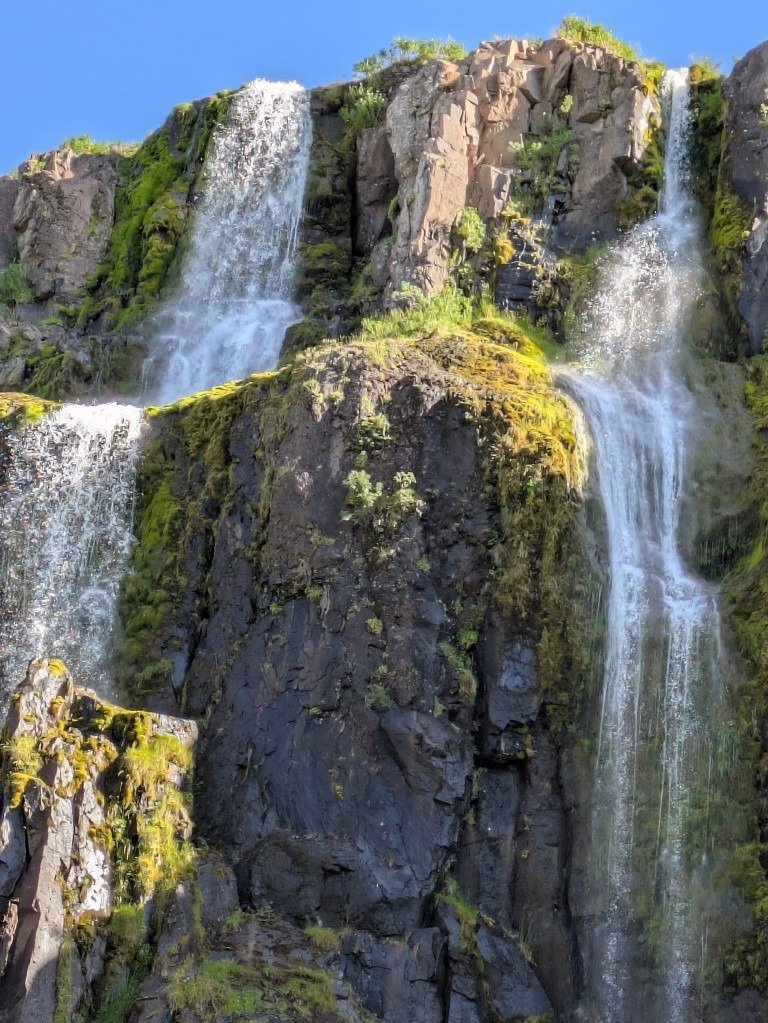
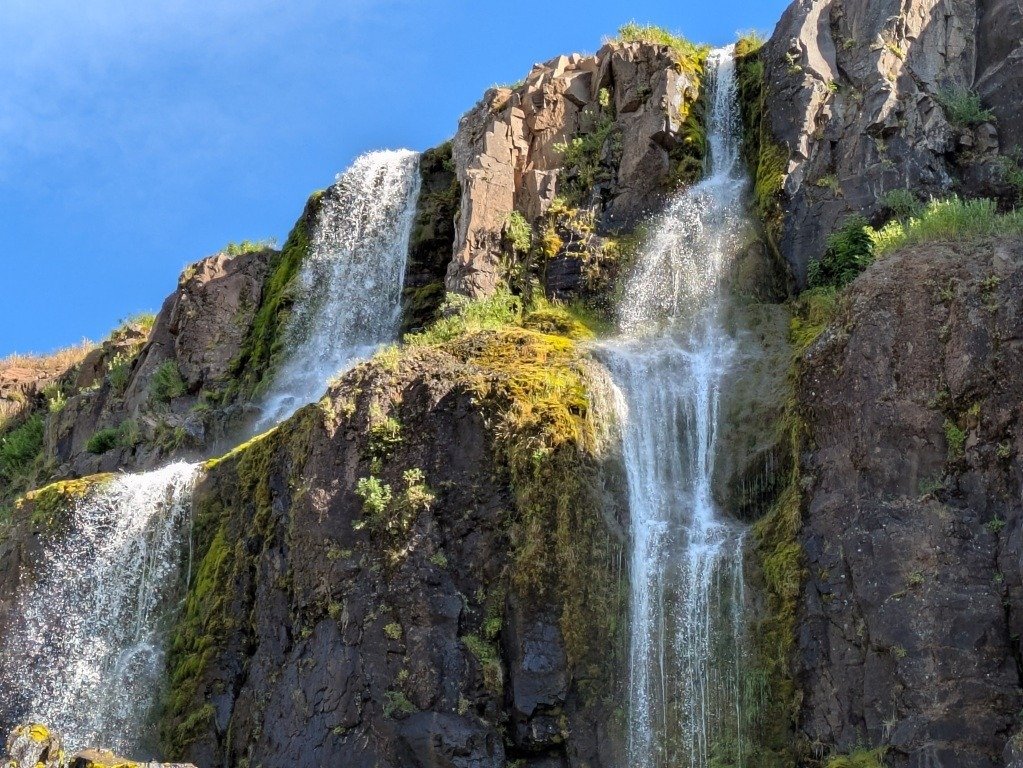
In the afternoon took a short walk across the road and then up the path to the nearby Búðarárfoss waterfall. A short but steep path led up to a wooden bridge below the waterfall giving a good photo opportunity. Following the path across the bridge eventually wound its way back down to the road. The round trip took about 30 minutes.
This has been a fairly dry summer season here, so all the waterfalls are at reduced levels. Once the rains and winter snow return the falls become more spectacular.
Highlight of the day: Going over the mountain.