Cobh
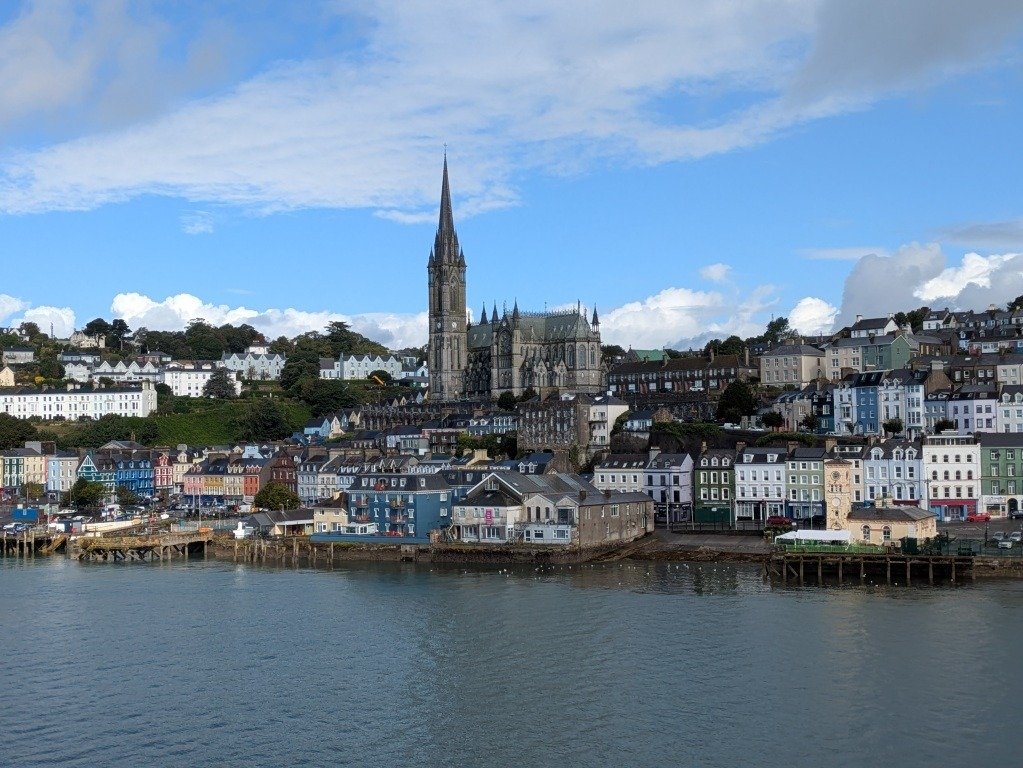
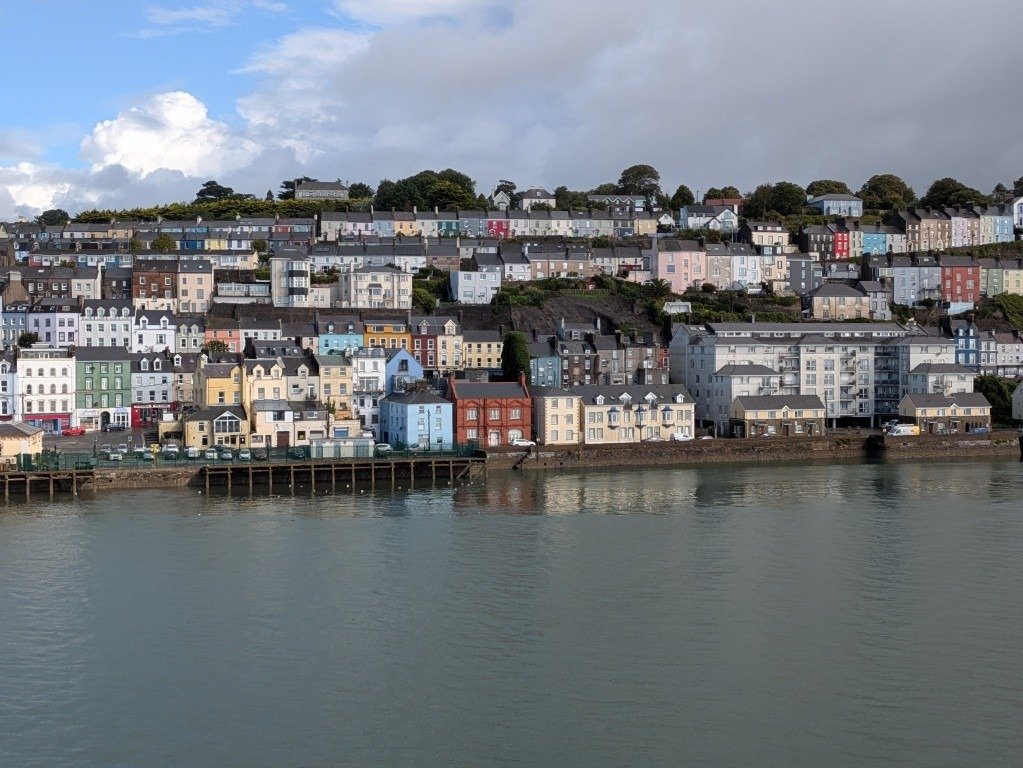
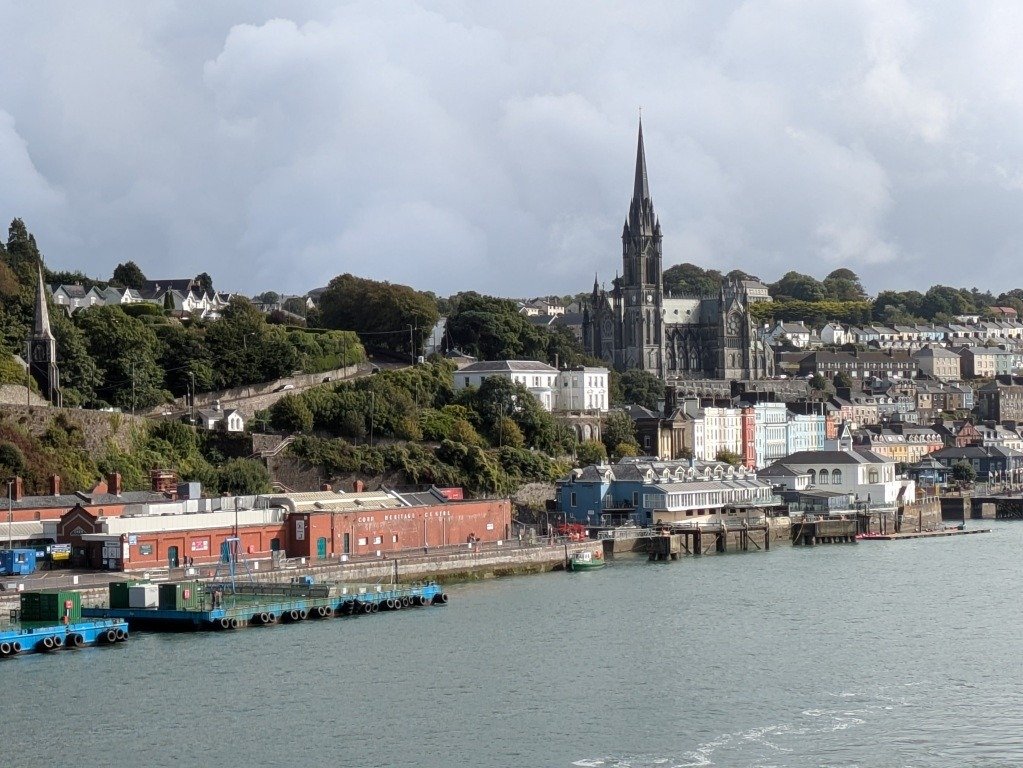
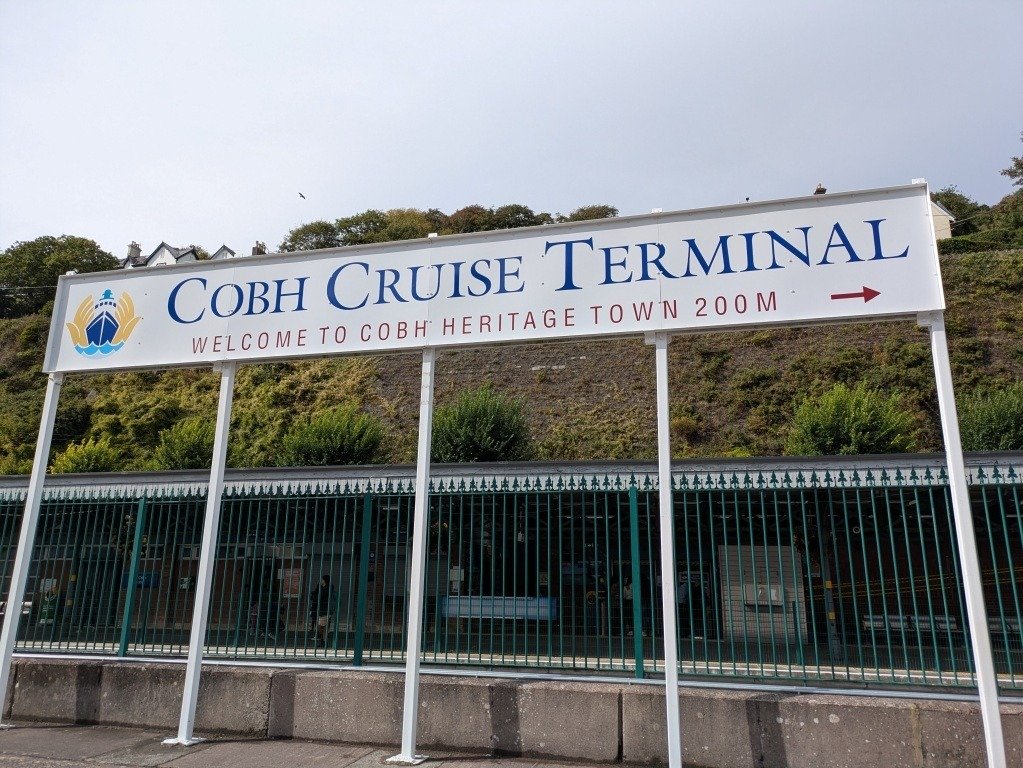
Sunday morning saw us approaching Cobh with partly sunny weather and temperature around 16c. Eventually docked close to the town by 11am. Cobh, known from 1849 until 1920 as Queenstown, is a seaport town on the south coast of County Cork, Ireland. With a population of approximately 14,000 Cobh is on the south side of Great Island in Cork Harbour and home to Ireland’s only dedicated cruise terminal.
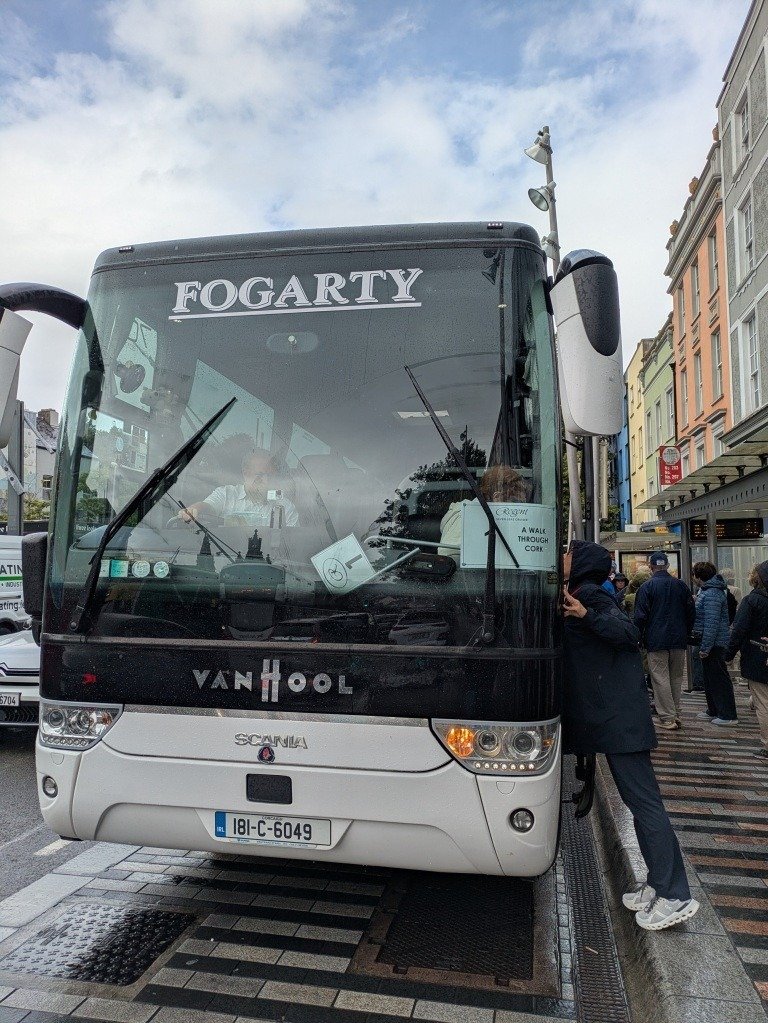
Today I was on the Cork city walking tour and Patti went to Blarney Woolen Mills. My tour set out at noon. 38 of us on the bus with our guides Ann & Roger along with driver Eddie. A 30-minute scenic drive, mostly along the waterside, took us into Cork. Of interest is that Cobh is on an island and we had to cross the only small bridge to get to the mainland.
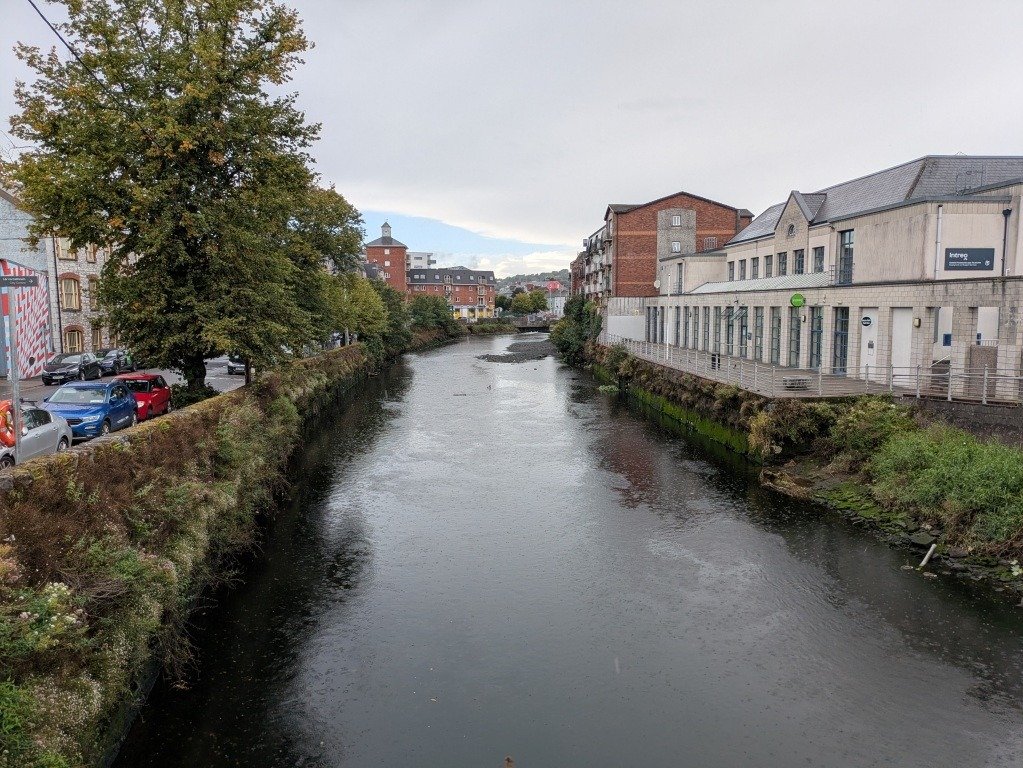
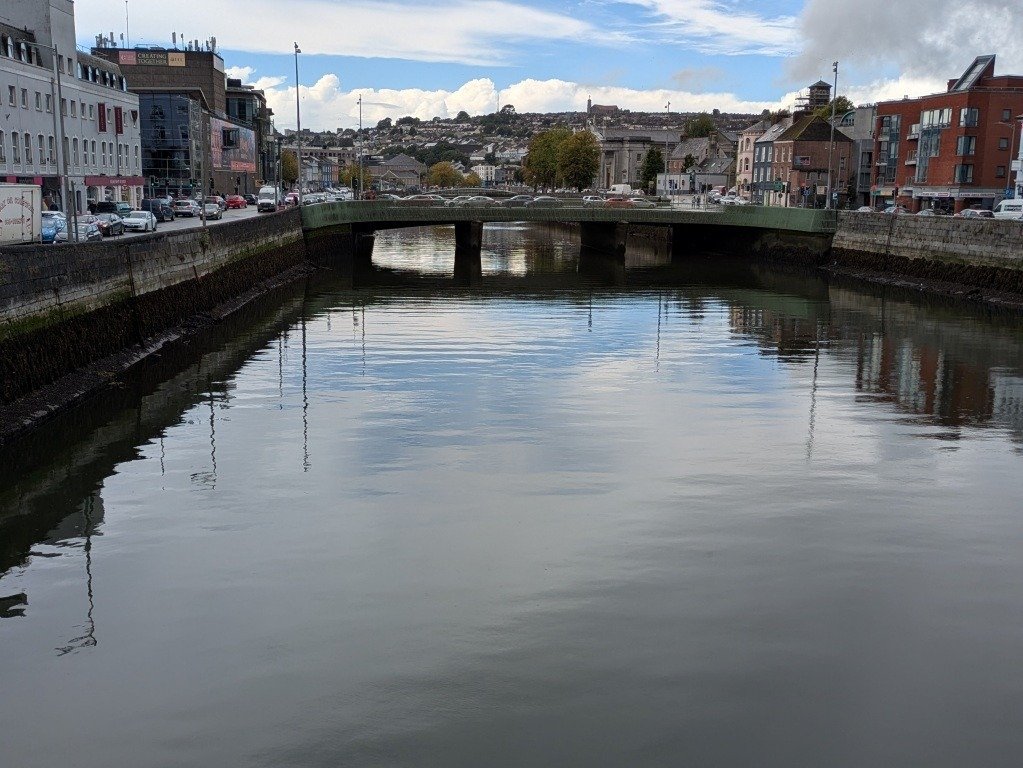
Cork is the second-largest city in the Republic of Ireland, the largest city in the province of Munster and the third largest on the Island of Ireland. It has a population of approximately 225,000. The city centre is an island between two channels of the River Lee which meet downstream at its eastern end, where the quays and docks along the river lead outwards towards Louch Mahon and Cork Harbour, one of the world’s largest natural harbours. Cork was founded in the 6th century as a monastic settlement and was expanded by Viking invaders around 915. Its charter was granted by Prince John in 1185. Cork city was once fully walled, and remnants of the old medieval town centre remain around South and North Main streets.
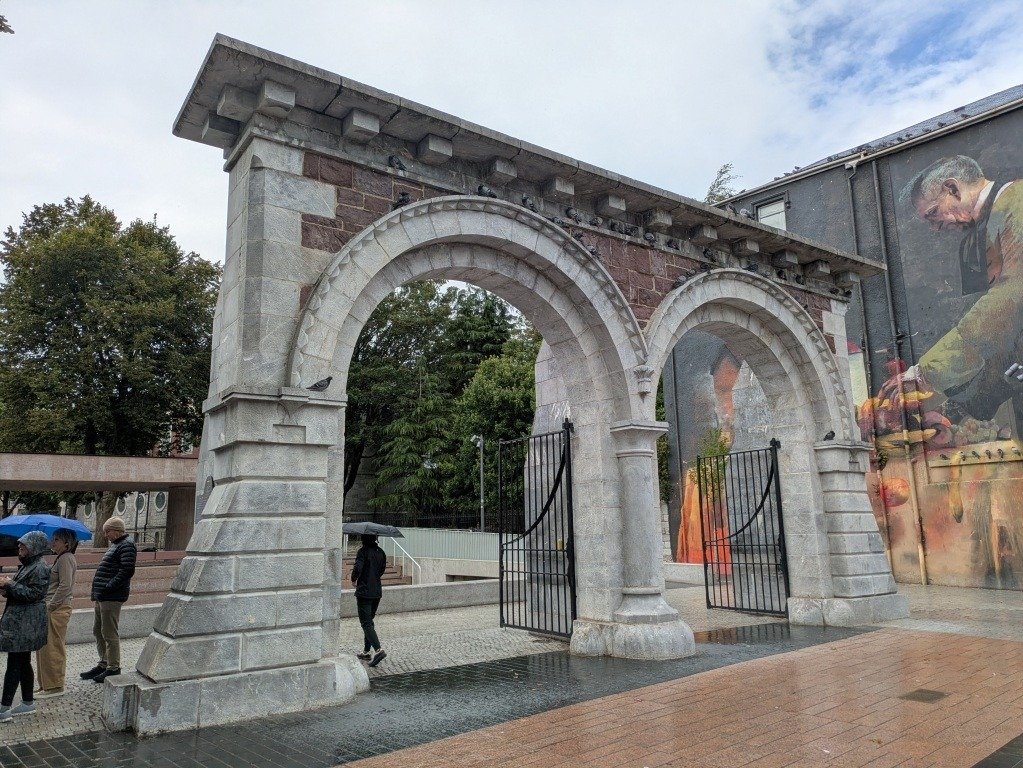
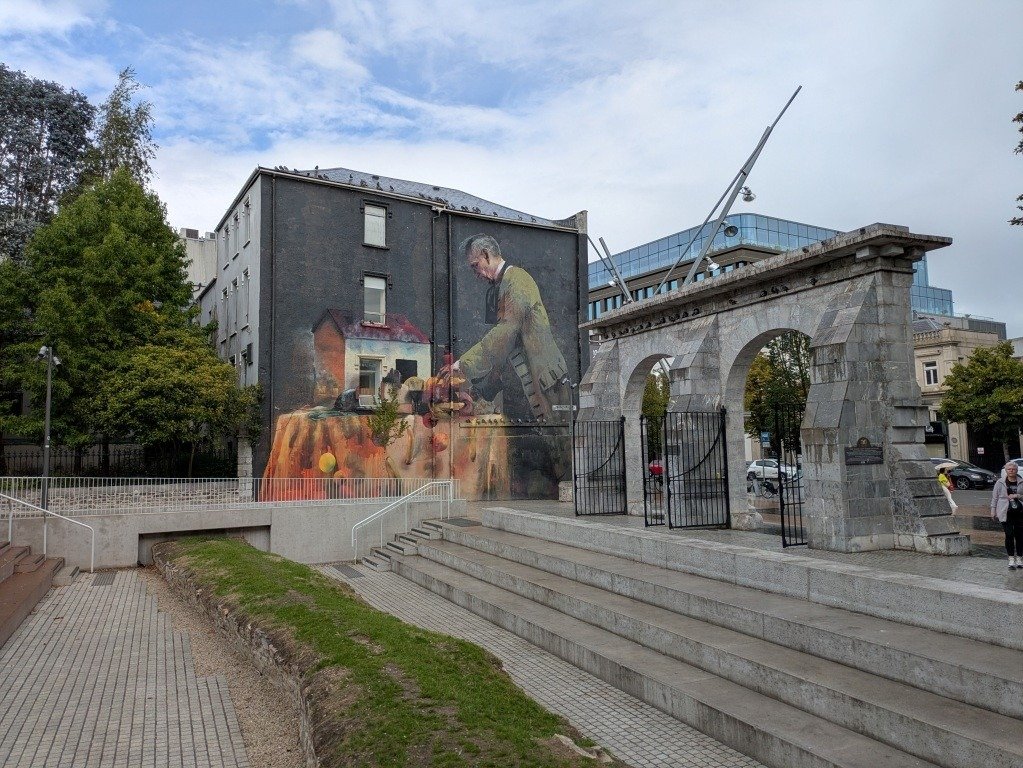
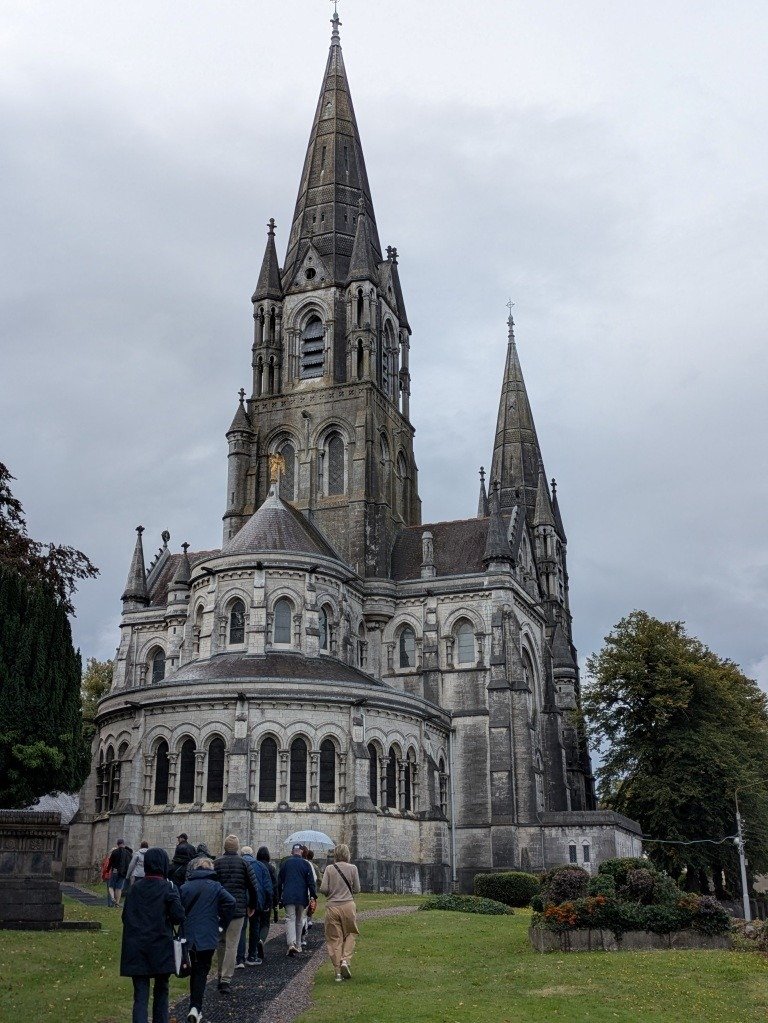
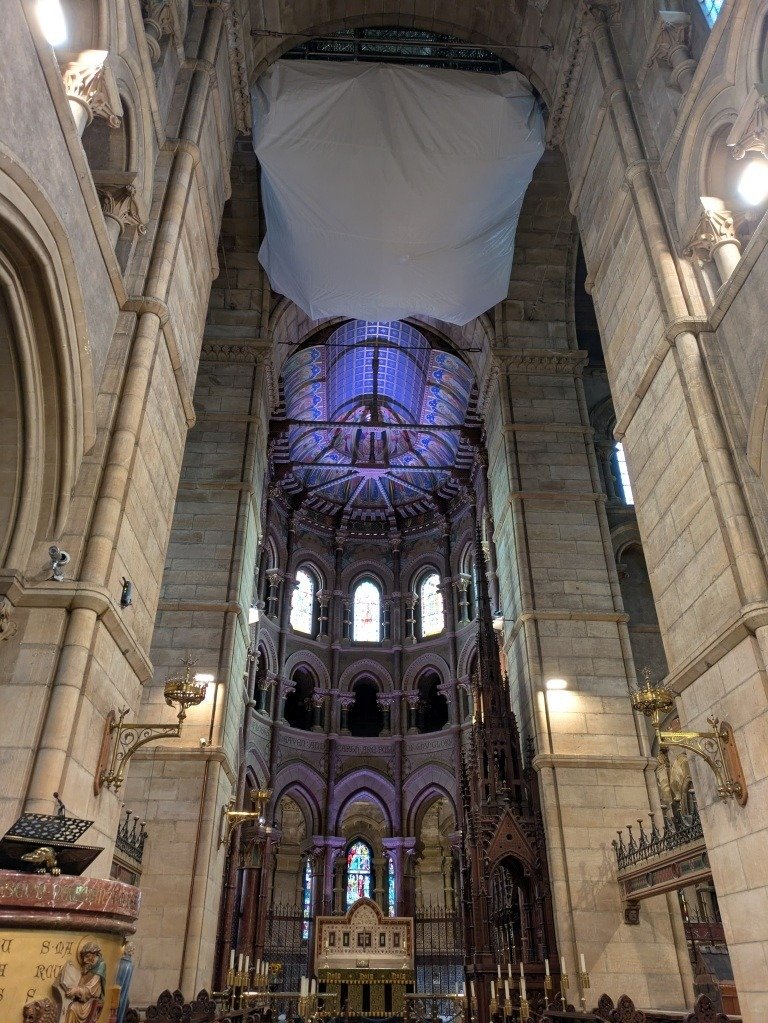
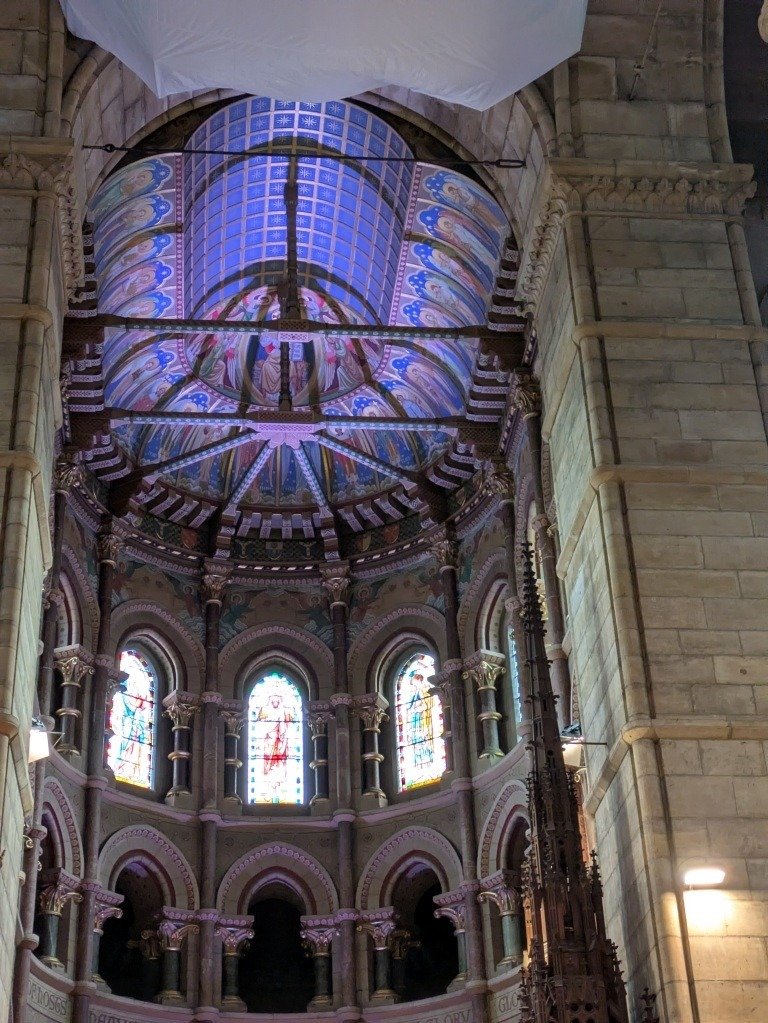
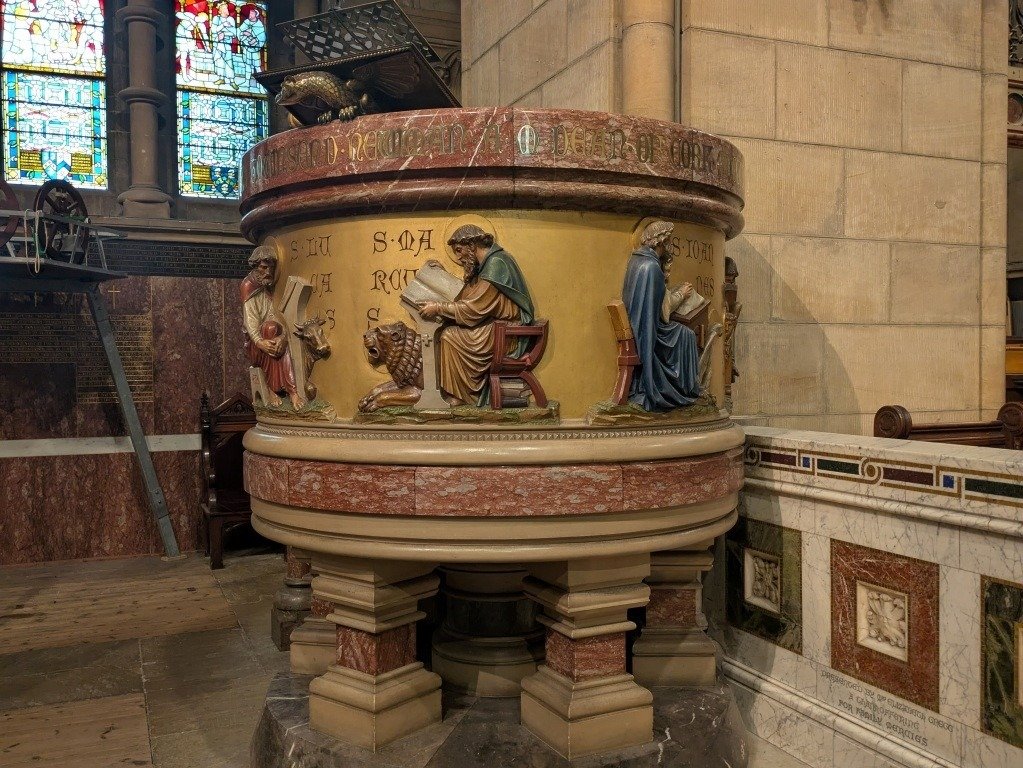
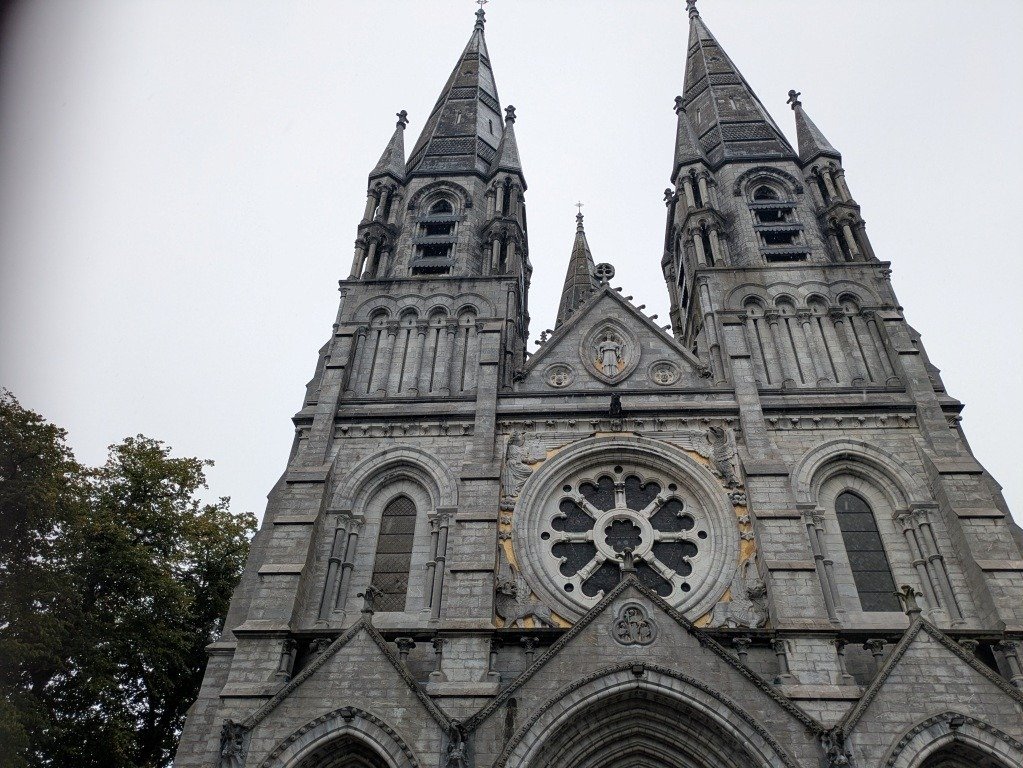
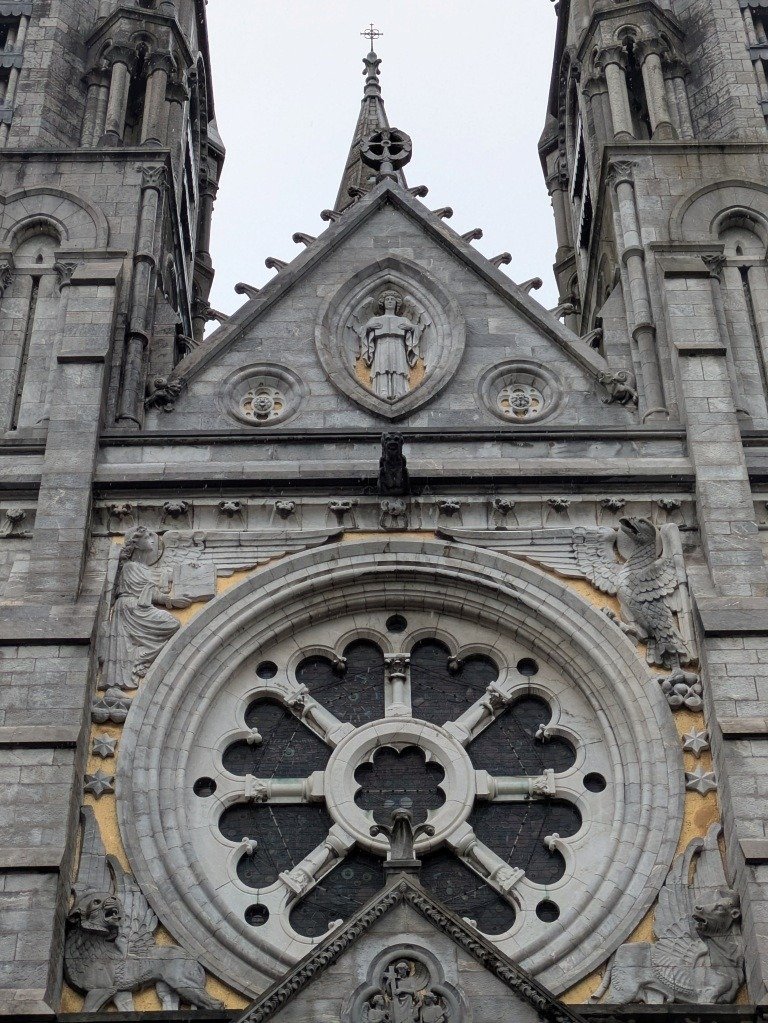
Once we arrived in the city centre we split into 2 groups for our walking tour. 16 of us went off with Ann, walking across to the city corn market archway. From there we headed to Saint Finn Barre’s cathedral just as the clouds thickened and light rain started to fall. The cathedral was quite impressive although not on a grand scale. We were given an interesting talk about the history of the place by the church guide.
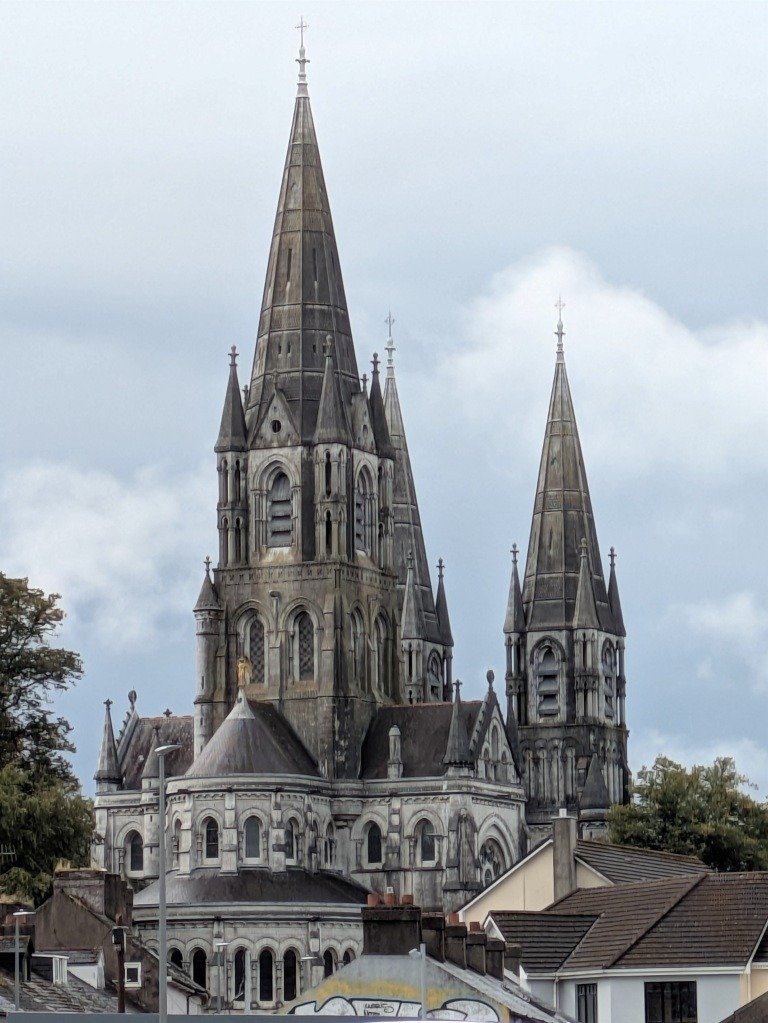
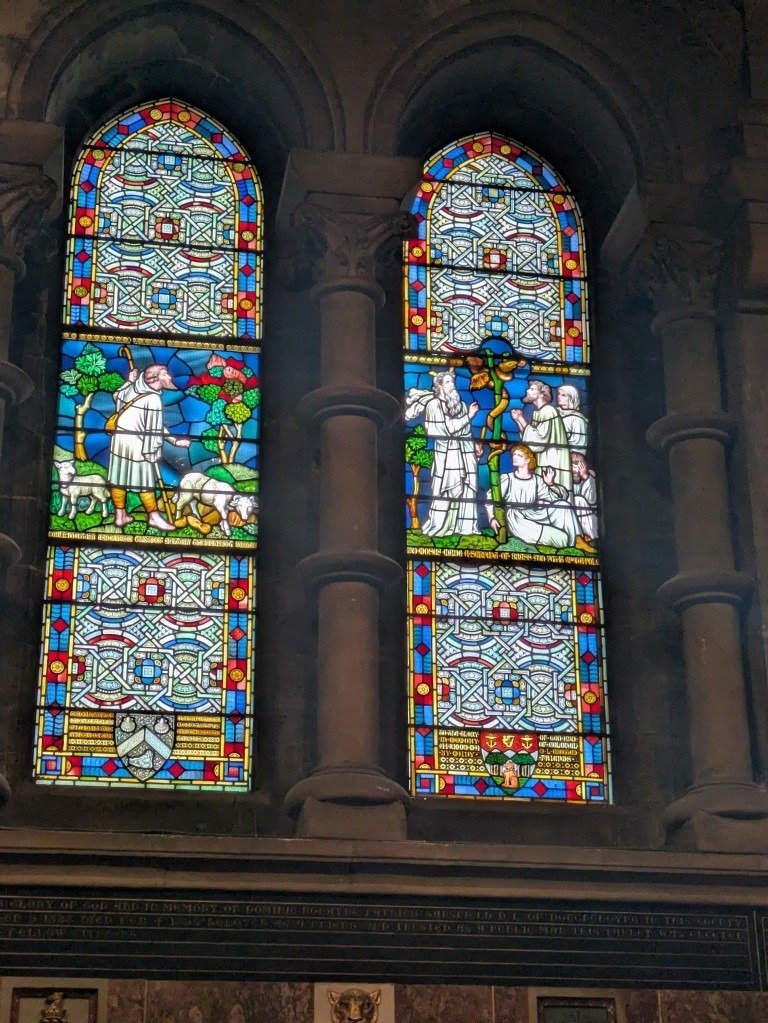
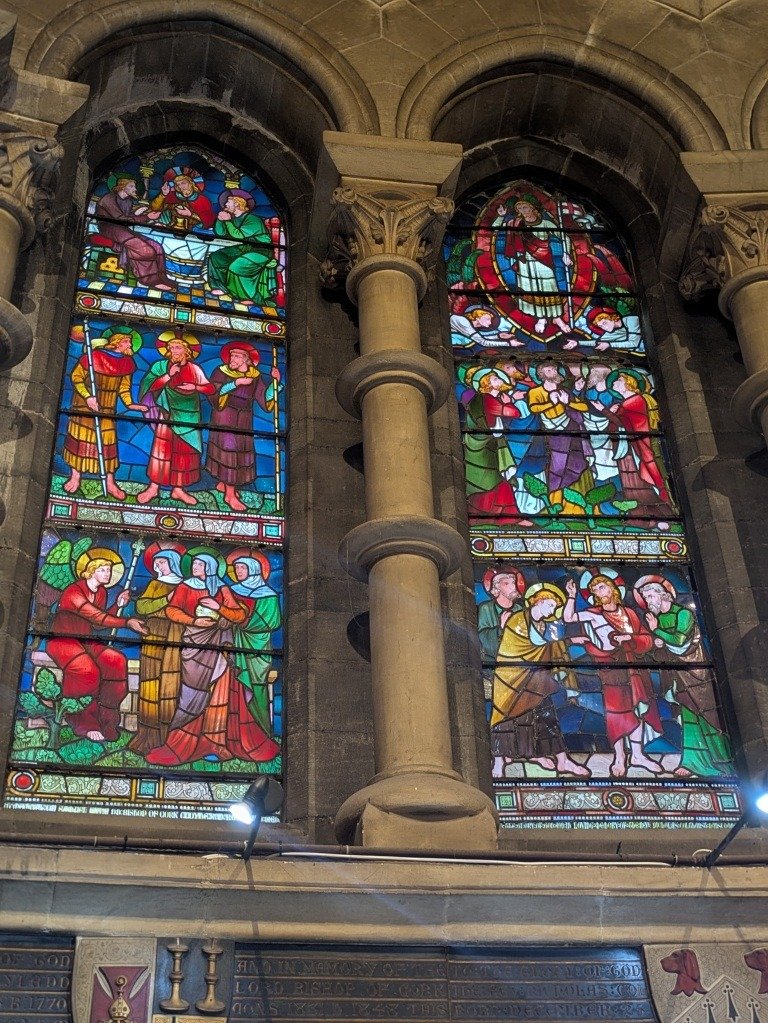
William Burges was appointed the cathedral architect in 1862. Although initially budgeted at £15,000, Burges’ ambitious vision saw costs rise to £100,000 by completion, creating a landmark of unmatched splendor. The foundation stone was laid in 1865 by Bishop John Gregg, and the cathedral was consecrated on St. Andrew’s Day, 1870. The towers and spires are crafted from Cork limestone and much of the interior features red Cork marble. Inside, the walls of Bath stone hold vibrant stained-glass windows, some of the finest in Ireland, retaining their vivid, unfaded colours.
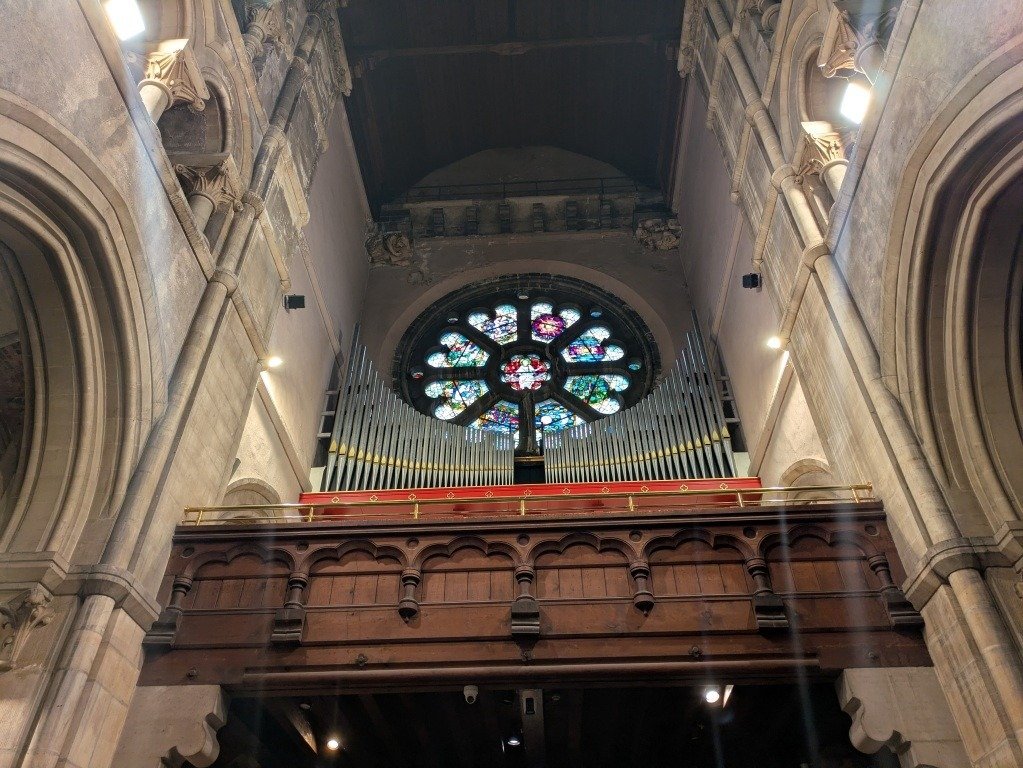
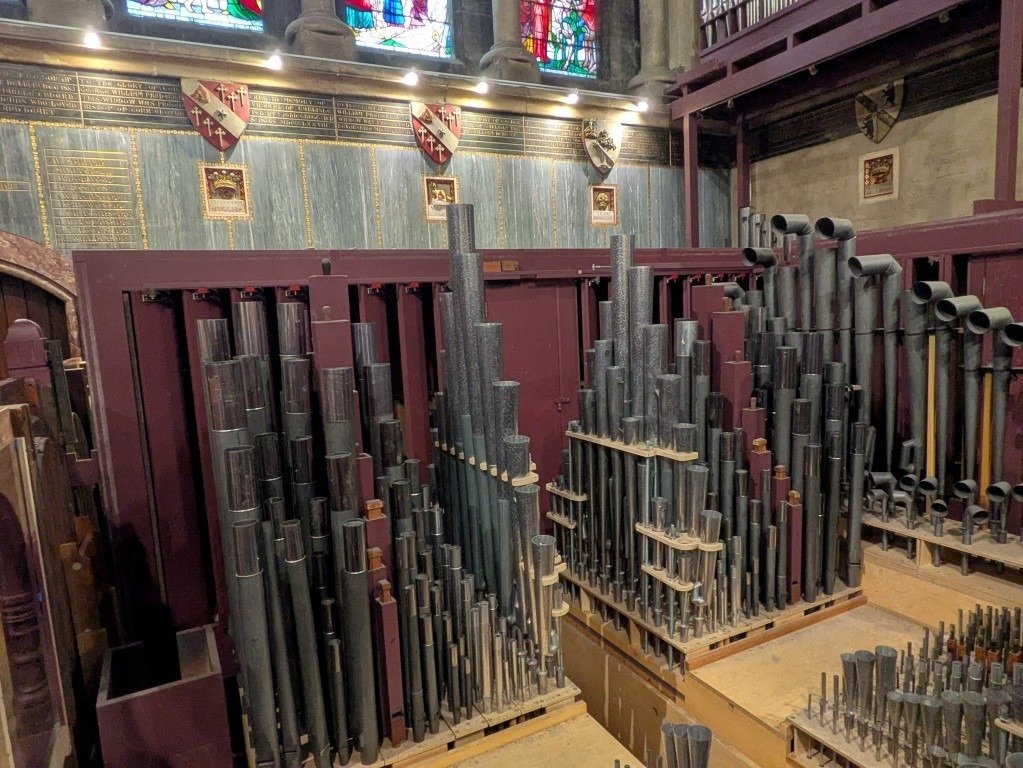
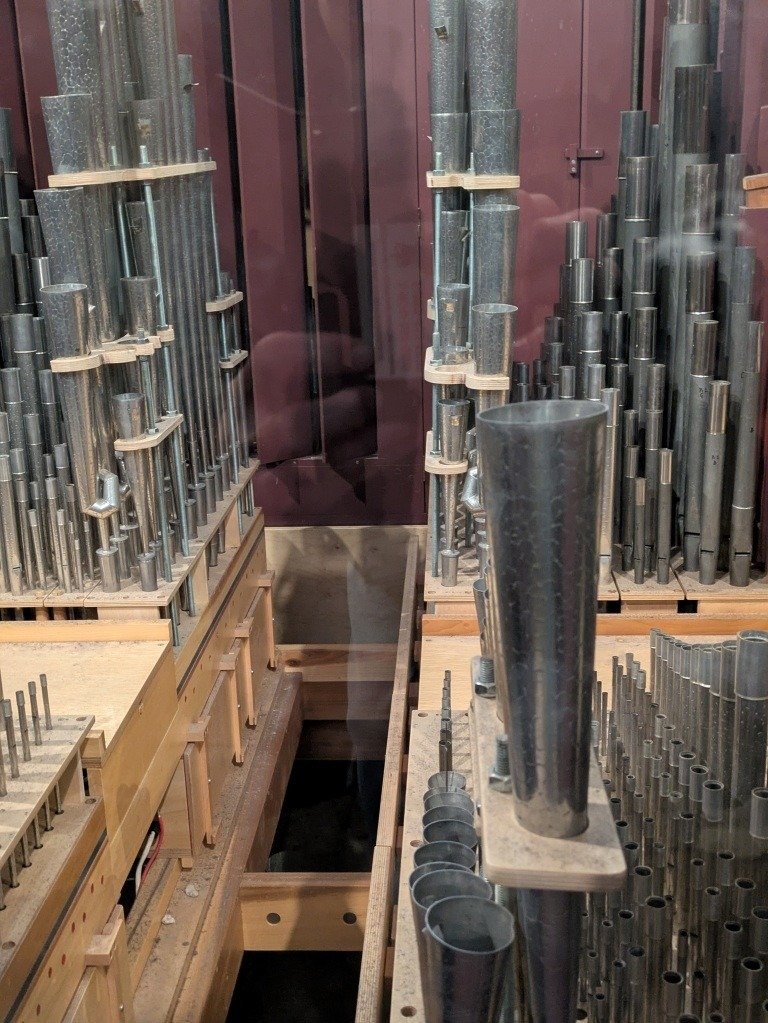
We then had time to look around and of most interest to me was the organ. The original West Gallery position, while excellent for the organ itself, must have posed problems when the choir at the East End had to be accompanied. After some controversy, Dean Madden proposed that the organ be moved and, to avoid obscuring the stained glass windows and mosaics, a large pit, 14 ft. deep, was dug in the North Transept. In 1889 the organ was moved into this chamber by the Cork firm T.W. Magahy so that only the tops of the tallest pipes were showing. He added three ‘pneumatic machines’ to the action and three new stops – though it is not entirely clear which these were. There were further rebuilds in 1906, 1965 and 2013.
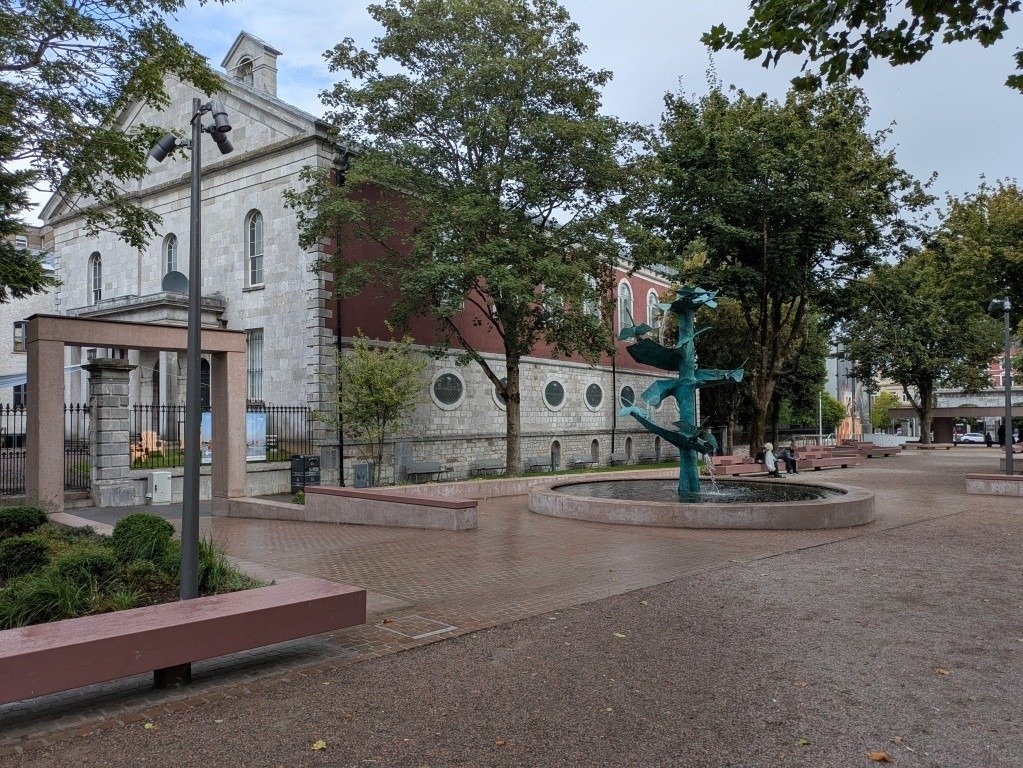
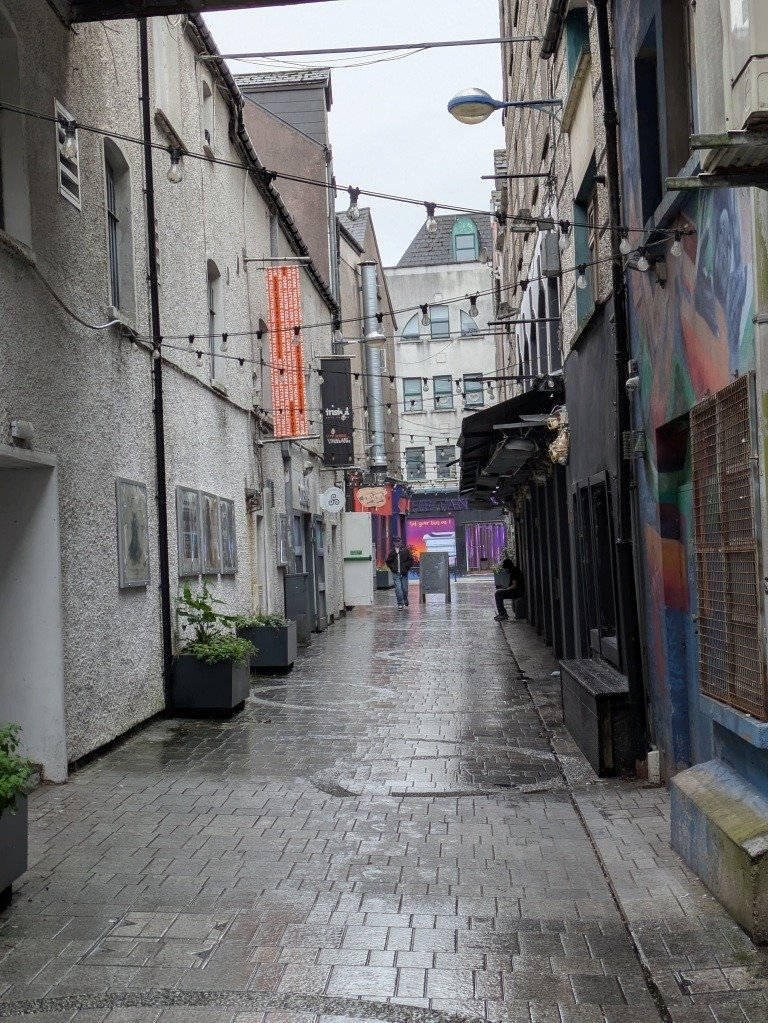
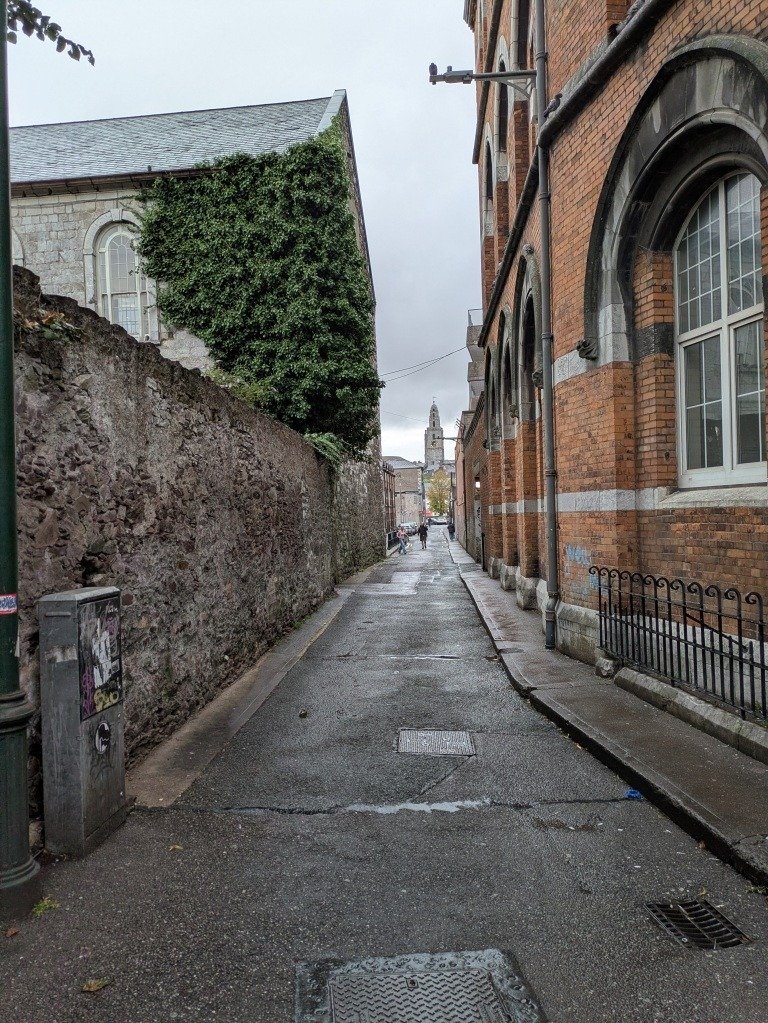
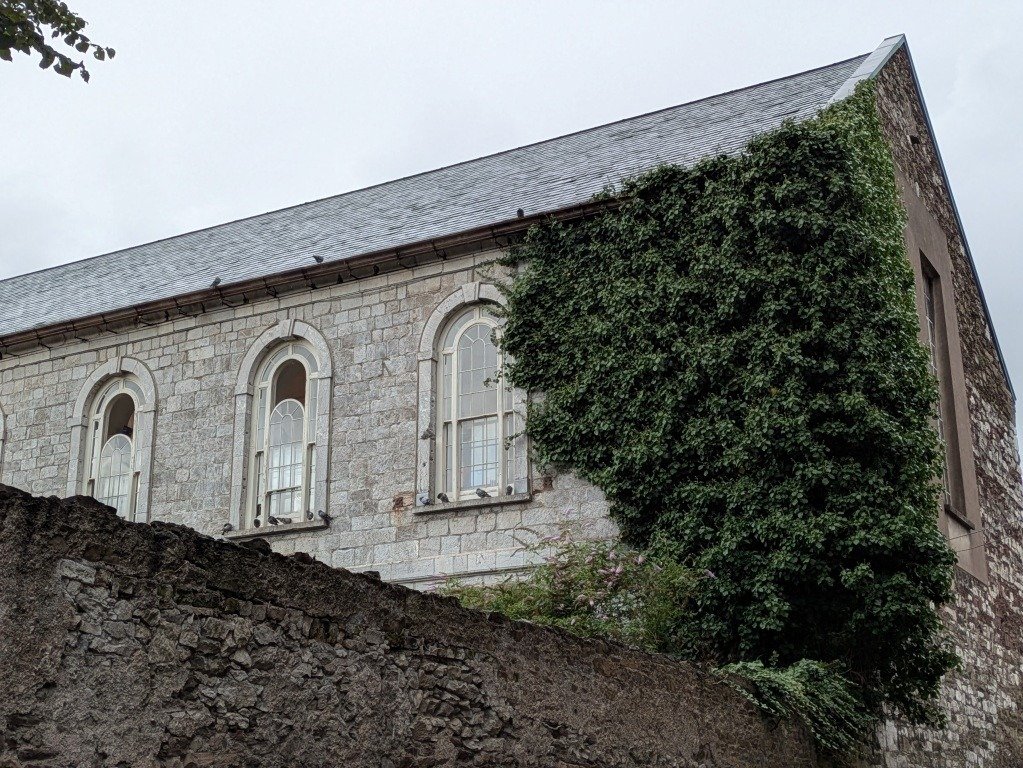
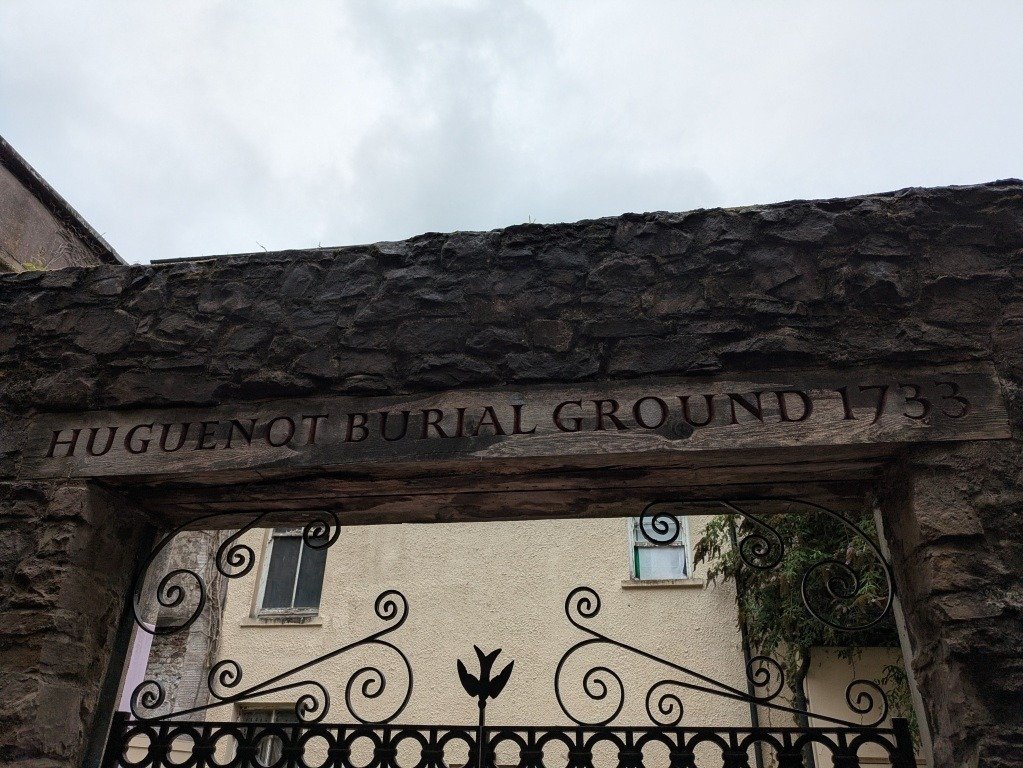
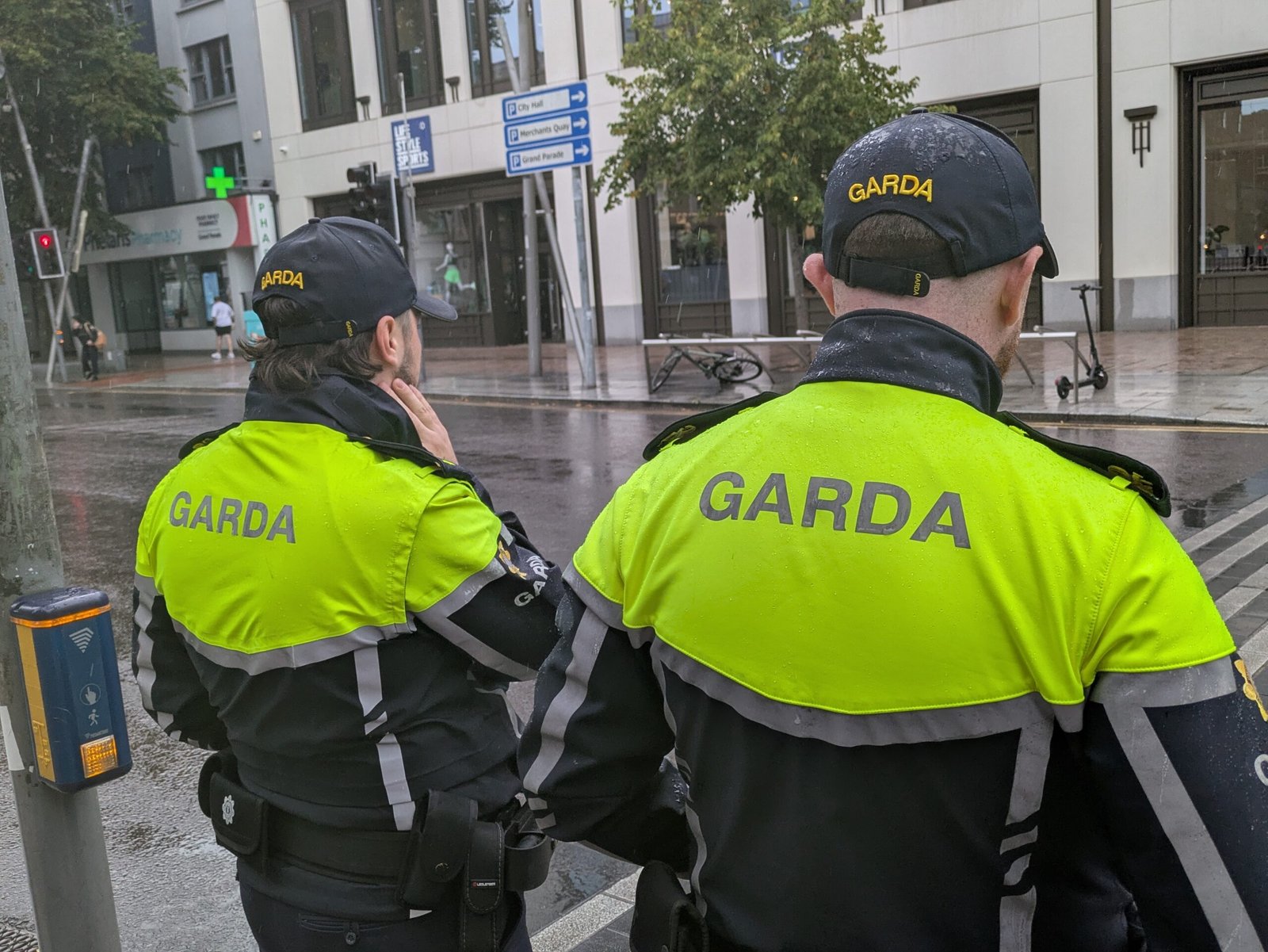
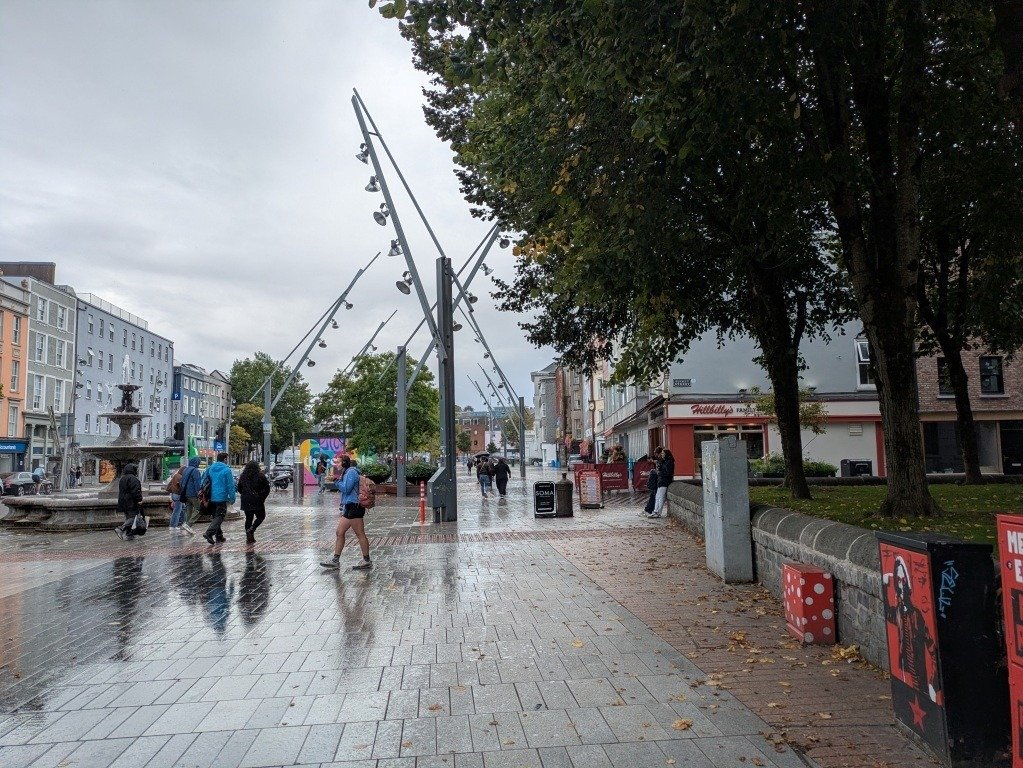
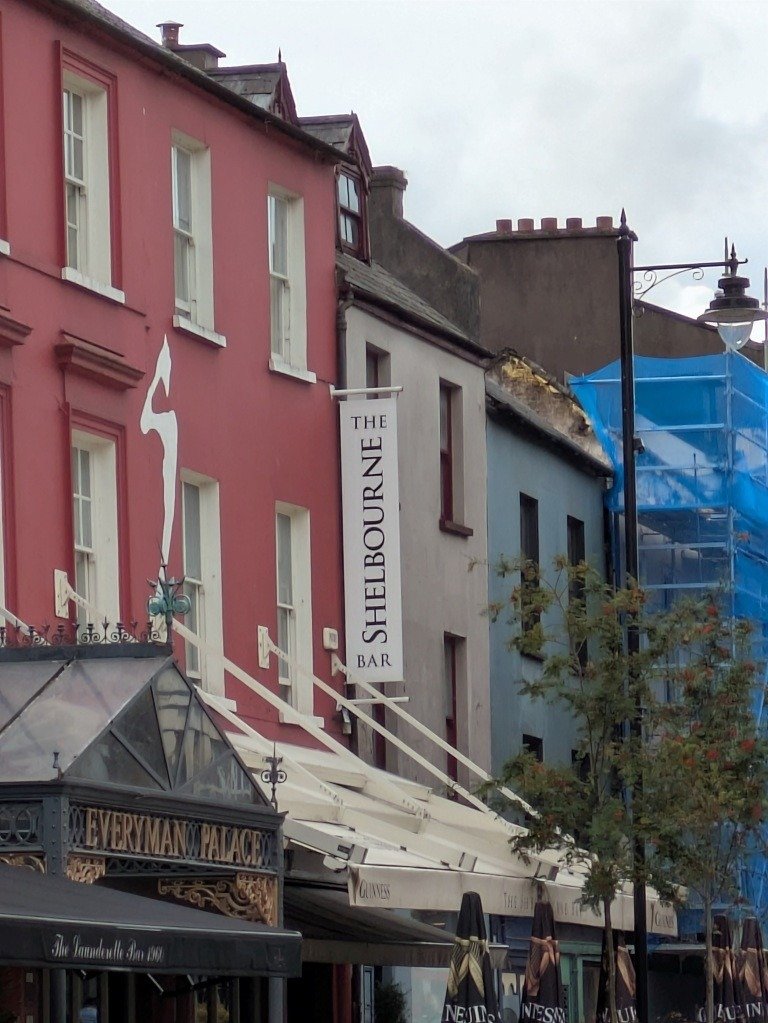
Exiting the cathedral the rain had become steadier although not heavy continued for most of the walking tour. We walked the side streets where the original warehouses were situated and down some alleyways. Took in the pedestrian areas around St Patrick’s Street and then over to the Merchants Quay and river. Just as the rain eased up we arrived at The Shelbourne Bar where we spent 30 minutes over a pint of Murphy’s stout. 3:45pm saw us back on the bus for the return trip to Cobh and on the dockside by 4:20pm.
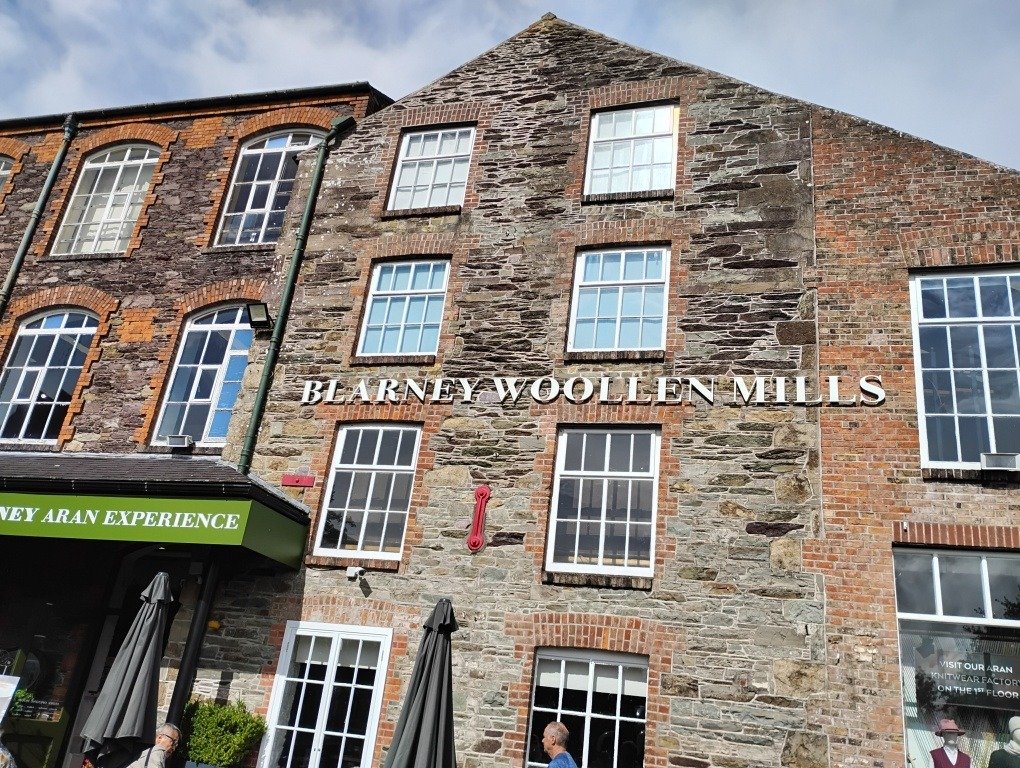
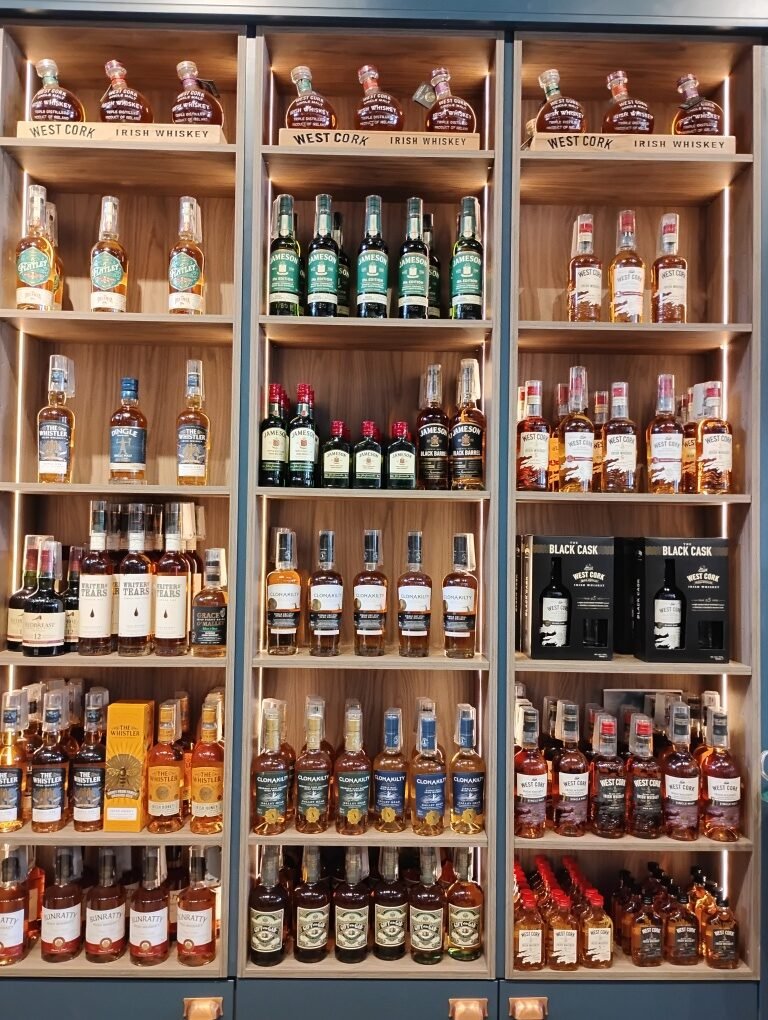
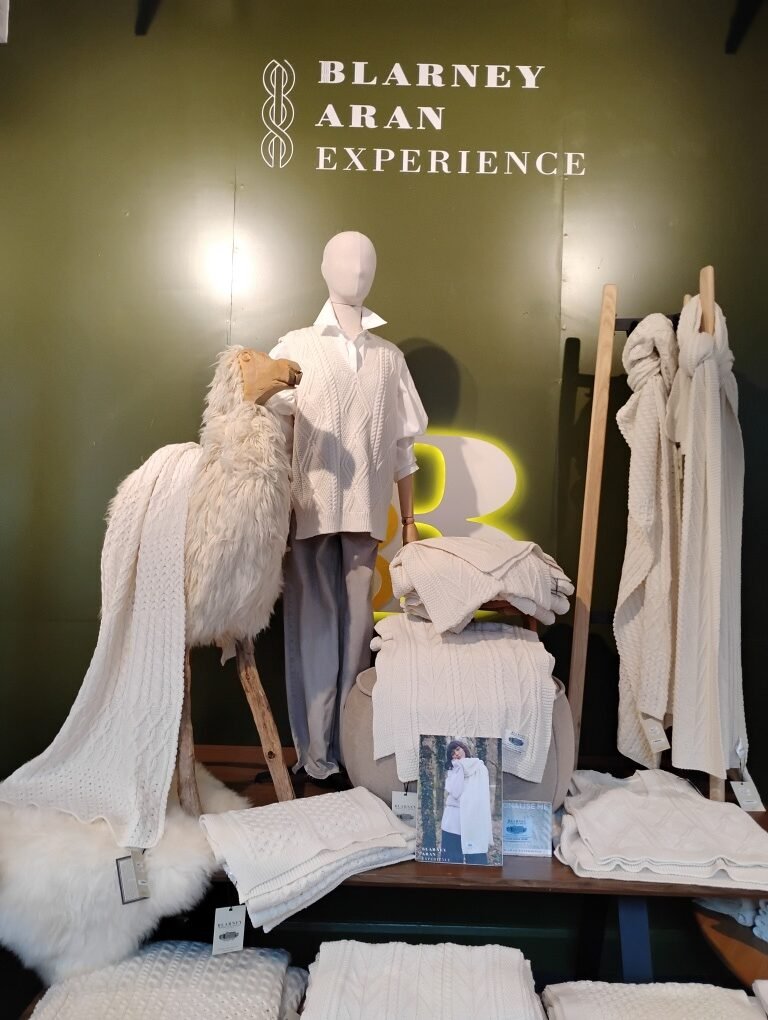
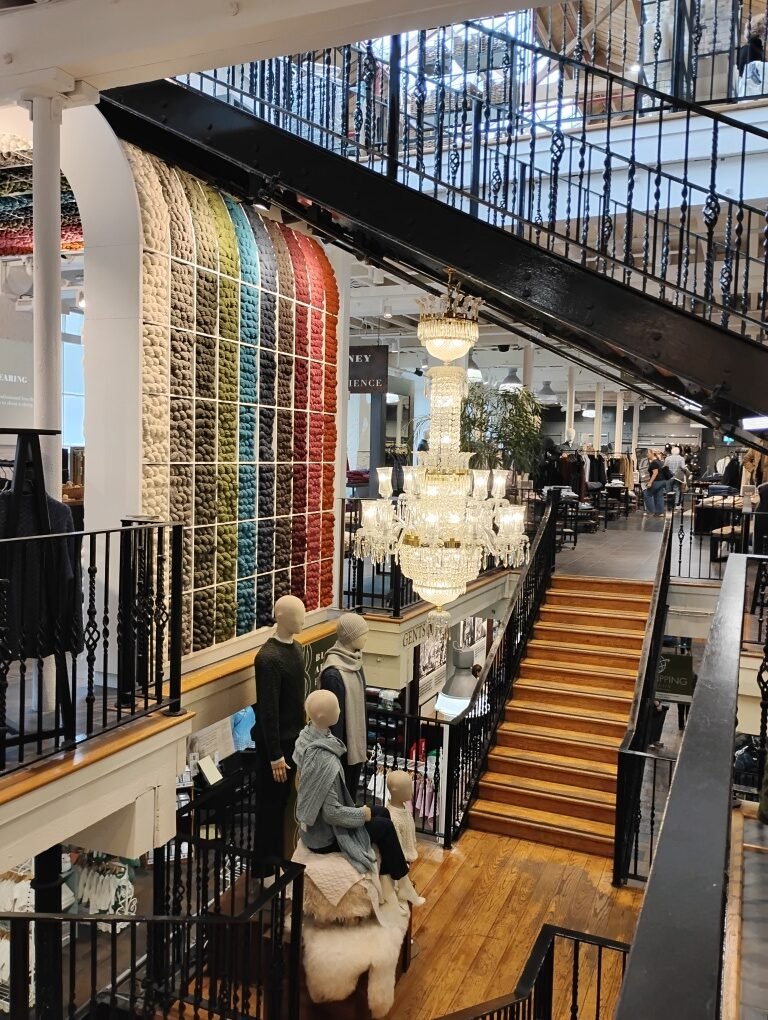
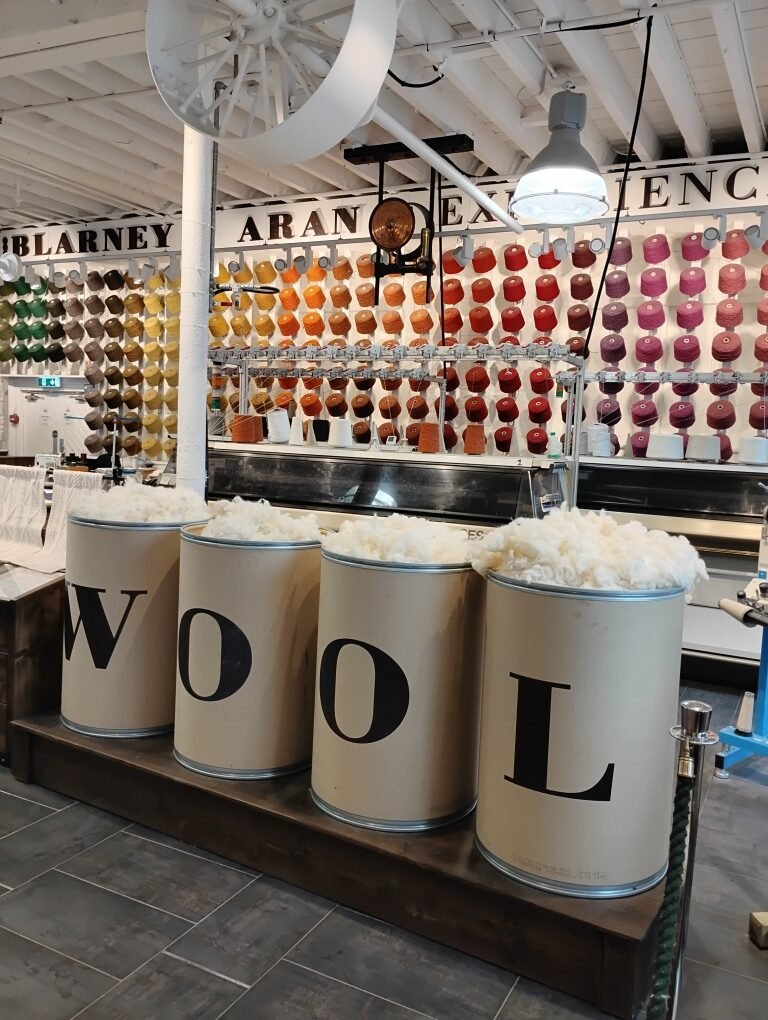
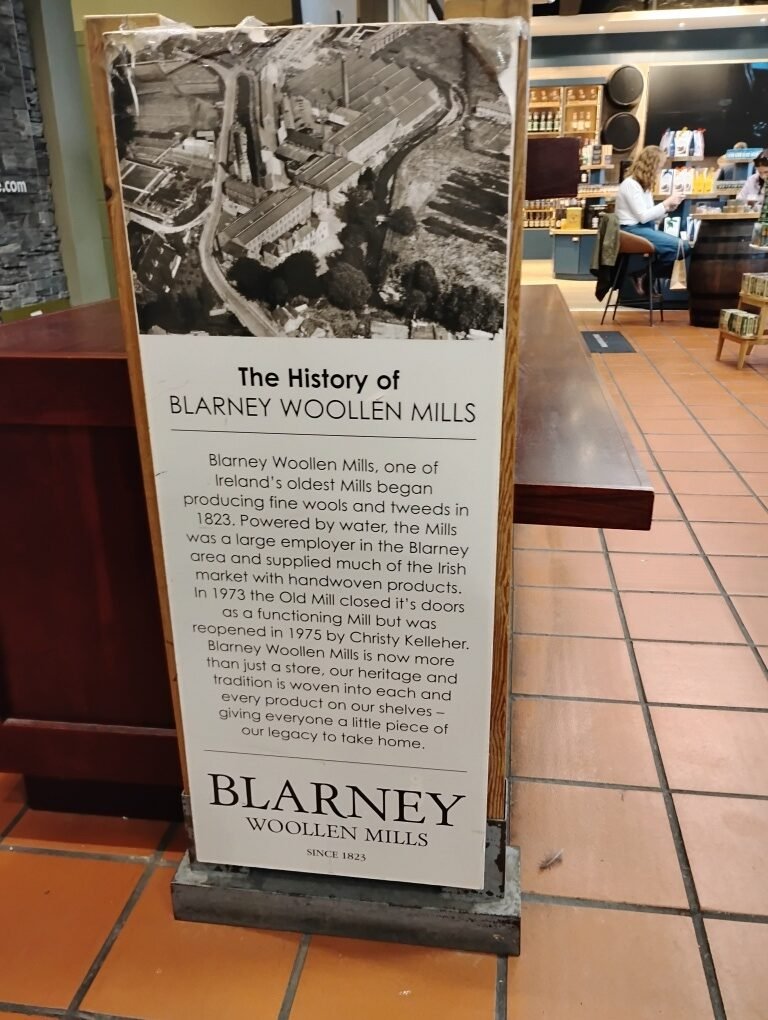
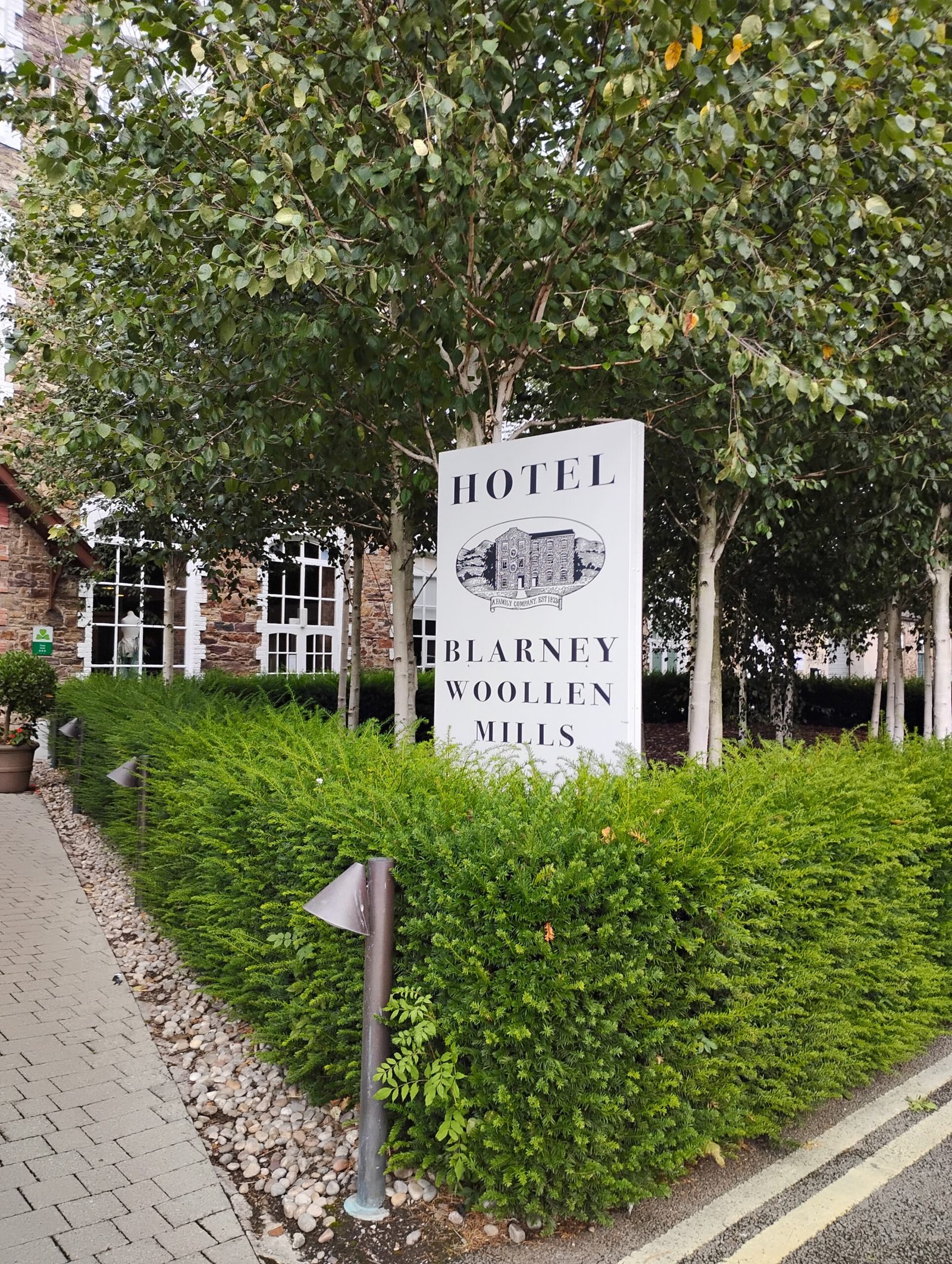
Patti’s tour of 40 left at 2pm and headed into Cork City for a drive round tour before heading out to Blarney about 30 minutes further on. Visited the Blarney Woolen Mill for about 2 hours also enjoying an Irish Coffee in the mill. Blarney Woollen Mills was built in 1823. It was used mainly for spinning and weaving wool. The mill briefly closed for two years between 1973 and 1975, after which it was re-opened as an Irish heritage shop. Now it still sells Blarney Mill woolen clothing as well as local artisan woolens and gift items. There is also a hotel on the site. Returned to the dockside by 5:45pm.
Highlight of the day: organ pipes in the pit